Physical Address
304 North Cardinal St.
Dorchester Center, MA 02124
Physical Address
304 North Cardinal St.
Dorchester Center, MA 02124


The Online Gambling Industry Created Itself
Series – The Online Gambling Industry


Marketing is fun!
Once again I’m looking back at the early days of Intertops marketing. And then, along the way, I gain an much wider appreciation of just how creative the online gambling industry became.
After completing the last article about Intertops’ US marketing strategy, I was reminded about a few more absolute marketing gems that Intertops were responsible for. One of which was the 2001 Snooker World Championship where Intertops fortuitously managed to sponsor both finalists, Ronnie O’Sullivan and John Higgins. It was a triumph for Intertops and marked a new era in sport sponsorship. The other marketing gems — Moolette and Lashings — I’ll address those in the next article.
But then it occurred to me, the online gambling industry did not emerge fully formed. It was not discovered like oil in the North Sea, nor handed down through regulatory blessing. It was constructed — deliberately, strategically, and often audaciously. In the late 1990s and early 2000s, operators did not wait for legitimacy. They engineered it. They sponsored it. They coded it. They marketed it into existence.
If Shaw’s observation is correct — that identity is something created rather than found — then few modern industries embody that principle more clearly than online gambling.
From the first digital sportsbooks to the rise of betting exchanges and televised poker, the industry built its own visibility, infrastructure and narrative. It created trust where none existed. It built loyalty in a borderless environment. And it embedded itself into the cultural bloodstream of global sport.
One of the clearest symbolic moments of that self-creation came at the Crucible Theatre, Sheffield, UK in May 2001.

Ronnie O’Sullivan’s first world championship
The 2001 World Snooker Championship final featured Ronnie O’Sullivan and John Higgins — two of the most gifted players of their generation. It was a compelling sporting contest. O’Sullivan would go on to win 18–14, securing his first world title and stepping fully into sporting greatness.

But beyond the baize, something else was happening.
Intertops, one of the earliest online sportsbooks, found itself sponsoring both finalists. Whether by coincidence or commercial foresight, the result was unmistakable: an online gambling brand embedded at the very centre of one of snooker’s most prestigious events.
This was not accidental cultural drift. It was strategic visibility.
At the turn of the millennium, online gambling companies understood a simple truth: trust follows familiarity. And familiarity comes from association. If your logo is visible at the Crucible, if your name sits alongside elite athletes, if your brand is repeated in commentary and media coverage, then you are no longer a shadowy internet experiment. You are part of the sporting establishment.
That is how legitimacy is manufactured.

Snooker’s explosion in popularity was directly linked to the mass adoption of colour television in the United Kingdom during the late 1960s and 1970s. BBC2 began regular colour broadcasts in 1967, but by the mid-1970s colour TV ownership had expanded rapidly. In 1968, fewer than 5% of UK households owned a colour set. By 1975, that figure had risen to roughly 40%, and by 1985 more than 90% of households had colour television.
By the late 1970s and early 1980s, snooker had become prime-time television. The 1985 World Championship final between Dennis Taylor and Steve Davis drew approximately 18.5 million viewers in the UK — still one of the highest audiences ever recorded for a BBC broadcast after midnight. Throughout the 1980s, World Championship finals regularly attracted audiences in excess of 10–15 million viewers.
International expansion followed television syndication. By the 1990s, the World Championship was broadcast in dozens of countries, and by the 2000s snooker had established major ranking events in Asia. China became a particularly significant growth market: by the 2010s there were estimated to be over 50 million regular snooker players in China alone, and total global participation has often been cited at over 100 million recreational players worldwide.
In short, colour television did not merely broadcast snooker — it transformed it into a commercially viable, globally recognised sport. The medium amplified the spectacle, the personalities and the drama, turning a club game into an international television product.
Snooker proved uniquely suited to the new medium. The vivid contrast between the green baize and the coloured balls made it visually distinctive in a way black-and-white broadcasts could not capture. The BBC’s Pot Black series, launched in 1969 specifically to showcase colour television, played a major role in introducing the sport to a national audience.

Industry creators were very busy
In the late 1990s, online betting faced multiple structural challenges:
There were no long track records and no decades of customer reassurance.
So the industry did something remarkable: it built its own ecosystem.

Jurisdictions provided a safe home
Operators initially clustered in The Caribbean and Canada and later on Gibraltar, Alderney, Malta and the Isle of Man. These jurisdictions provided licensing frameworks that signalled oversight and accountability. Rather than waiting for major markets to legislate, the industry created parallel regulatory hubs.
Jurisdictions like Gibraltar became more than a tax-efficient base. It became a credibility signal.
Check out my article about The Jurisdictions here!

Payments provided nutrients
Companies like Neteller (founded 1999), Paypal and later Skrill enabled online gambling to function at scale. E-wallets reduced consumer anxiety about card payments and offered a buffer between player and operator.
Gambling helped bootstrap fintech adoption. In turn, fintech stabilised gambling.

Affiliates provided customers
Perhaps the most powerful innovation of the era was affiliate marketing.
Operators decentralised their own promotion. Thousands of independent websites reviewed, compared and promoted gambling brands in exchange for revenue share. This created:
The affiliate was not just a marketer. He or she was a loyalty partner. The industry effectively crowdsourced its expansion.
Innovation expanded the market
While visibility and payments built trust, product innovation built loyalty.
Bet365, founded in 2000, invested heavily in in-play betting technology. Rather than replicating the betting shop model online, they reimagined it. Live odds updates, streaming integration and dynamic pricing turned passive wagering into continuous engagement.
Betfair, also founded in 2000, disrupted the bookmaker model entirely. By introducing a peer-to-peer exchange with commission-based pricing, it reframed betting as a market rather than a house-versus-player proposition. The narrative shifted from “gambling” to “trading.”
These were not incremental changes. They were identity statements. The industry was not copying the past. It was defining a new future.

Chris Moneymaker made money and inspired a generation
In 2003, Chris Moneymaker qualified online for the World Series of Poker and won the Main Event. The “Moneymaker Effect” transformed online poker overnight.
But this was not pure serendipity. Online poker rooms had already built satellite qualification systems that allowed ordinary players to compete on global stages. Televised poker coverage amplified this model. Viewers saw amateurs turn small online buy-ins into life-changing sums.
The message was clear: You do not need access. You need a login.
Online gambling positioned itself as democratising opportunity. That narrative — whether romanticised or not — generated powerful emotional loyalty.

Visibility provided identity
Sponsorship became one of the most visible mechanisms of self-creation.
Football shirts. Snooker tournaments. Poker broadcasts. Television advertising in newly liberalised jurisdictions. Gambling brands embedded themselves into the spectacle of sport.
The 2001 snooker final is one example. But it was part of a broader shift from peripheral advertising to central integration.
Athletes served as bridges between digital platforms and traditional audiences. Their credibility transferred to emerging brands. This was not just marketing. It was identity borrowing.
In later years, the model evolved further — into the crypto era.

Decentralisation is an example of reinvention
By 2017–2018, the industry faced another frontier: decentralisation.
Blockchain-based betting projects sought to eliminate intermediaries, reduce margins and introduce tokenised ecosystems. The language shifted again:

Projects such as BetterBetting and the BETR token reflected an attempt to merge sports betting with distributed ledger technology. The logic echoed the early 2000s: New technology. New narrative.New legitimacy to be built.
And once again, athletes became ambassadors. Sporting figures lent visibility to technical concepts. The pattern repeated — just with a different technological layer.
The industry did not stumble into crypto. It experimented with it. It explored it. It attempted to shape it.
Creation, not discovery.

Creating brand loyalty helps retain customers
Perhaps the most underestimated achievement of the early online gambling era was the construction of loyalty in an inherently fluid environment.
Customers could switch platforms with a click. There were no geographic constraints. Yet operators built long-term retention through:
Trust was reinforced transaction by transaction.
A successful withdrawal built more brand equity than a hundred banner adverts.

The industry expanded rapidly
Looking back at the late 1990s and early 2000s, it becomes clear that online gambling did not simply grow. It authored its own expansion.
It chose jurisdictions.
It funded payment rails.
It empowered affiliates.
It sponsored sport.
It redefined betting mechanics.
It embraced technological risk.
Each of these decisions shaped its identity.
When Intertops’ name appeared alongside both finalists at the Crucible in 2001, it symbolised more than marketing success. It signalled that the online gambling industry was no longer peripheral. It had written itself into the script of elite sport.
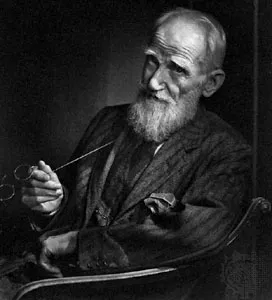
The often contentious George Bernard Shaw (1856 – 1950) wrote more than sixty plays and became the leading dramatist of his generation. In 1925 he won the Nobel Prize in Literature.
George Bernard Shaw’s observation resonates here because the online gambling industry has never been static. It has repeatedly redefined itself — through regulation, innovation and reinvention.
From dial-up sportsbooks to live in-play streaming.
From betting shops to exchanges.
From credit cards to e-wallets.
From centralised operators to tokenised ecosystems.
At each stage, it chose to act rather than wait.
The industry did not find legitimacy. It constructed it.
It did not inherit trust. It built it.
It did not discover identity. It created one.
And in doing so, it demonstrated something larger about technological eras: industries that survive are not those that hope to be accepted. They are those that design their own acceptance.
The baize at the Crucible in 2001 was green. But the message behind the sponsorship boards was unmistakably digital.
The industry had stepped onto the main stage.
And it had written itself there.