Physical Address
304 North Cardinal St.
Dorchester Center, MA 02124
Physical Address
304 North Cardinal St.
Dorchester Center, MA 02124

Something I need to think about
Series – The Online Gambling Industry
Have I left it too late?
I have worked in the gambling industry for most of my life. As my nether years rapidly approach, it seems I’ve started on phase of preponderance.
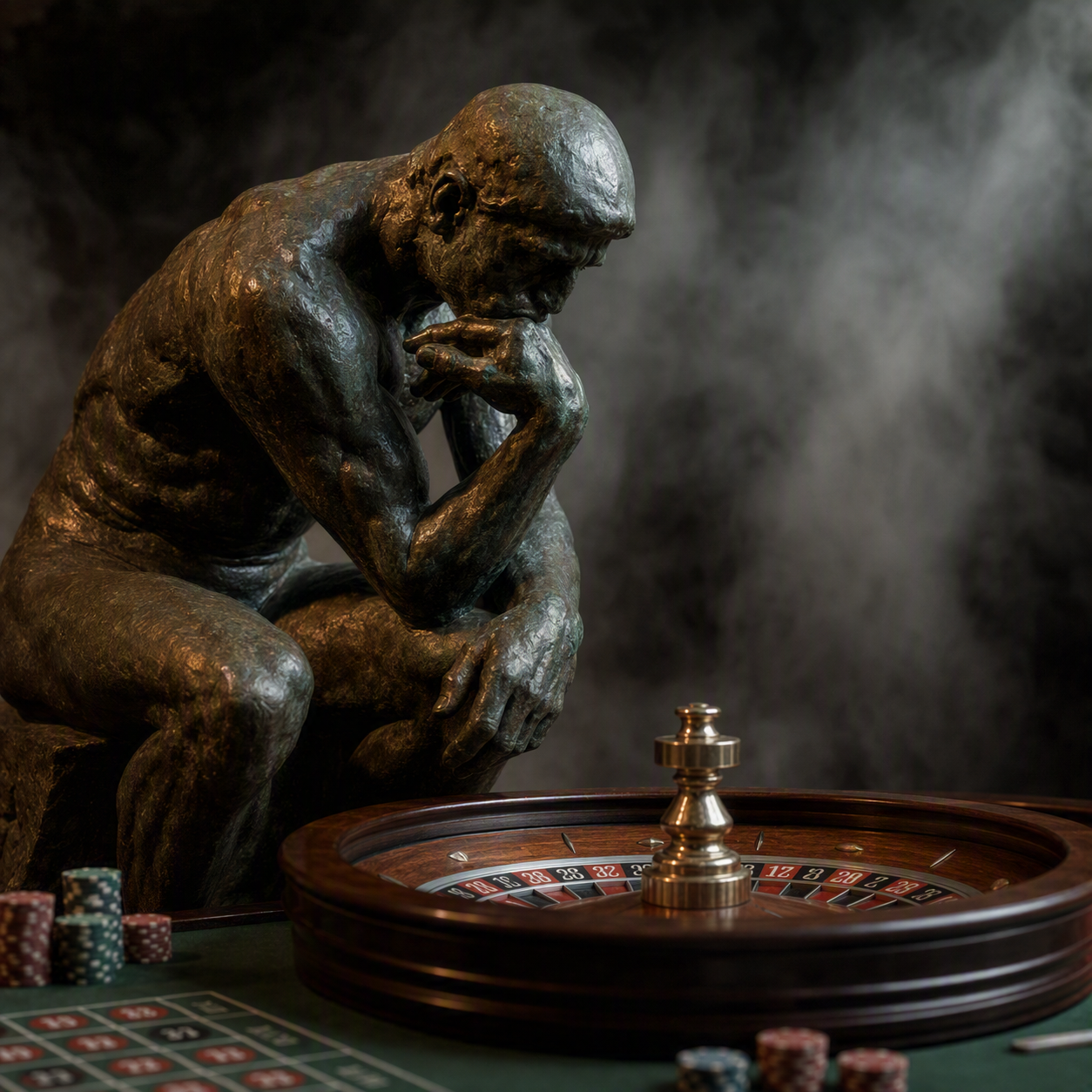
Perhaps I’m subconsciously becoming concerned about an imminent day of reckoning and I have realised that I have never really paused to ask the fundamental question of whether or not gambling is, overall, a good or a bad thing.
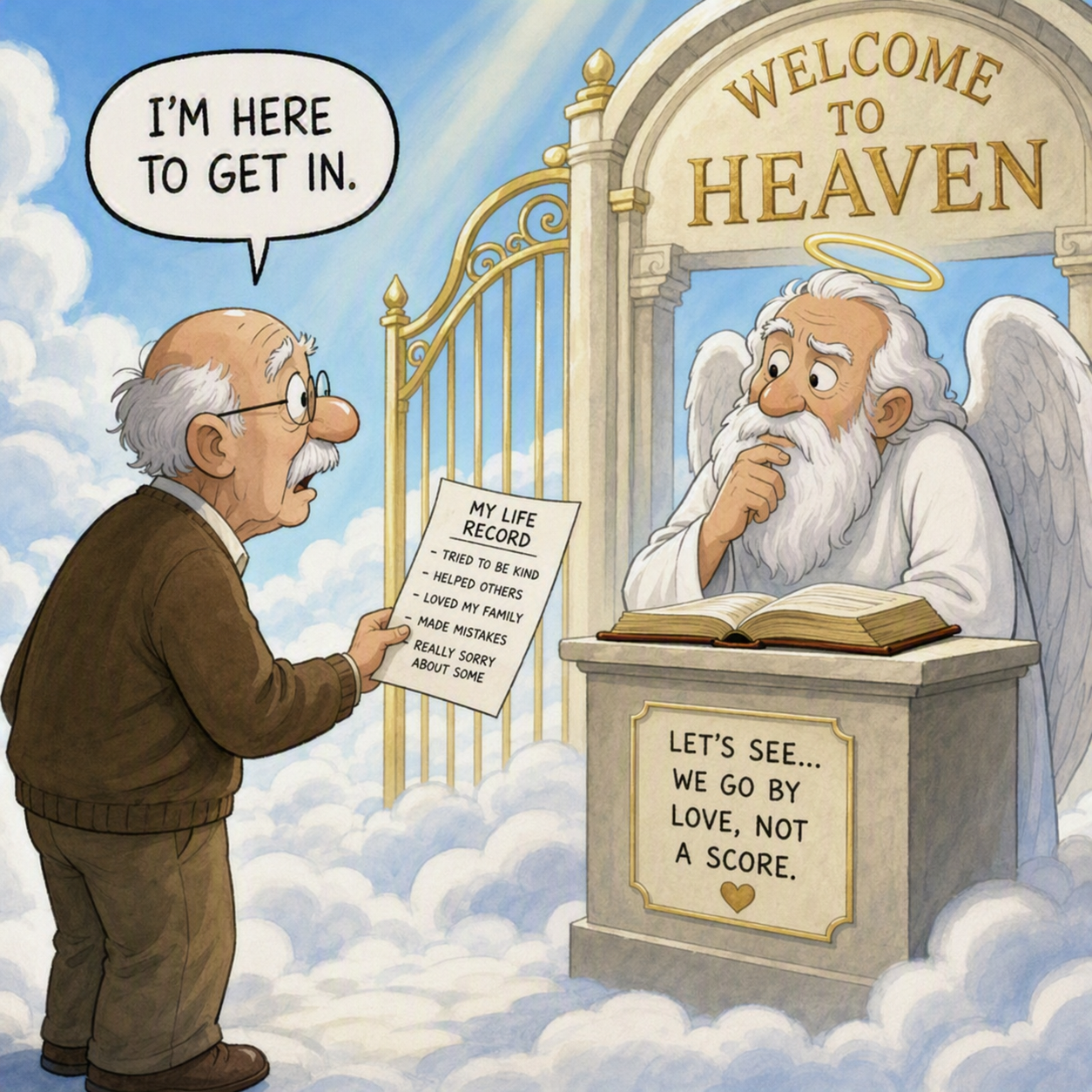
As this is a possible point of concern for those higher beings considering my admission to either heaven or hell, I think it’s time I took a serious look at this and line up my ethical ducks.
Up until now I have dismissed this question as someone else’s problem. My conscience has always been clear with the knowledge that as an provider of gambling services, I cannot be held responsible for what a person does with their hard earned money. It’s their choice and I merely provide a service, right?
However, this optimistic washing of hands is probably not going to cut it for the heavenly entrance examination, so I’d better come up with a better analysis of the issue. And, as usual, I will start off with looking back in time for some guidance and see where that leads me.
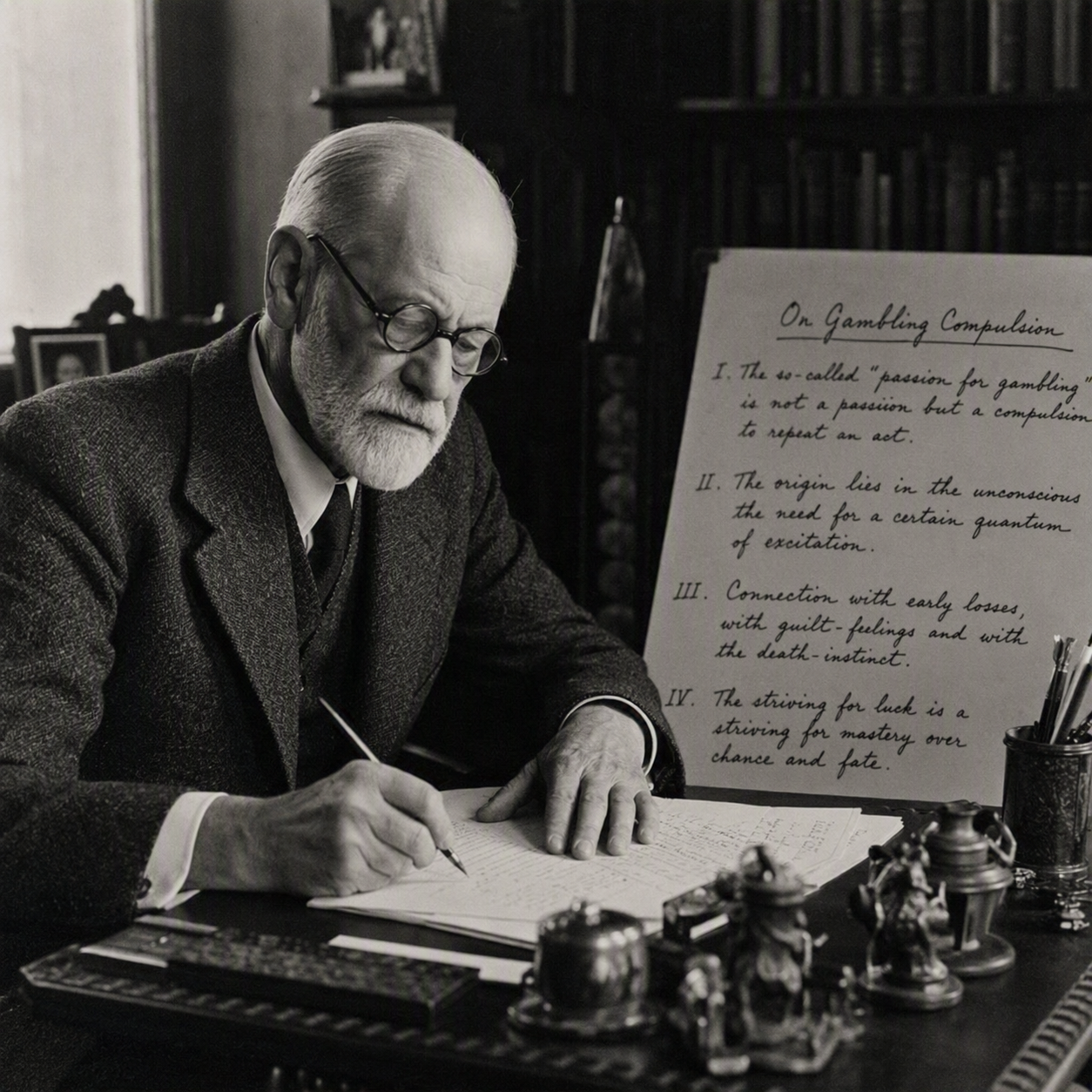
Sigmund Freud knew all about gambling addiction
Let’s start with the famous Sigmund Freud and see what he has to say about the matter.
Born in Austria in 1856, Sigmund Freud fundamentally changed how humanity views the human mind by popularizing the concept of the unconscious. Rather than seeing humans as purely rational beings, Freud argued that our behaviour, choices, and mental illnesses are largely driven by hidden, repressed desires and childhood traumas.
Freud viewed gambling as a pathological, self-destructive compulsion rooted in deeply unconscious psychological conflicts rather than a desire for financial gain.
He formulated his primary arguments in his famous 1928 essay, Dostoevsky and Parricide, which analysed the severe gambling addiction of Russian author Fyodor Dostoevsky.
Freud’s perspective can be broken down into several core psychological components:
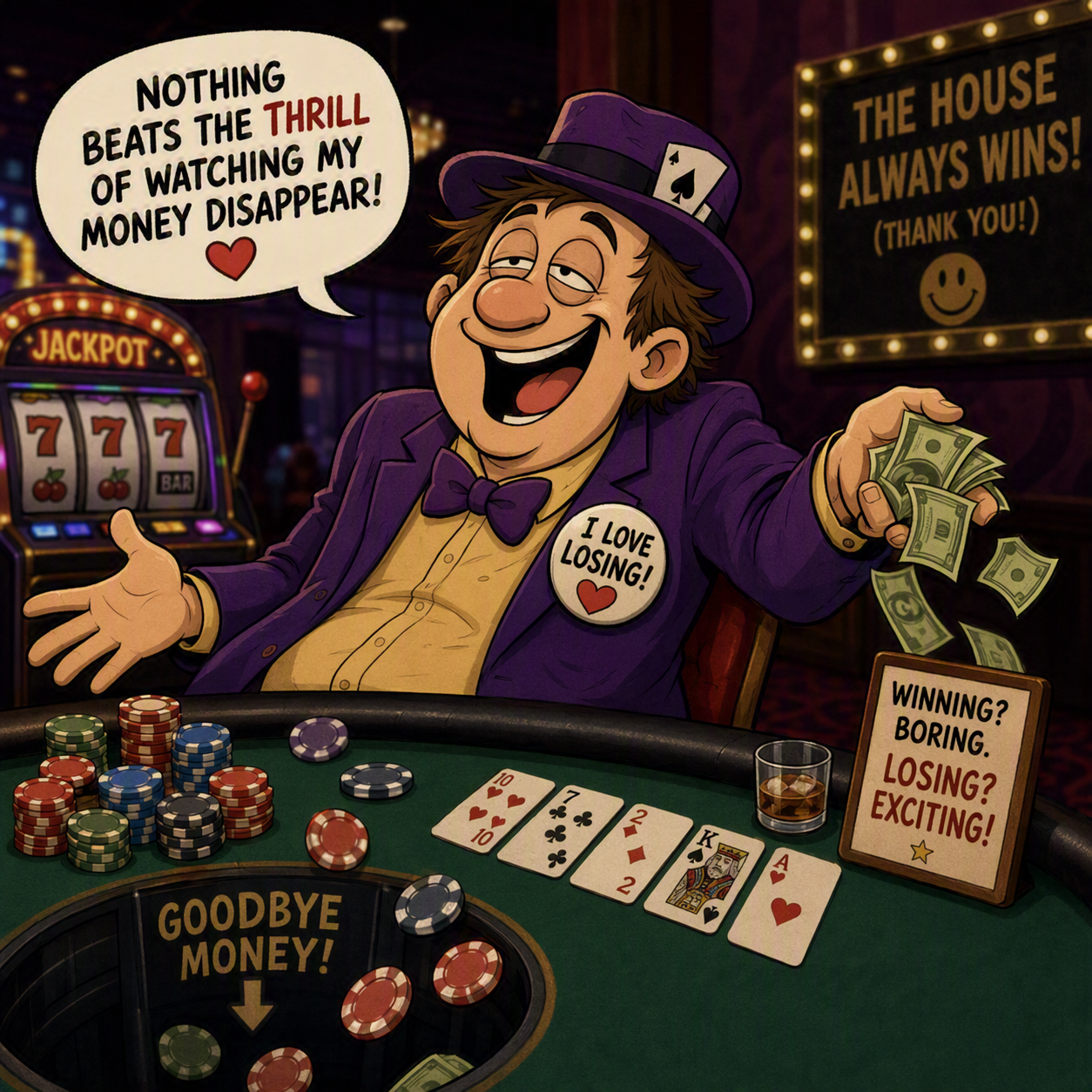
There’s nothing like ruination
The Thrill of Ruin: Freud argued that the true gambler does not actually play to win money, but rather for the psychological excitement and intense emotional highs and lows of the game.
Self-Punishment: He believed pathological gambling was a masochistic act. Winning was secondary; the ultimate, hidden goal was to lose everything to satisfy a deep, unconscious need for self-punishment.
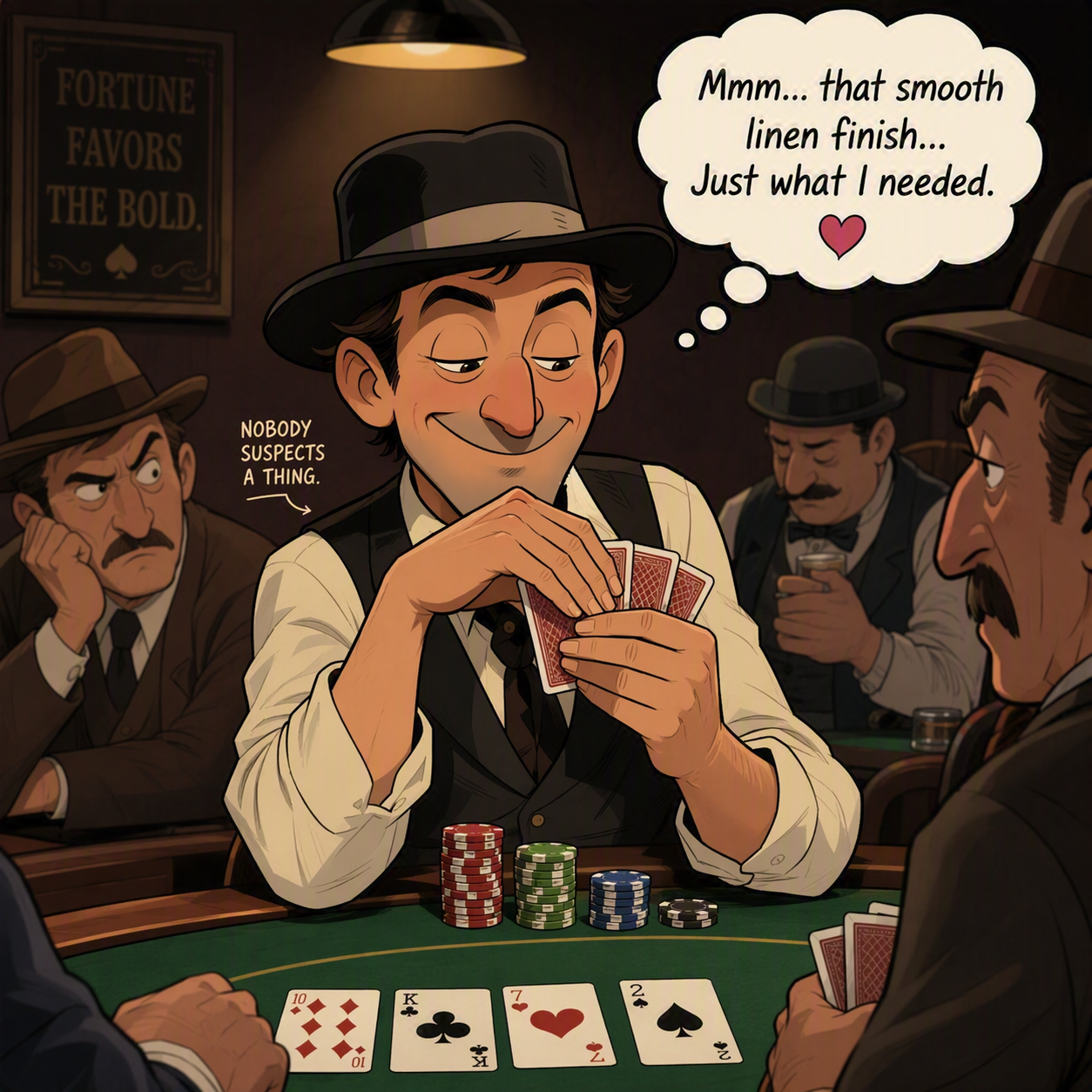
We’ve all been there
The “Primal Addiction”: Freud famously linked gambling to childhood sexuality, categorizing it as a substitute or “surrogate” for masturbation.
Repetitive Compulsion: He saw the rhythmic, repetitive mechanics of gaming—and the physical handling of cards, dice, or chips—as a sublimated continuation of the “onanism compulsion” of youth.
The Cycle of Guilt: The cycle of gambling mirrored the masturbatory cycle: an irresistible temptation, a burst of intense playing (pleasure), a breakdown of vows to stop, and a heavy burden of overwhelming guilt and bad conscience afterward.
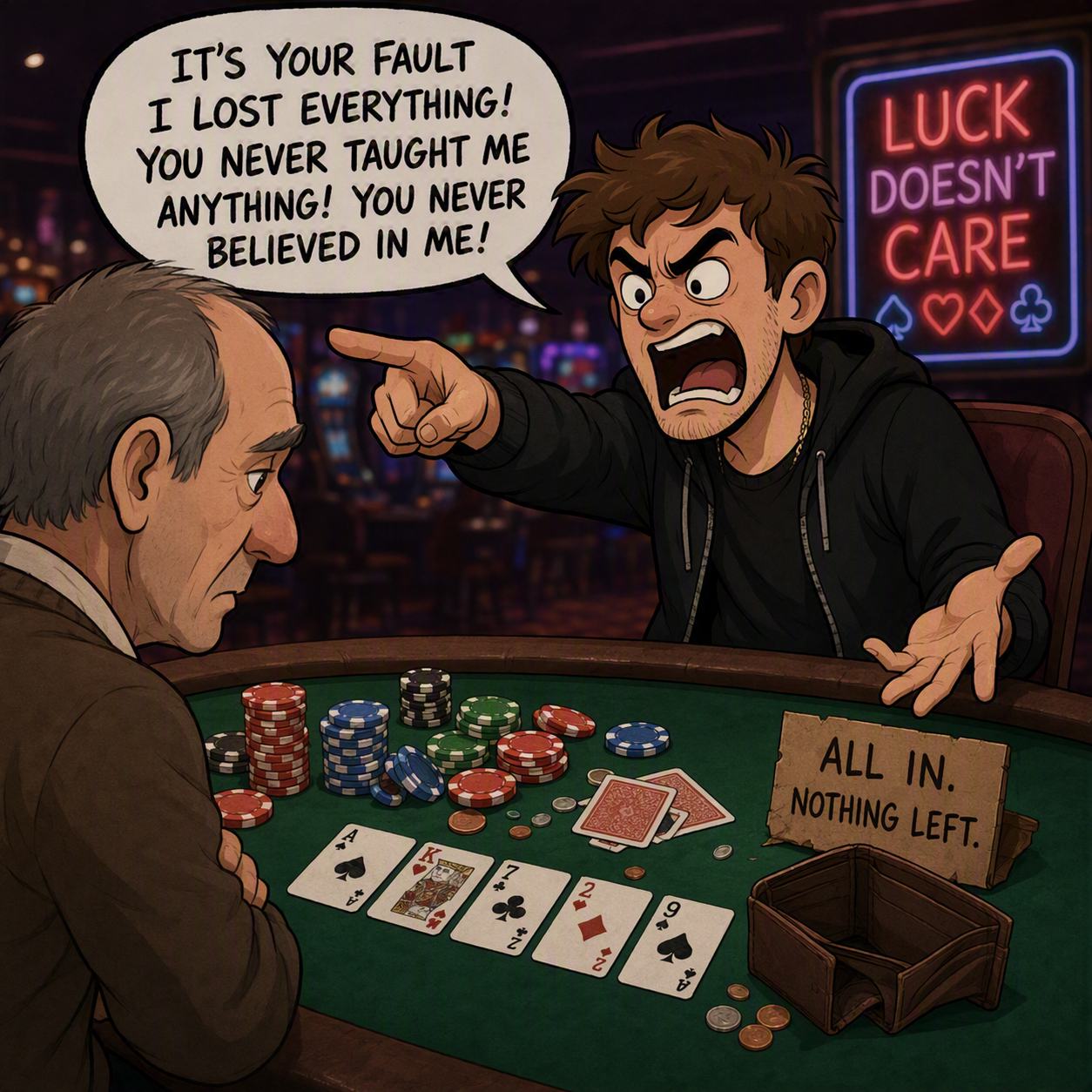
Blame yer old Dad why not?
Ambivalence Toward the Father: In Freudian theory, the severe guilt that drives the need for self-punishment stems from the Oedipus complex. The male gambler harbours unconscious, ambivalent aggressive feelings toward his father.
Challenging Fate: Freud viewed the gambling table as a stage where the player tests “Fate” or “Destiny”—which serve as psychological stand-ins for the father or God. By playing, the gambler is unconsciously asking, “Will my father punish me or favour me?” Losing serves as the expected punishment that temporarily relieves their inner guilt.
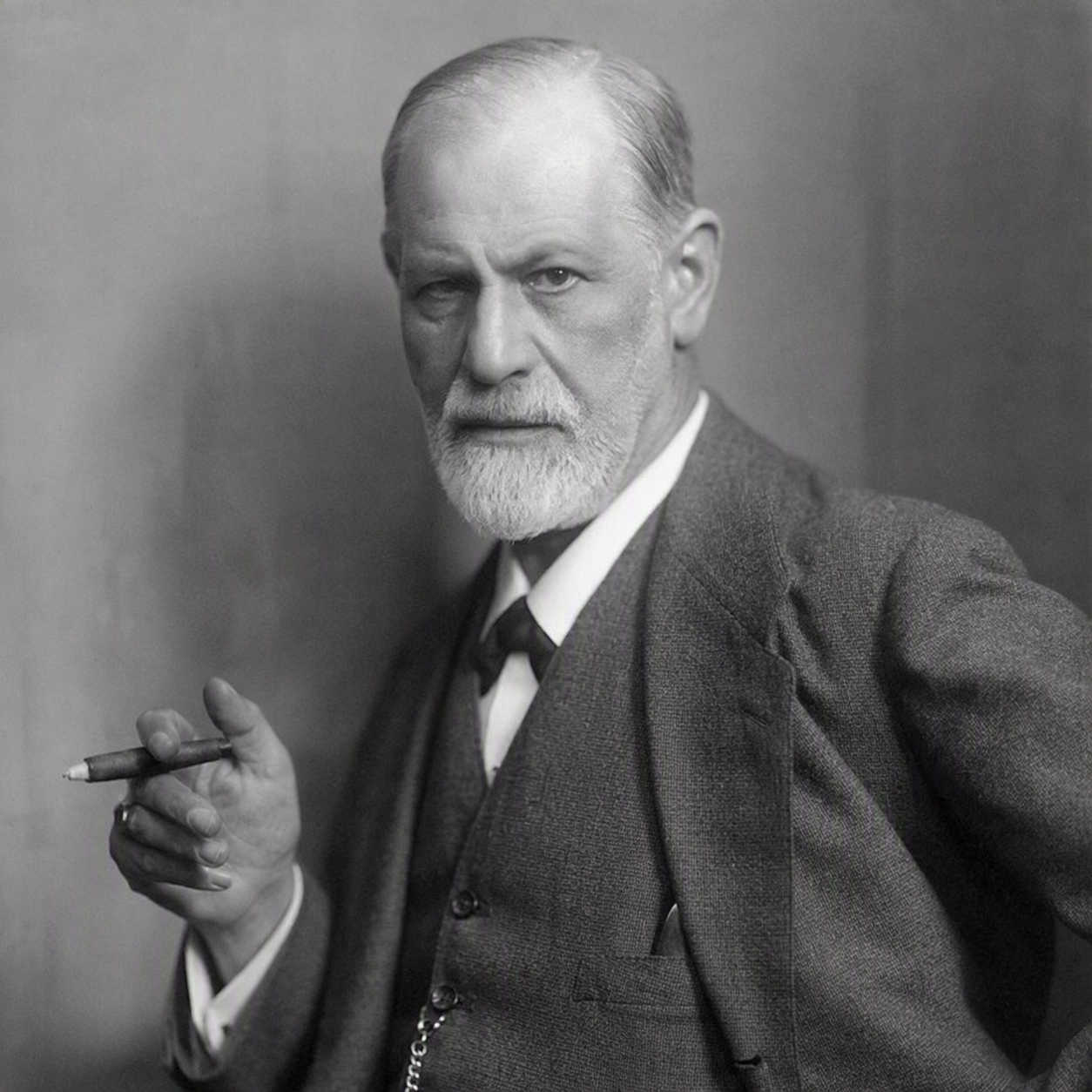
Smoking makes more sense
So that’s quite a perspective. And as a side note, Freud never gambled himself as he was a highly controlled, deeply analytical man whose personal vices were strictly chemical – namely, his severe nicotine addiction and his early ‘clinical’ experimentation with cocaine.
However, Freud’s grandson Lucien Freud was a notorious, pathological gambler – the polar opposite of his grandfather.

Lucien Freud by Lucien Freud
Lucian Freud (1922–2011) became one of the most celebrated and highly-paid British painters of the 20th century, but he possessed the exact self-destructive gambling traits his grandfather had written about decades earlier:
Massive Debts: Lucian was heavily embedded in London’s gambling scene and criminal underworld. He routinely lost astronomical sums of money on horse racing and card games.
Trading Art for Debts: Lucian frequently ran out of cash and had to pay off his bookmakers using his own paintings. One of his regular bookies, Alfie McLean, accumulated a collection of 23 Lucian Freud artworks to settle gambling debts. By the time McLean died, that collection was worth over £100 million.
Losing to Create: In a twist that perfectly mirrored Sigmund Freud’s theories on self-punishment and the “need to lose,” people close to Lucian noted that he often gambled heavily until he lost everything. Only when he was financially ruined did the psychological pressure lift, allowing him to experience the intense focus needed to paint his masterpieces.

A Bookie at your door is never a good thing
Now the question in my mind arises, would Lucien have still been able to create his masterpieces without the experience of catastrophic losses due to his gambling habit?
I think the short answer to this is yes, he likely still would have painted masterpieces – but perhaps the artwork would have looked entirely different, and most likely he would have found another self-destructive outlet to fuel it.
Here is a psychological breakdown of how a gambling banishment might have altered art history:
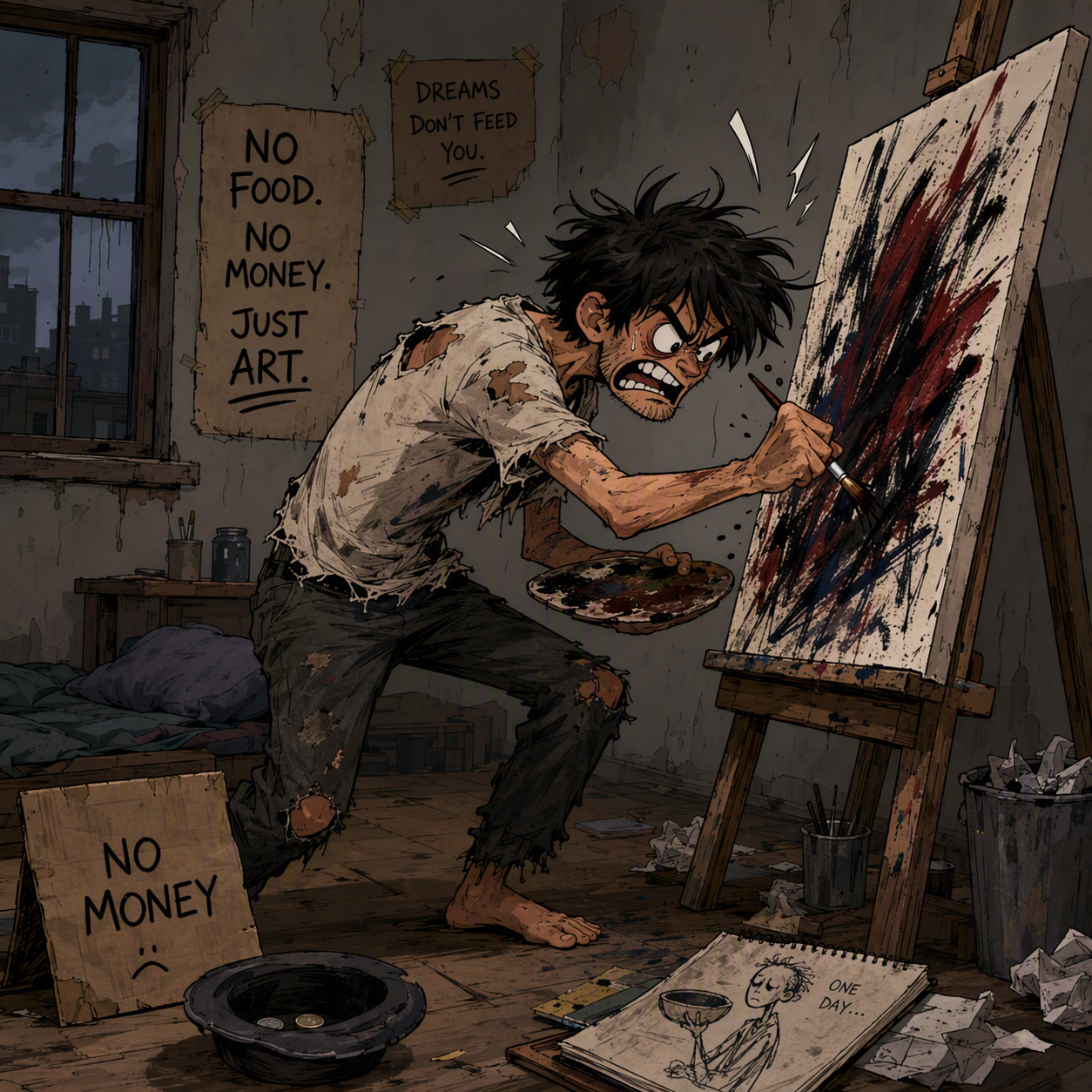
Poverty drives you on
Sigmund Freud famously argued that human drives cannot be destroyed; they can only be repressed or substituted. Lucian was a man of intense, chaotic energy. If gambling had been completely prohibited, his psychological makeup suggests he wouldn’t have become a calm, orderly painter. Instead, he likely would have leaned heavier into his other well-documented vices, such as his notoriously turbulent and overlapping romantic relationships, or physical reckless behaviour, to generate the anxiety he required.
Lucian Freud did not paint for money or fame; he painted from a place of raw, visceral necessity.
The Danger Zone: Financial ruin stripped away his upper-class comfort and placed him in immediate danger with underworld bookmakers.
The Fight-or-Flight Canvas: This self-inflicted crisis state triggered a fight-or-flight response. When he sat at the canvas dead broke, the stakes were life and death. That high-wire tension is visible in the heavy, thick, aggressive textures of his paint. Without the desperation of losing everything, his work may have lacked that trademark psychological weight and raw grit.

Reset!
Mirroring his grandfather’s theories, Lucian used losing as a mechanism to punish himself and clear his inner guilt. Once he was completely wiped out financially, his psychological ledger was reset to zero. This relief from guilt gave him a clean slate and a profound, quiet focus. If gambling were illegal, the build-up of that internal tension might have paralyzed his creativity instead of fuelling it, or forced him to find a more dangerous way to crash his life.
Conversely, many art historians argue that gambling actually hindered his maximum potential. Lucian spent thousands of hours at racetracks, betting shops, and late-night card games, frequently fleeing the city when debts caught up to him. Had gambling been illegal and inaccessible, those thousands of hours would have been redirected straight into the studio. He might have produced double the amount of masterpieces, operating on pure artistic obsession rather than financial panic.
BBC Series Fake or Fortune regarding a Lucien Freud painting

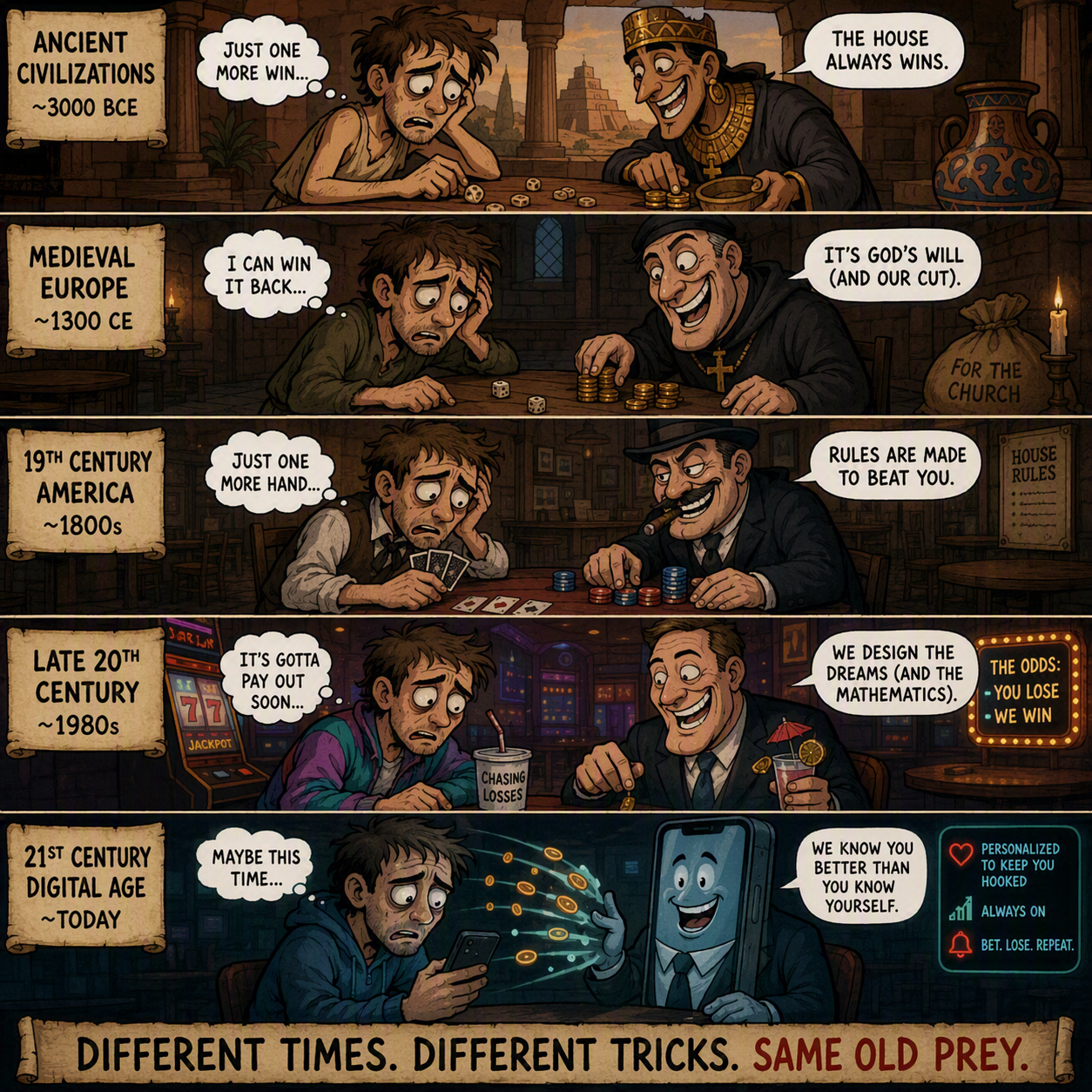
Historical victims
Obviously Lucien was not on his own. Throughout human history gambling addicts have been systematically preyed upon by rulers, institutions, and organized crime because their neurological vulnerability makes them the ultimate source of guaranteed revenue.
Long before modern casinos used AI algorithms, ancient states and predatory lenders figured out how to trap and exploit compulsive gamblers.
Here is a look at how gambling addicts were preyed upon throughout history, along with some more famous historical figures who fell victim to the compulsion.
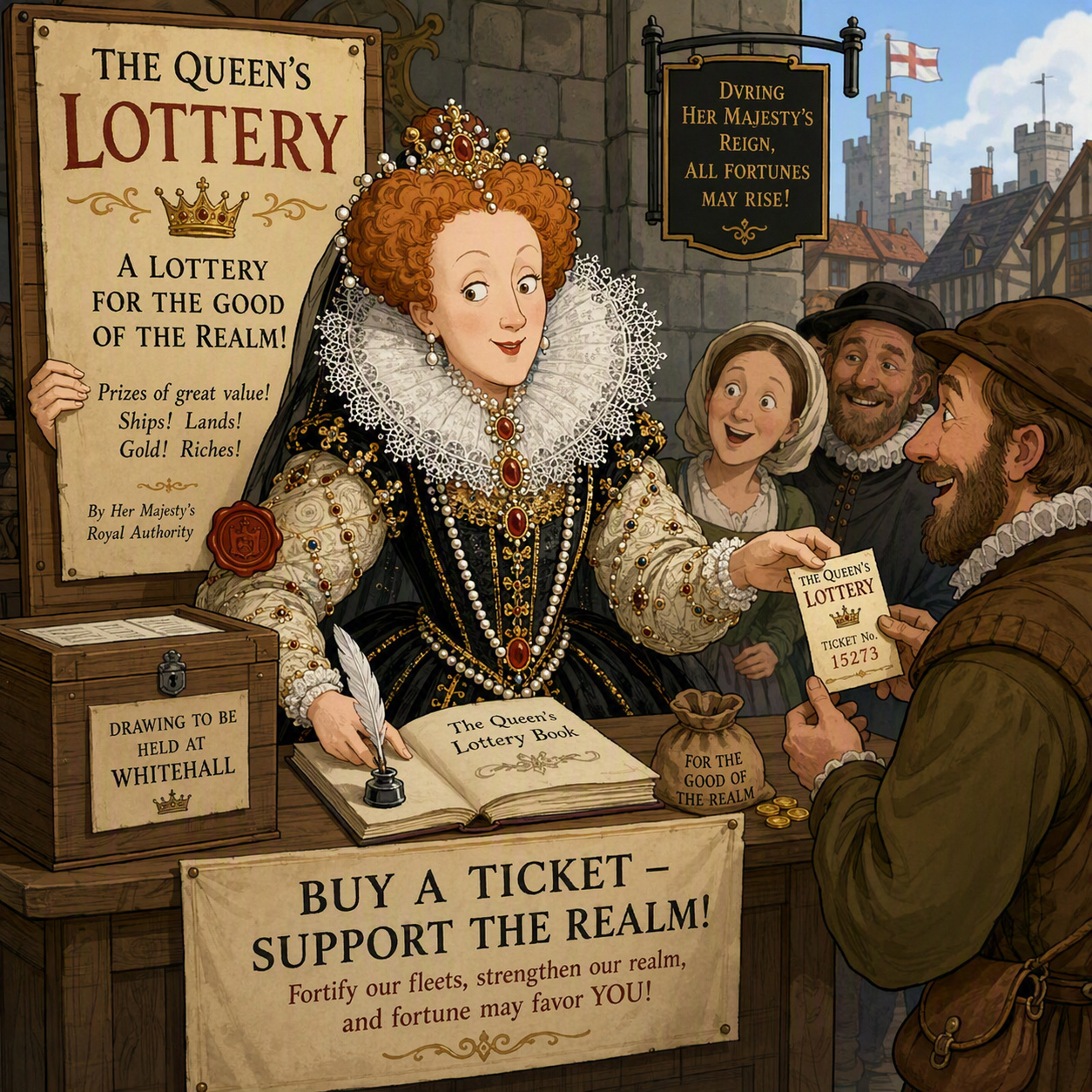
The Queen had a lottery
Historically, rulers realized that the fastest way to extract money from citizens – or force them into submission – was to legalise and tax games of chance.
Ancient Rome and Debt Slavery: The Roman elite loved dice games (tesserae). Roman law was highly predatory: if a citizen gambled away their money and couldn’t pay their debts to wealthy patrician lenders, the lenders were legally allowed to haul the debtor into court and enslave them to work off the debt.
The British Crown’s Tax on Hope: In the 16th and 17th centuries, European monarchs realized they could fund wars without raising standard taxes by launching state lotteries. They explicitly targeted the poor and desperate. Queen Elizabeth I created the first English state lottery in 1566, using predatory marketing campaigns to convince citizens that buying a ticket was their civic duty, taking massive cuts to enrich the crown.
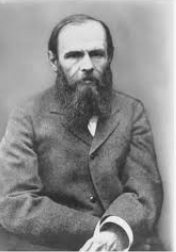
Fyodor Dostoevsky
The history of high society is littered with brilliant minds who were utterly ruined by the game, usually surrounded by predators who enabled them.
As mentioned earlier, the legendary Russian author of Crime and Punishment was a catastrophic roulette addict. His vulnerability made him easy prey for a ruthless publisher named F. T. Stellovsky.
The Predatory Contract: Knowing Dostoevsky was drowning in roulette debts, Stellovsky offered him a predatory advance. The catch? If Dostoevsky did not deliver a brand-new, full-length novel by a strict deadline, Stellovsky would legally inherit the copyright and royalties to all of Dostoevsky’s past and future works for nine years, effectively ruining him.
The Miracle: In a state of pure panic, Dostoevsky hired a stenographer and dictated a complete masterpiece in just 26 days. The irony? The novel was titled The Gambler, and it was a raw, autobiographical portrait of his own addiction.
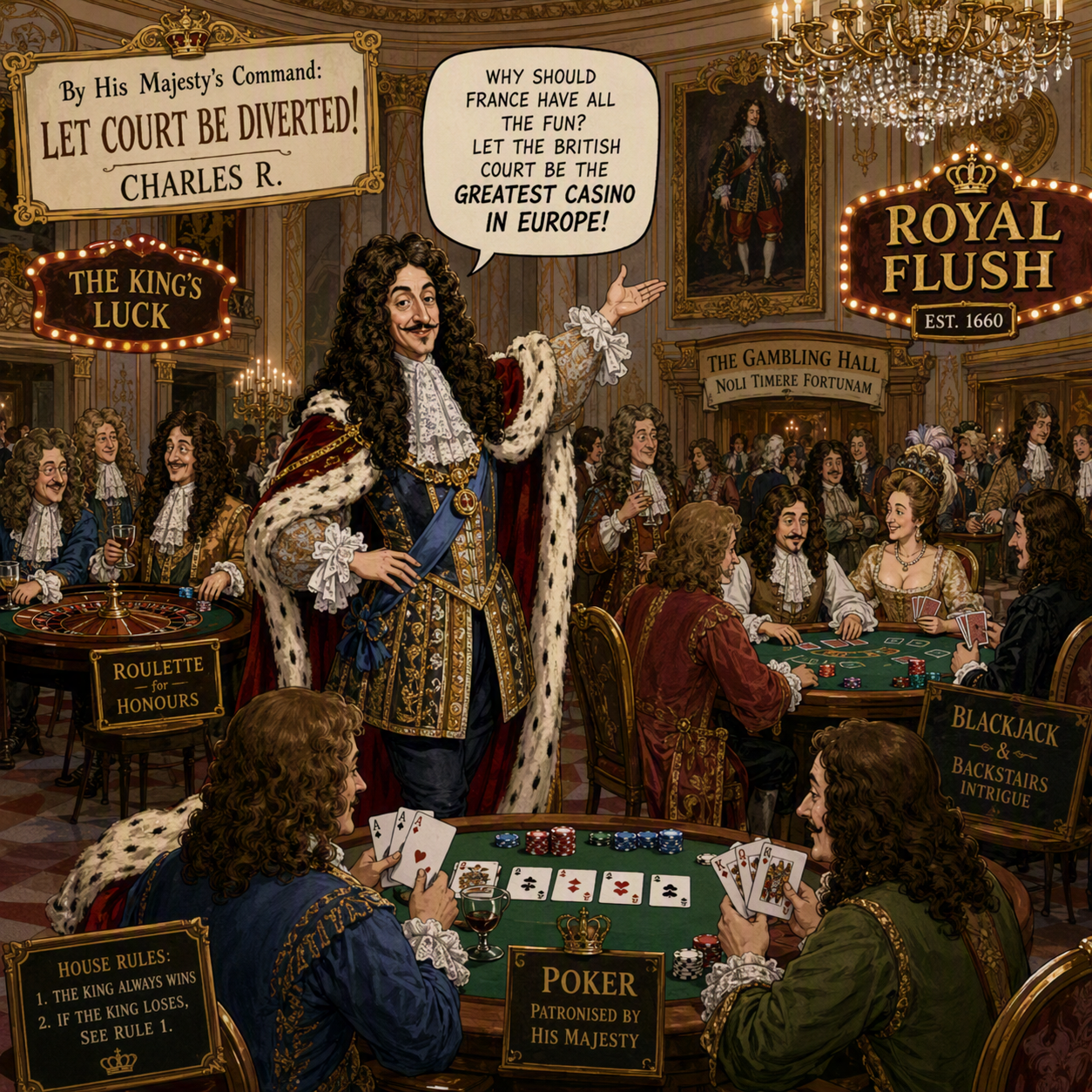
The King’s Casino
Charles II (1630–1685) was so obsessed with gambling that he turned the entire British royal court into a high-stakes, 24-hour casino.
Preyed Upon by Courtiers: Shrewd aristocrats and foreign diplomats quickly realized the King’s brain completely short-circuited at the gaming tables. They used his addiction against him, intentionally letting him win or trapping him in massive losses to extract political favours, royal titles, and land grants while he was distracted by the cards.
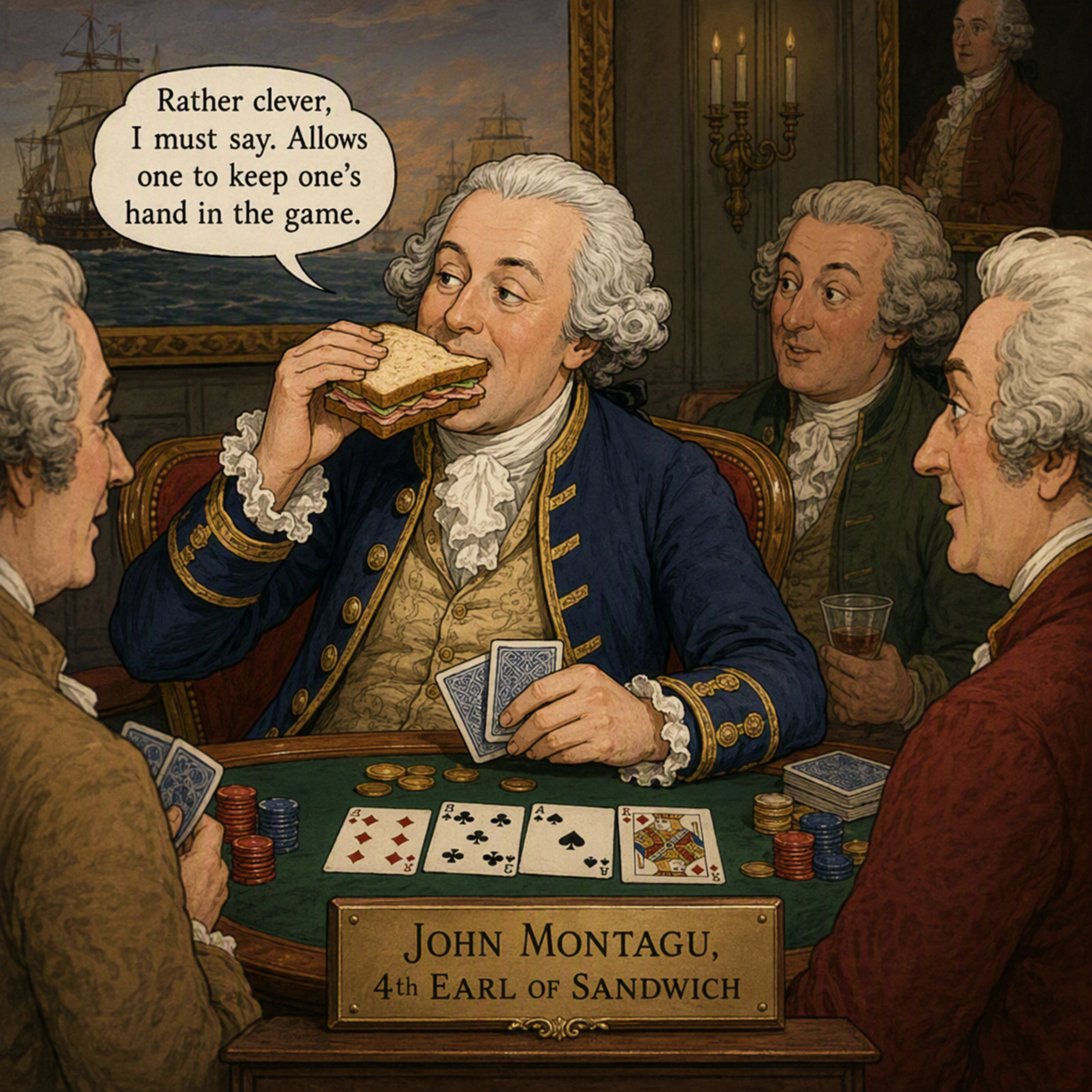
John Montagu and his sandwich
The man who gave his name to the “sandwich” was a severely addicted 18th-century English aristocrat.
The 24-Hour Trap: Montagu would regularly sit at the gambling tables for 24 hours straight without stopping. The house managers and kitchen staff at his elite clubs did not try to stop his self-destruction; instead, they enabled it. To ensure he never had to leave the table to eat a proper meal, his cook began putting slices of salt beef between two pieces of toasted bread. The sandwich was literally invented as a form of “harm maximization” so an addict wouldn’t have to pause his playing.

Brian Malony
If you want to see how modern corporate institutions prey on addicts, look no further than Brian Molony, a seemingly quiet Canadian bank manager in the early 1980s.
The Embezzlement: Molony had a severe, hidden gambling addiction. Utilizing his position, he successfully embezzled over $10 million from the Canadian Imperial Bank of Commerce to fund high-stakes trips to Atlantic City.
The Casino’s Red Carpet: The Caesars Boardwalk Regency casino knew exactly what Molony was doing. Instead of cutting off a man who was losing millions, they rolled out the ultimate predatory red carpet. They flew him to the casino in private Learjets, provided him with complimentary penthouse suites, and served him his favourite food – all to keep him glued to the baccarat tables until he had drained every cent of the stolen bank funds. His story was later turned into the brilliant film Owning Mahowny starring Philip Seymour Hoffman.
A Youtube documentary about Brian Molony and his compulsive gambling which led to a $10m loss

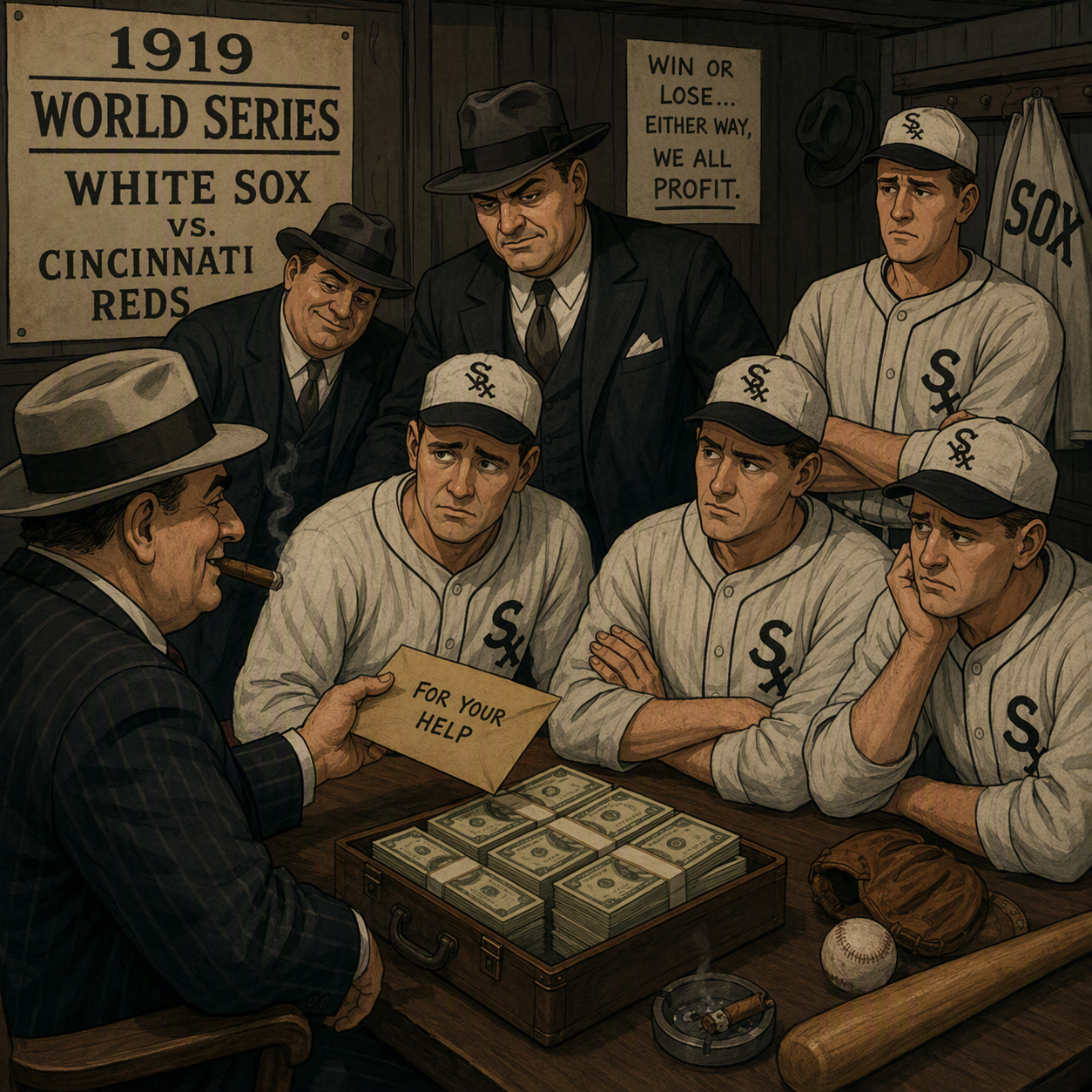
How to solve our bad salaries
Throughout the 20th and 21st centuries, athletes with gambling addictions became the ultimate prey for organized crime. Mobsters would deliberately hook athletes on credit, wait for them to rack up unpayable debts, and then blackmail them into throwing games.
The 1919 Black Sox Scandal: Eight members of the Chicago White Sox deliberately threw the World Series because they were underpaid by their billionaire owner and heavily leveraged by underground mob gamblers.
The Shakedowns: From NBA referees like Tim Donaghy to modern sports stars, organized crime has always treated the addicted athlete as a goldmine—using debt as a leash to fix games and manipulate the multi-billion dollar betting markets.
The historical pattern is unbreakable: whether it is an ancient Roman patrician, an 18th-century casino host, or a modern offshore crypto platform, the house has always known that an addict will trade their freedom, their wealth, and their sanity just to stay in the game.
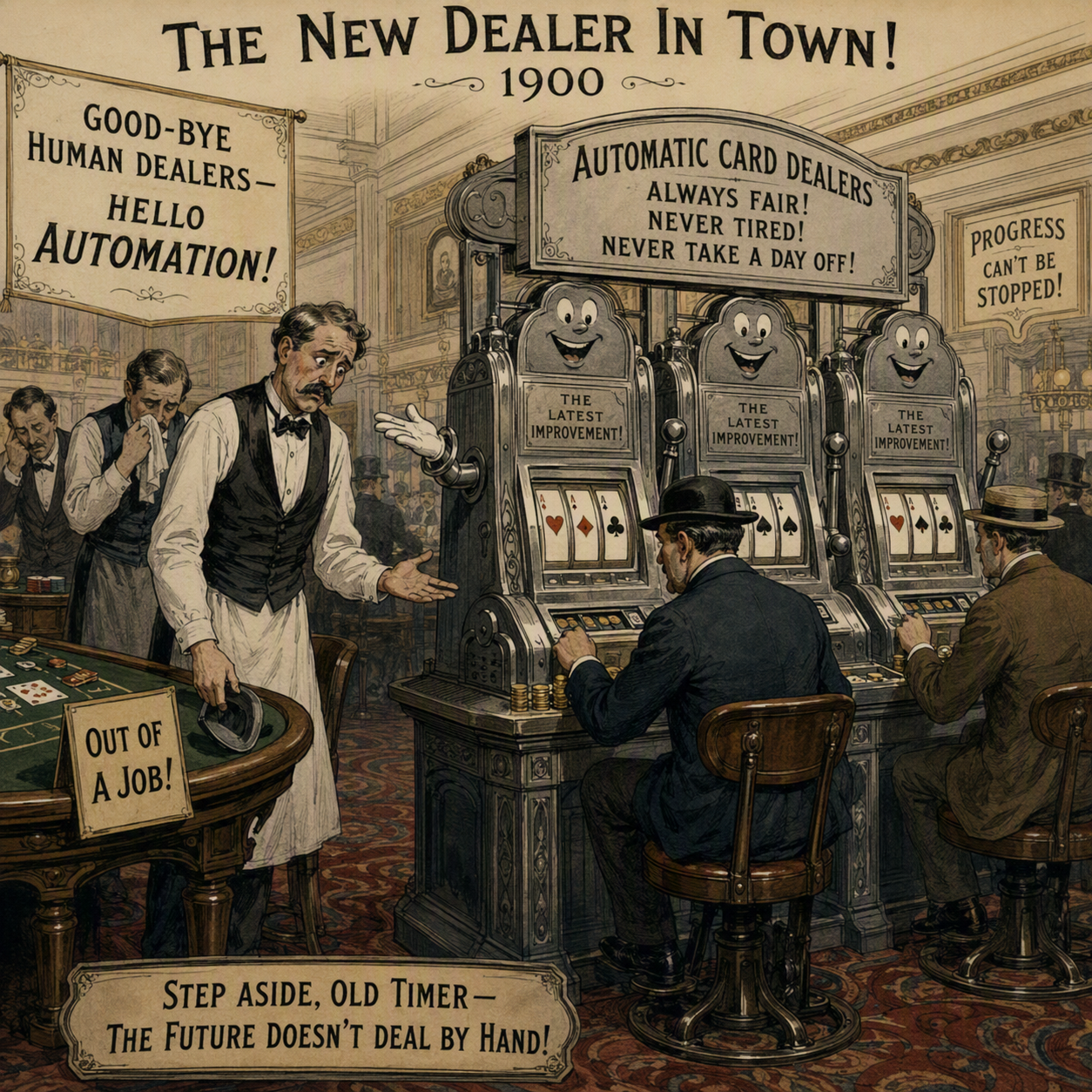
Slots replaced dealers
The invention of the slot machine is the exact historical moment where gambling shifted from a social, human-to-human activity into an automated, psychological trap engineered to exploit the human brain.
Before the slot machine, gambling required human dealers, cards, and opponents, which naturally limited how fast someone could play. The slot machine removed the human element entirely, creating a frictionless loop of instant gratification.
The start was not without problems
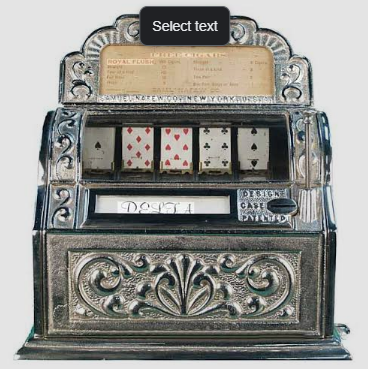
In 1891, a company named Sittman and Pitt in Brooklyn, New York, created a primitive gambling machine that became a massive hit in local bars.
The Mechanism: It featured five spinning drums containing a total of 50 playing card faces. A player inserted a nickel and pulled a lever to spin the cards, hoping to land a winning poker hand.
The Predatory Hack: To ensure the house had a massive, unfair advantage, the creators physically removed two cards from the drums – the Ten of Spades and the Jack of Hearts. This silently cut the odds of a player hitting a Royal Flush in half. Furthermore, the machine could not pay out cash automatically; players had to go to the bar to collect prizes like a free beer or a cigar.
Charles Fey’s Liberty Bell
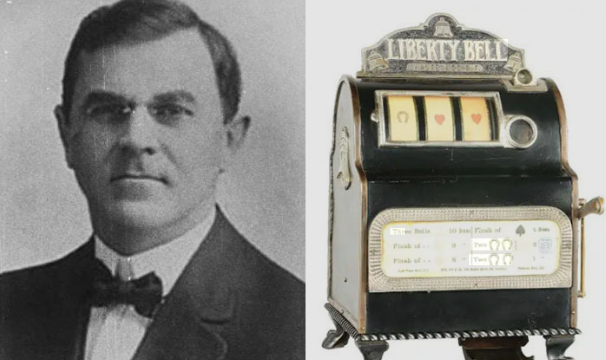
A German immigrant and mechanic living in San Francisco named Charles Fey revolutionized the concept in 1895. He realized that if a machine could pay out actual cash instantly without a bartender’s intervention, people would play much faster and more impulsively.
The Design: Fey reduced the five drums to three spinning reels and replaced the complex playing cards with just five simple symbols: horseshoes, diamonds, spades, hearts, and a cracked Liberty Bell.
The Payout: Lining up three Liberty Bells triggered the ultimate jackpot: 50 cents (10 nickels), which the machine automatically clanked out into a metal tray.
The Birth of the “One-Armed Bandit”: The machine was an overnight sensation. Because it was operated by a single iron lever on the side – and because it effectively “robbed” players of their money over time – it earned the permanent historical nickname the “One-Armed Bandit.”
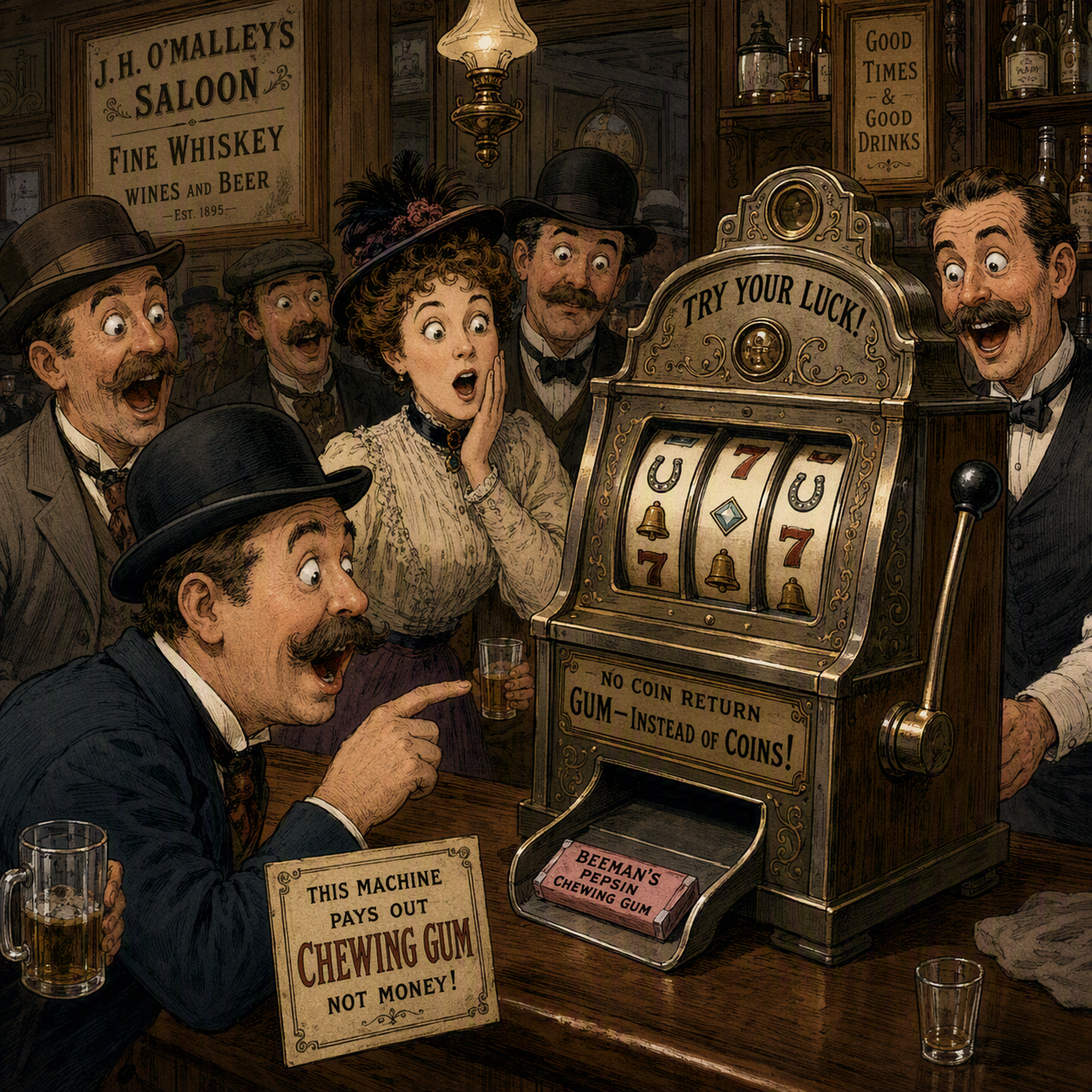
Chewing Gum is more acceptable it seems
Even in their raw, mechanical infancy, these early machines accidentally stumbled upon the exact psychological triggers that modern neuroscience now studies:
The Variable-Ratio Schedule of Reinforcement: Pioneered behaviourist B.F. Skinner later proved that the most addictive way to reward a brain is through unpredictable randomness. If a machine pays out on a predictable schedule, the brain loses interest. If the payouts are entirely random, the brain becomes obsessed with the possibility that the very next pull will be the big win. Fey’s mechanical reels executed this perfectly.
The Illusion of Physical Skill: The presence of the physical lever gave players a false sense of control. Addicts genuinely believed that how they pulled the lever—hard, soft, or with a certain rhythm—could influence where the gears inside stopped, feeding the exact “illusion of control” cognitive distortion treated in CBT.
The “Fruit Machine” Re-brand: When moral crackdowns and religious groups successfully got cash-paying slot machines banned in various US states in the early 1900s, manufacturers adapted predatorily. They replaced the card suits with fruit symbols (cherries, lemons, plums) and the “BAR” logo (originally the logo of the Bell-Fruit Gum Company). Instead of cash, the machines paid out fruit-flavoured chewing gum matching the symbols landed. This brilliant pivot disguised a gambling device as a harmless candy dispenser, introducing the concept to an entirely new, younger demographic.
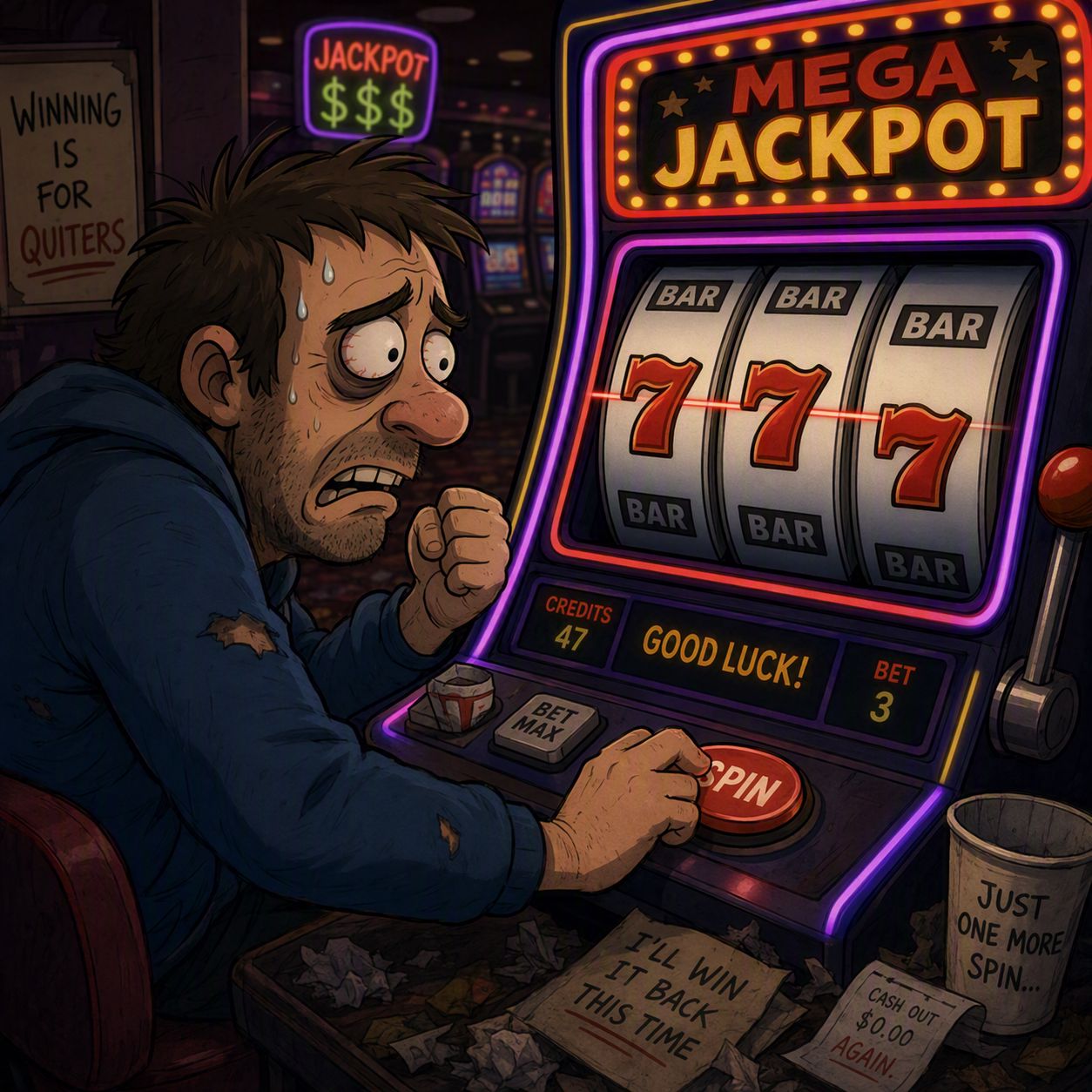
Almost, but not quite, keeps them coming
If Charles Fey’s mechanical machine was a predatory trap, the electronic slot machines that emerged in the late 20th century became psychological stealth weapons.
Today, mechanical reels are entirely gone, replaced by computerised screens driven by a Random Number Generator (RNG). This allowed designers to invent the modern mechanics of addiction we discussed earlier: “Near Misses” (programming the digital reel to display a jackpot symbol just millimetre above the payline to spark a dopamine rush) and “Losses Disguised as Wins” (using flashing lights and celebratory audio cues to make a player feel like they won, even when they just lost money on a multi-line bet).
From the moment Charles Fey built his workshop in San Francisco, the goal of the slot machine has remained unchanged: to extract the maximum amount of money in the shortest period of time by capitalizing on the flaws of human brain wiring.
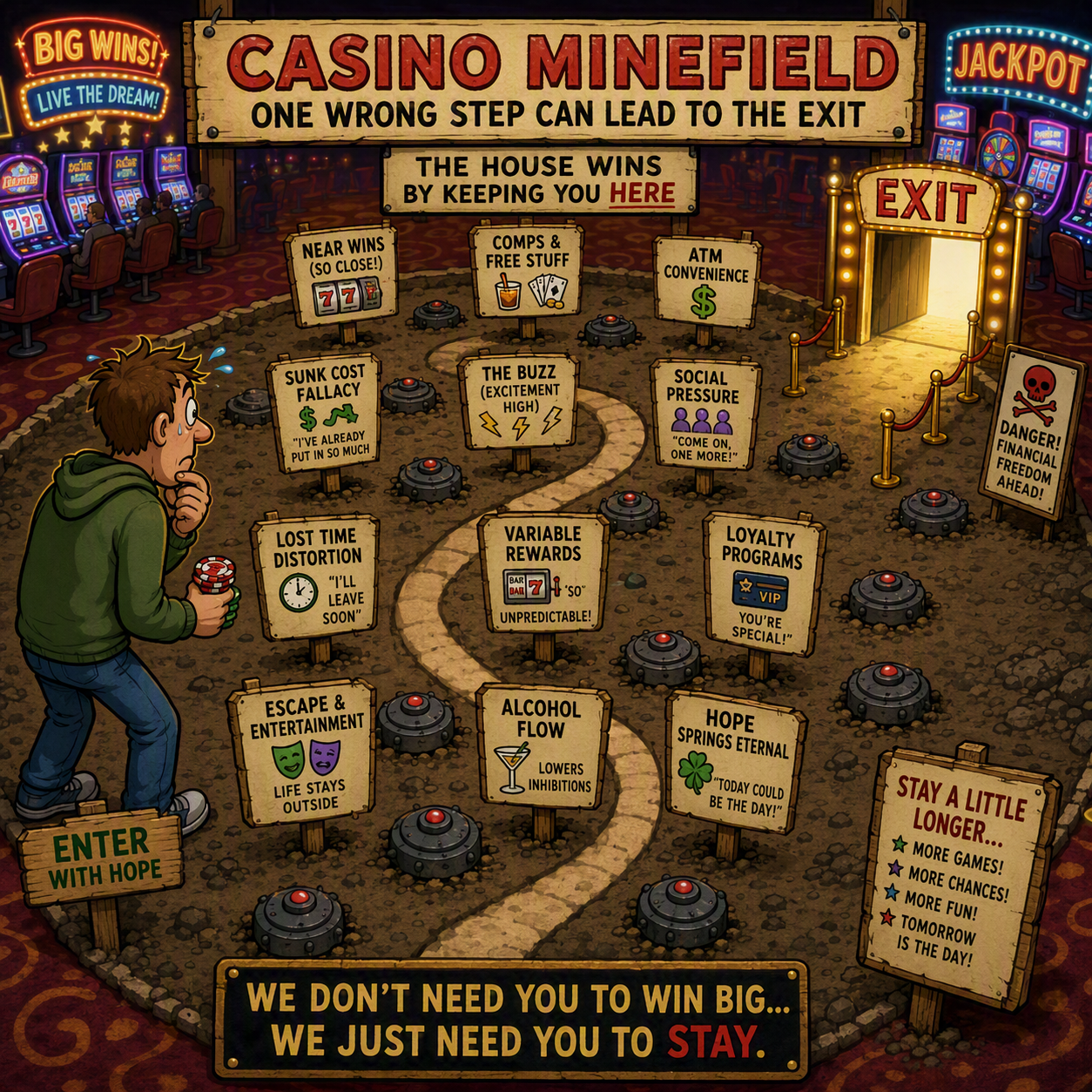
Casinos are minefields
The study of casino floor layout is an exact science that has undergone a massive ideological shift. Historically, casinos relied on psychological traps to keep people playing, but modern resorts use sophisticated luxury to achieve the exact same goal.
The evolution of casino architecture is defined by two competing design philosophies that dictate exactly how players are manipulated on the gaming floor.
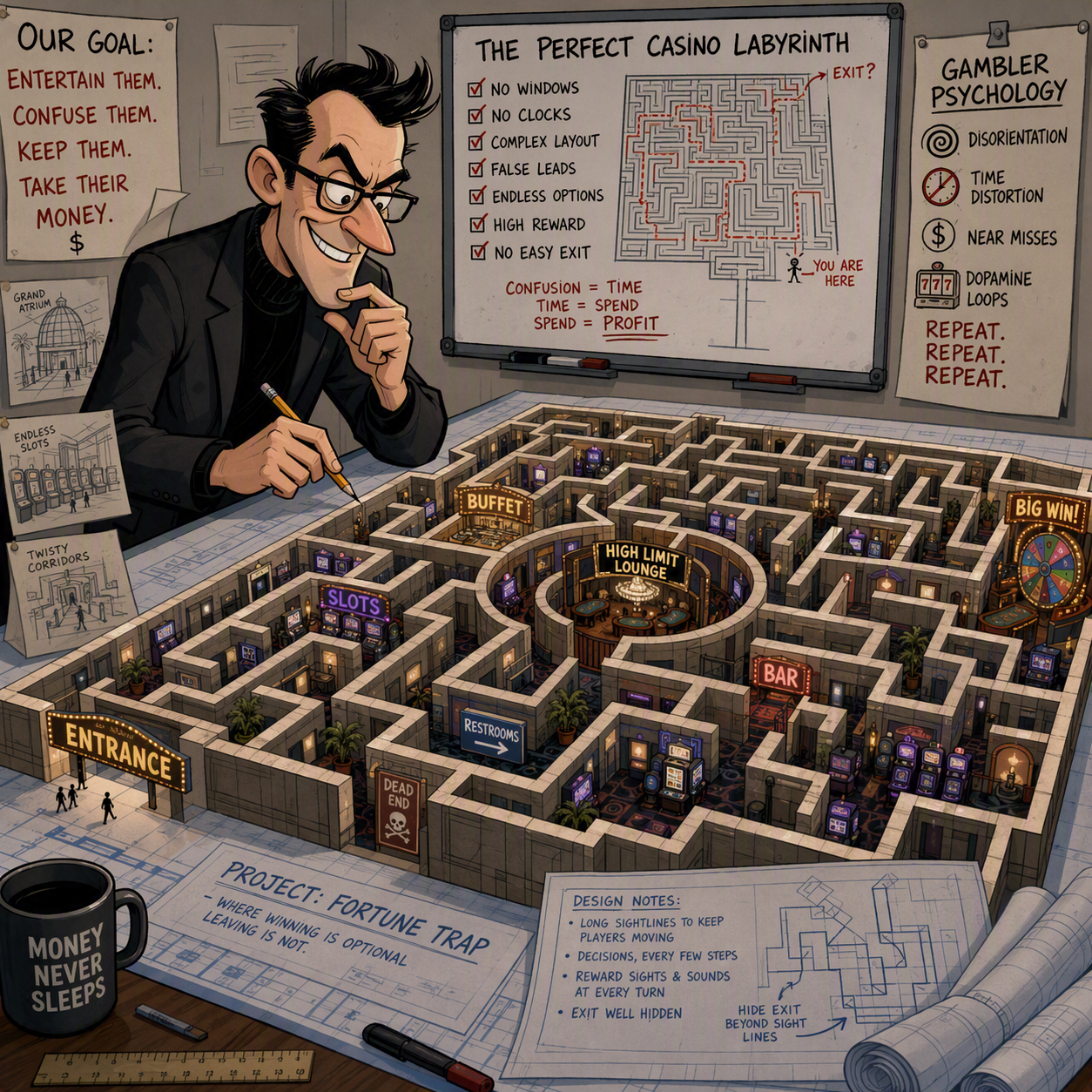
The labyrinth
For decades, the dominant blueprint for casino architecture was created by Bill Friedman, a recovering gambling addict turned professor of casino management. Friedman’s design was built on a dark, cynical premise: disorient the player so thoroughly that they cannot find the exit, forcing them to stay and gamble.
Friedman’s design rules included:
The Labyrinth Effect: Passageways were narrow, winding, and completely indirect. A player trying to walk to the restroom or the exit would be funnelled in a zigzag pattern past hundreds of flashing slot machines. Exits were intentionally obscured from view.
The Low-Ceiling Trance: Ceilings were kept intentionally low and featureless. This trapped sound, created a highly intense “collective hum” of slot machines, and made the space feel compact and intensely focused on the equipment.
The Timeless Bubble: This era popularized the total banishment of windows and clocks. By completely cutting off the outside world, players experienced “ego depletion” and lost track of whether it was 2:00 PM or 2:00 AM, keeping them glued to their seats.
Immediate Entry: The moment a guest stepped through the front door or off the hotel elevators, they hit slot machines within 10 feet. There was no transitional space.
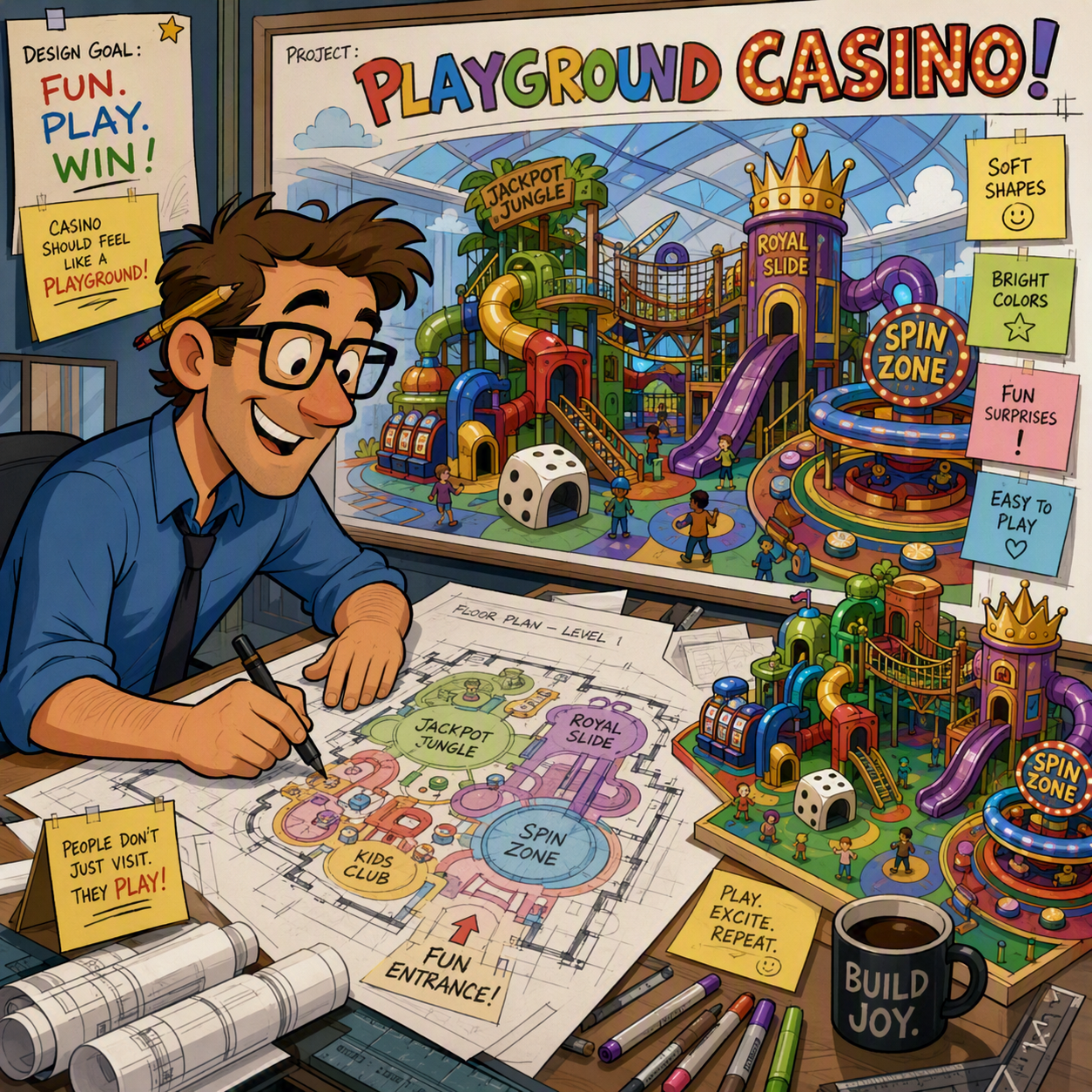
The playground
In the late 1990s, legendary casino designer Roger Thomas (hired by mogul Steve Wynn to build The Mirage and The Bellagio in Las Vegas) completely shattered Friedman’s rules. Thomas discovered a profound psychological breakthrough: disoriented, anxious people hold onto their money tightly, whereas relaxed, happy people take massive financial risks.
Modern casino design relies on an upscale “playground” approach to maximize player comfort:
Soaring Ceilings and Natural Light: Modern casinos feature massive, ornate ceilings, skylights, and even windows. The open, breezy air makes players feel liberated and comfortable, allowing them to take breaks without feeling physically drained.
The Freedom Delusion: Instead of hiding the exits, modern casinos make pathways wide, legible, and easy to navigate. This gives players a false sense of absolute freedom and control. Paradoxically, because they feel safe and un-trapped, they end up staying longer and spending more money.
Anesthesia of Luxury: The decor is hyper-luxurious, filled with expensive European art, moving water features, and fresh botanical conservatories. Psychological research shows that this atmosphere acts as an “anesthesia to dull losses.” When a player loses $500 in a glamorous room that looks like a royal palace, the loss hurts less than it would in a cramped, dark alley.
The “Spoke and Hub” Machine Clusters: Slot machines are no longer arranged in endless, rigid rows like a grocery store aisle. Instead, they are arranged in small, circular clusters. This gives players 360-degree sightlines, privacy from passersby (which particularly makes women feel more comfortable playing), and an intimate, cozy micro-environment.
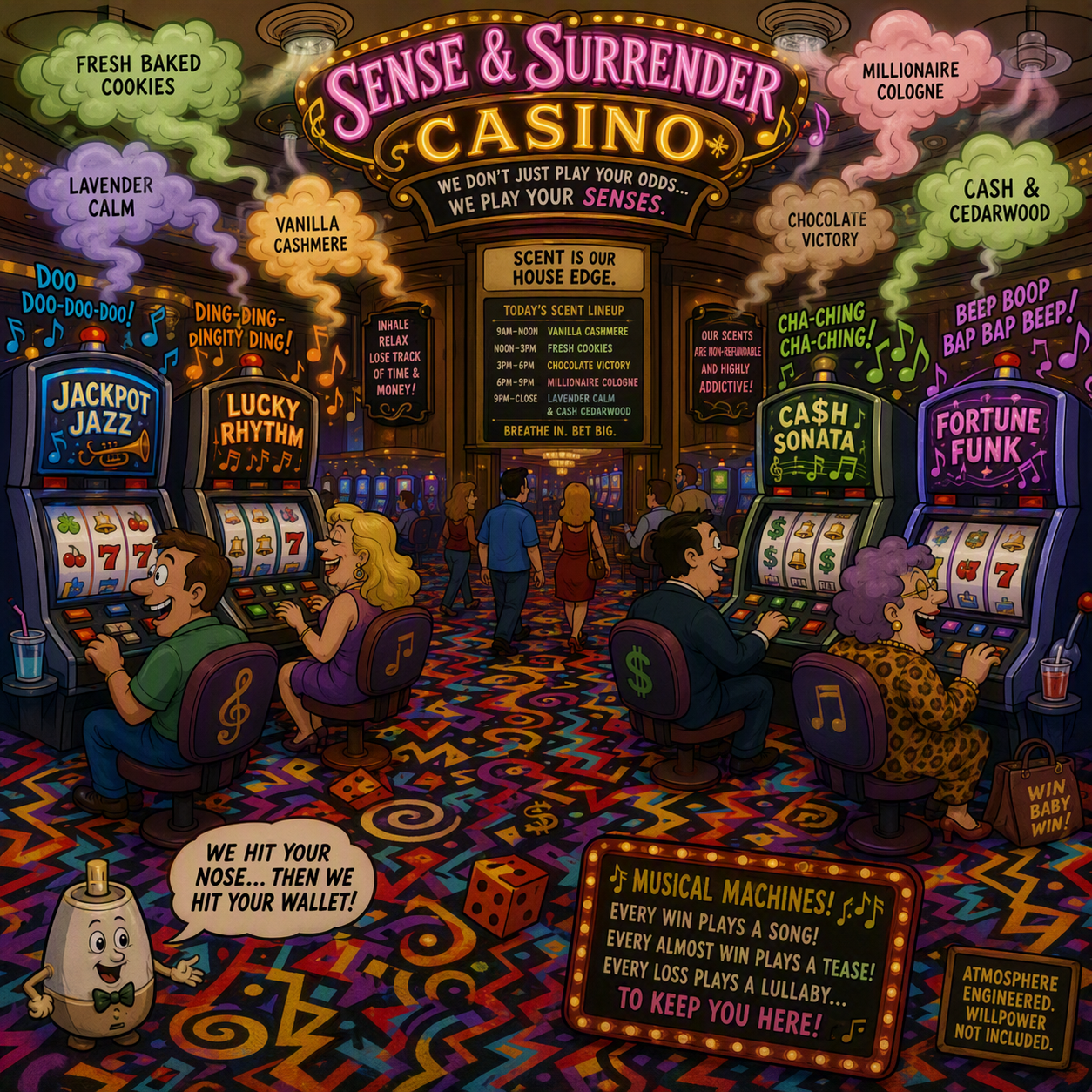
Casino seduction
While the physical floor plan changed from a maze to a playground, the sensory manipulation became incredibly high-tech. Modern casino floors are engineered down to the molecular level:
Scent Seduction: Casinos pump proprietary, ultra-expensive floral scents directly through their HVAC ventilation systems. This entirely masks the smell of stale tobacco and chemically triggers a sense of cleanliness and luxury. Wynn casinos, for instance, famously use a signature scent called “Asian Lily.”
The Chaotic Carpet: Casino carpets are notoriously famous for having wildly busy, loud, and seemingly hideous patterns. This serves a brilliant dual purpose. Practically, the busy geometric lines completely hide stains, dirt, and wear from millions of tourists. Psychologically, the chaotic visual patterns keep a person’s eyes tilted upward toward the brightly lit, beautifully glowing slot machines and table games.
The Sound Matrix: The auditory environment is heavily curated. Slot machines are tuned to a specific musical scale (usually C major) so that when dozens of machines are paying out simultaneously, they never create a discordant, annoying noise. Instead, they blend into a harmonious, celebratory soundscape that tricks the subconscious brain into believing that everyone in the room is constantly winning.
Whether a casino uses the old-school claustrophobic maze or the modern hyper-luxurious playground, the underlying mechanism remains a space designed to completely lower your psychological defences and encourage a vulnerable brain to play
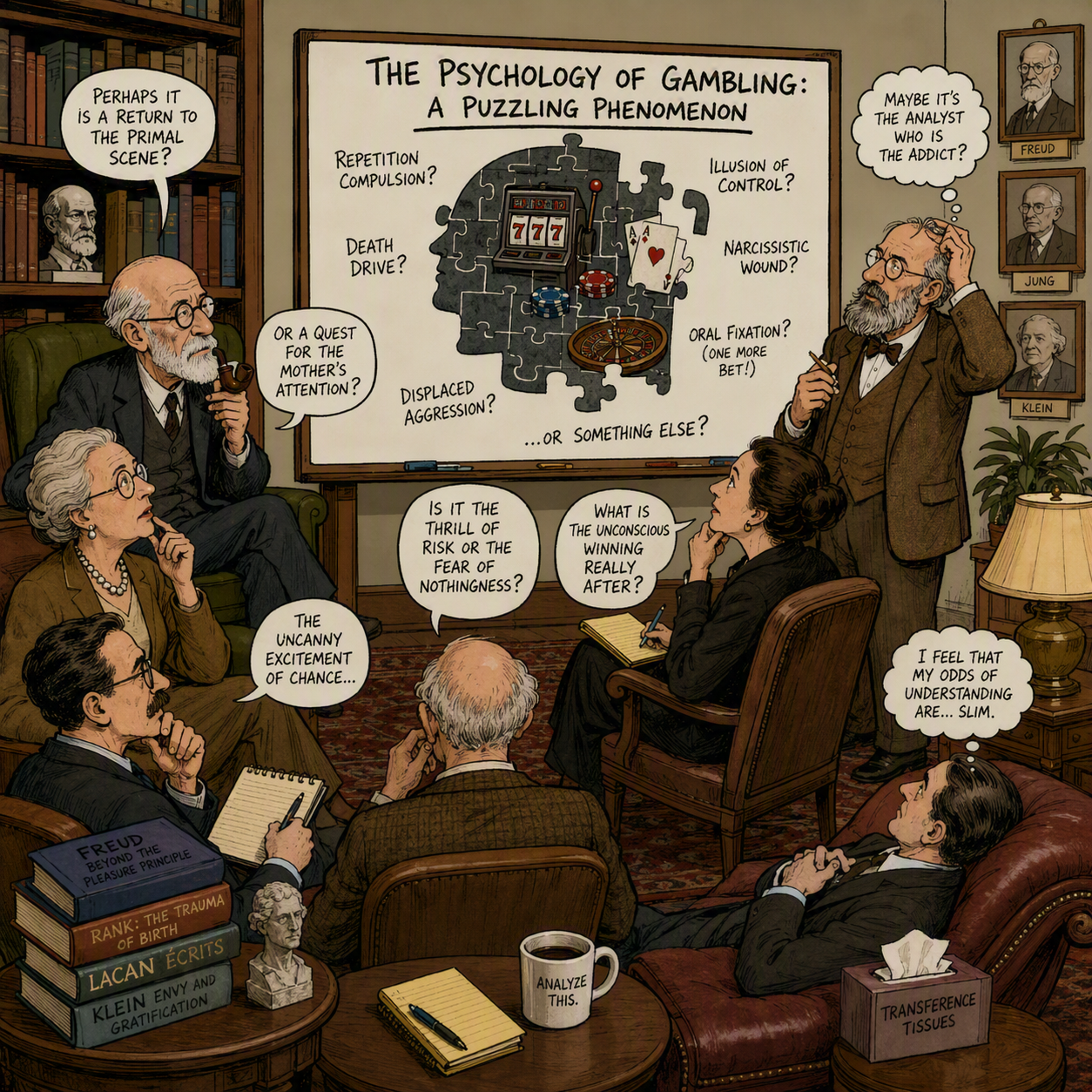
What is it all about?
Following Freud’s initial 1928 essay, several prominent psychoanalysts, psychiatrists, and researchers expanded on the psychological analysis of gambling. As legalised gambling spread in the mid-20th century, the focus shifted from purely theoretical ideas to clinical observations and structured treatments.
The most influential figures who analysed gambling and its effects after Freud include:

Edmund Bergler
Austrian-American psychoanalyst Edmund Bergler is widely considered the most important figure in early gambling psychology. While Freud only wrote one theoretical paper on the topic, Bergler actually treated dozens of compulsive gamblers and published the definitive 1957 book, The Psychology of Gambling.
The Six Characteristics: Bergler was the first to establish a diagnostic criteria for what he called the “neurotic gambler,” noting that they always take irrational risks, experience a “thrill” that is a mixture of pleasure and pain, and always believe they will eventually win.
Rebellion Against Reality: While Freud blamed the Oedipus complex (the father), Bergler traced gambling back to early childhood. He argued that infants feel “omnipotent” (all-powerful). As they grow, parents force them to accept the rules of reality. Bergler believed the gambler is an adult rebelling against logic and authority, trying to use the casino to force “Mother Nature” or “Fate” to cater to their infantile wishes.
The “Psychic Masochist“: Bergler heavily expanded Freud’s idea that gamblers have an unconscious wish to lose. He argued that because the gambler feels subconscious guilt for rebelling against society’s rules, the only way to resolve that guilt is through the self-punishment of financial ruin.
Ernst Simmel
Writing around the same time as Freud, German psychoanalyst Ernst Simmel took a heavily clinical look at gambling addictions. Simmel argued that gambling was tied to a “narcissistic regression”. When life gets too difficult or painful, the gambler regresses to a childlike mental state where they retreat into standard fantasies of luck and magic to escape real-world responsibilities.
Robert Custer
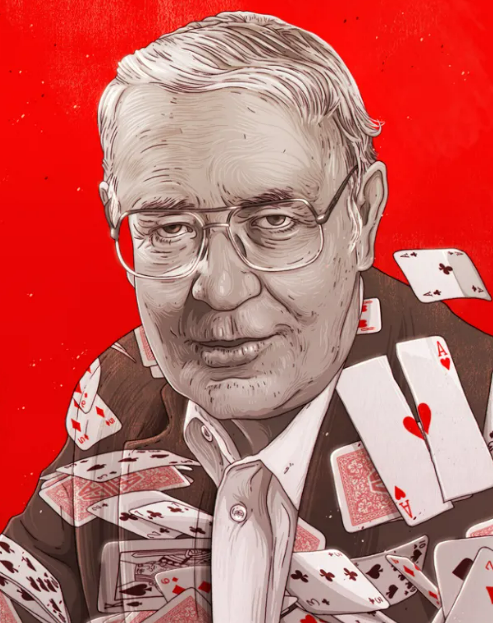
In the 1970s and 1980s, American psychiatrist Dr. Robert Custer completely revolutionized how the medical world viewed the effects of gambling. He stepped away from traditional Freudian psychoanalysis – openly rejecting the idea that gamblers “want to lose”—and reframed it through a medical and behavioural lens.
The Three Phases: Custer mapped out the actual progression of the disease: the Winning Phase (where early luck hooks the player), the Losing Phase (where they start “chasing” losses), and the Desperation Phase (which leads to financial ruin, panic, and potential criminal behaviour).
Official Recognition: Due to Custer’s extensive research and advocacy, pathological gambling was officially recognized as a legitimate mental health disorder in the DSM-III (the diagnostic manual for psychiatrists) in 1980.
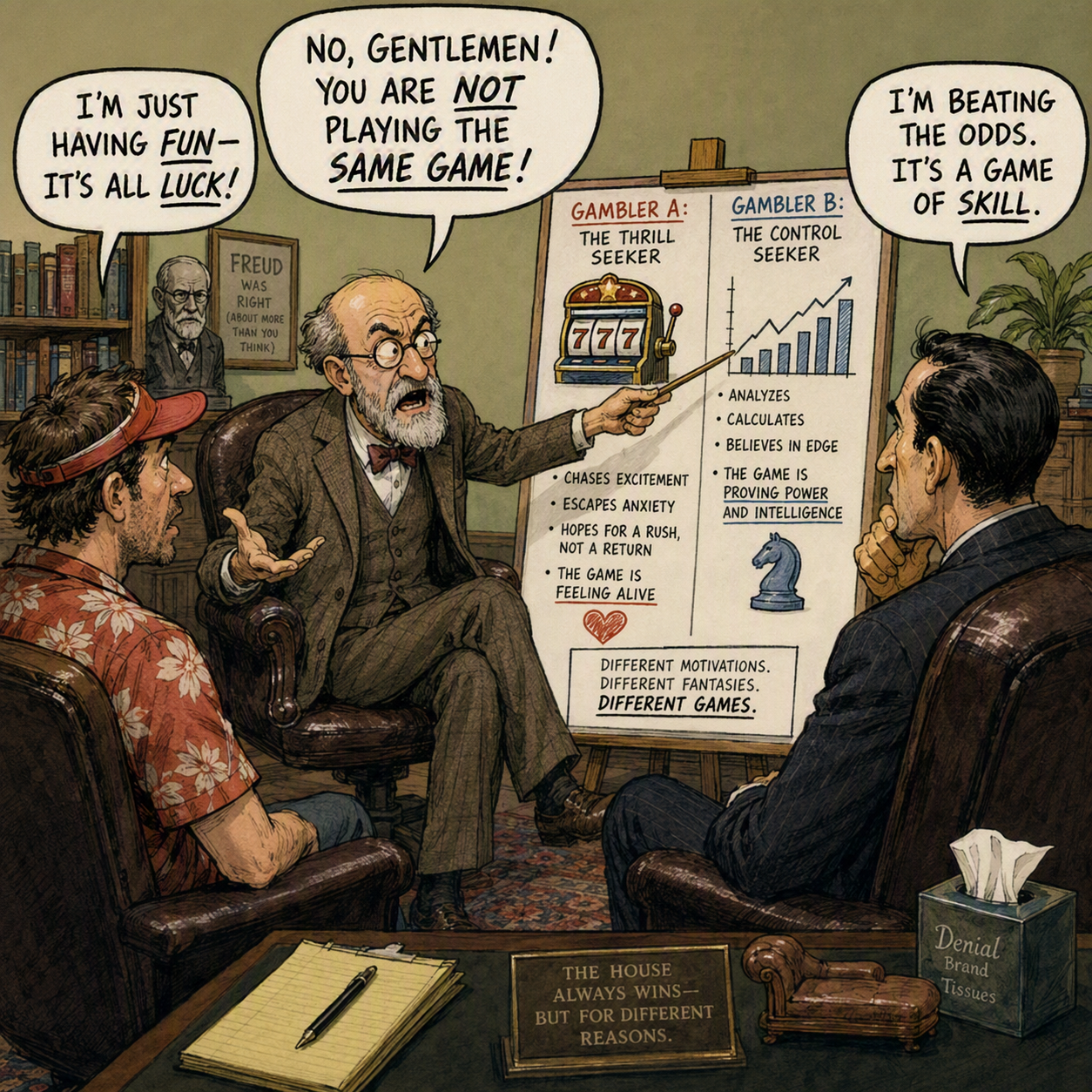
There are two types of gambler
This is all well and good, but is not really a world that I am intimately acquainted with. Most people I know gamble entirely for fun and have not experienced the problems that gambling addiction can bring. What do the learned ones have to say about that?
Well, psychoanalysts seem to draw a sharp, uncompromising line between the casual social gambler and the pathological gambler.
In his definitive 1957 work The Psychology of Gambling, Edmund Bergler argued that these two groups are not even playing the same game. To the analyst, casual gambling is an intellectual, reality-bound exercise, while pathological gambling is a regression into childhood fantasy.
The analytical distinction relies on several key psychological boundaries:
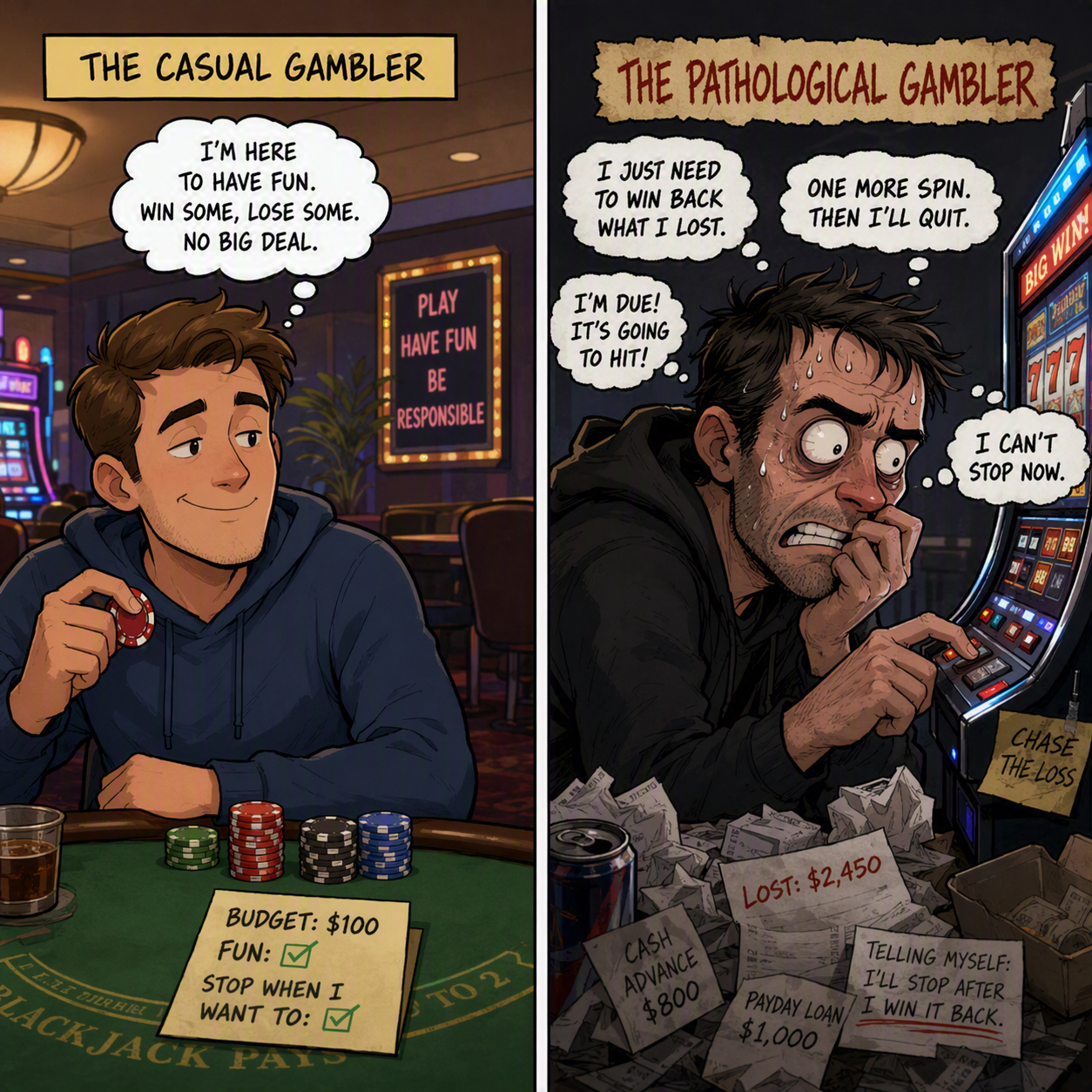
Some people actually enjoy gambling while others punish themselves
The Casual Gambler: Plays strictly for recreation, social connection, or the conscious desire to win money. If they win, they feel genuine pleasure. If they lose, they feel normal annoyance. The goal is external entertainment.
The Pathological Gambler: Plays for an intense, unconscious emotional cocktail that Bergler called a “pleasure-in-pain” mechanism. Winning is merely a temporary interruption; the true unconscious goal is the crushing relief of losing, which settles their internal psychological guilt.
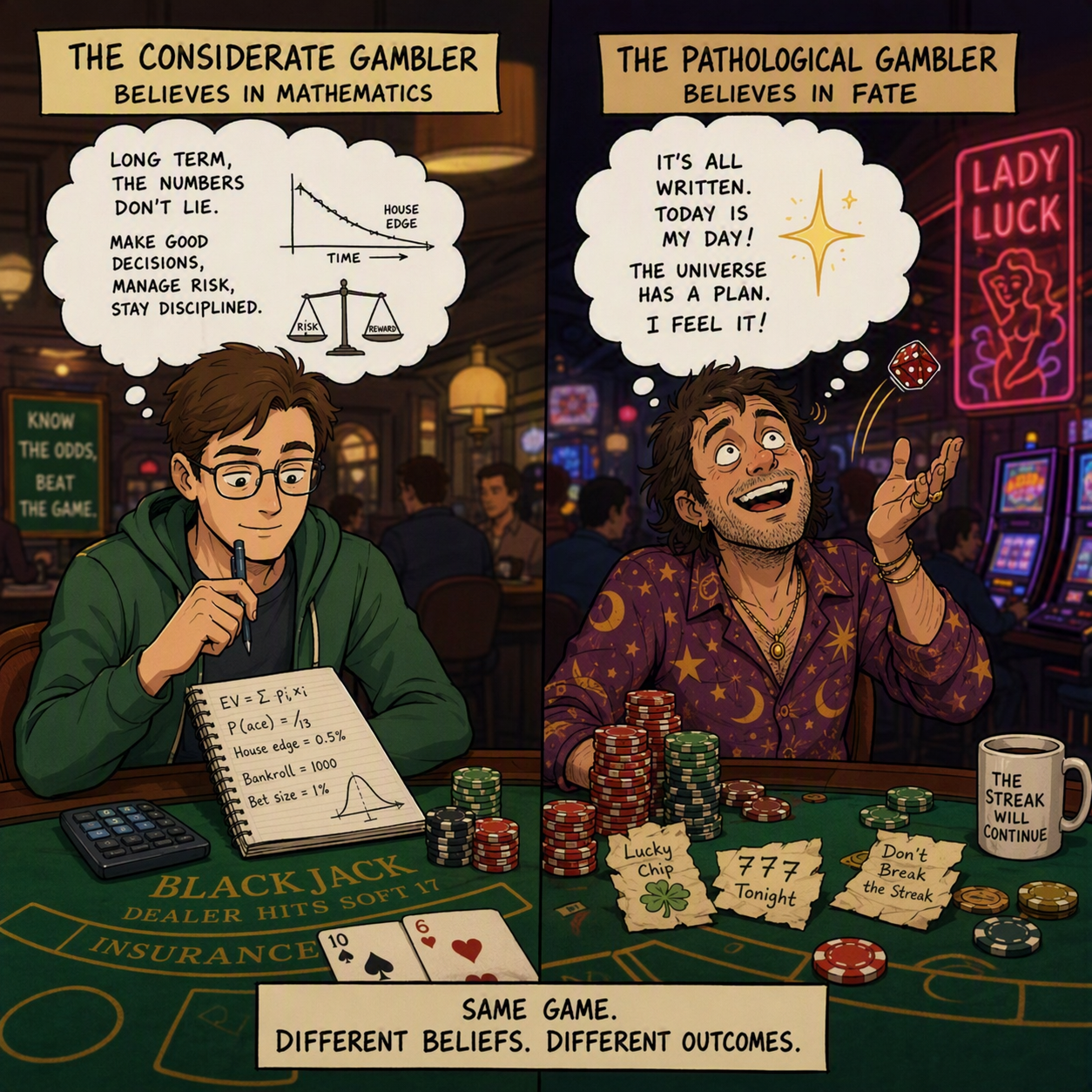
Mathematics V Fate
The Casual Gambler: Remains firmly anchored in reality and mathematics. They understand the concept of “the house edge.” They treat the casino like a movie ticket or an expensive dinner—a fixed cost for a night out.
The Pathological Gambler: Regresses to a state of infantile omnipotence. Deep down, they believe they are completely unique and that “Fate” or “Lady Luck” (which analysts view as stand-ins for parental figures) will bend the mathematical laws of the universe just for them.
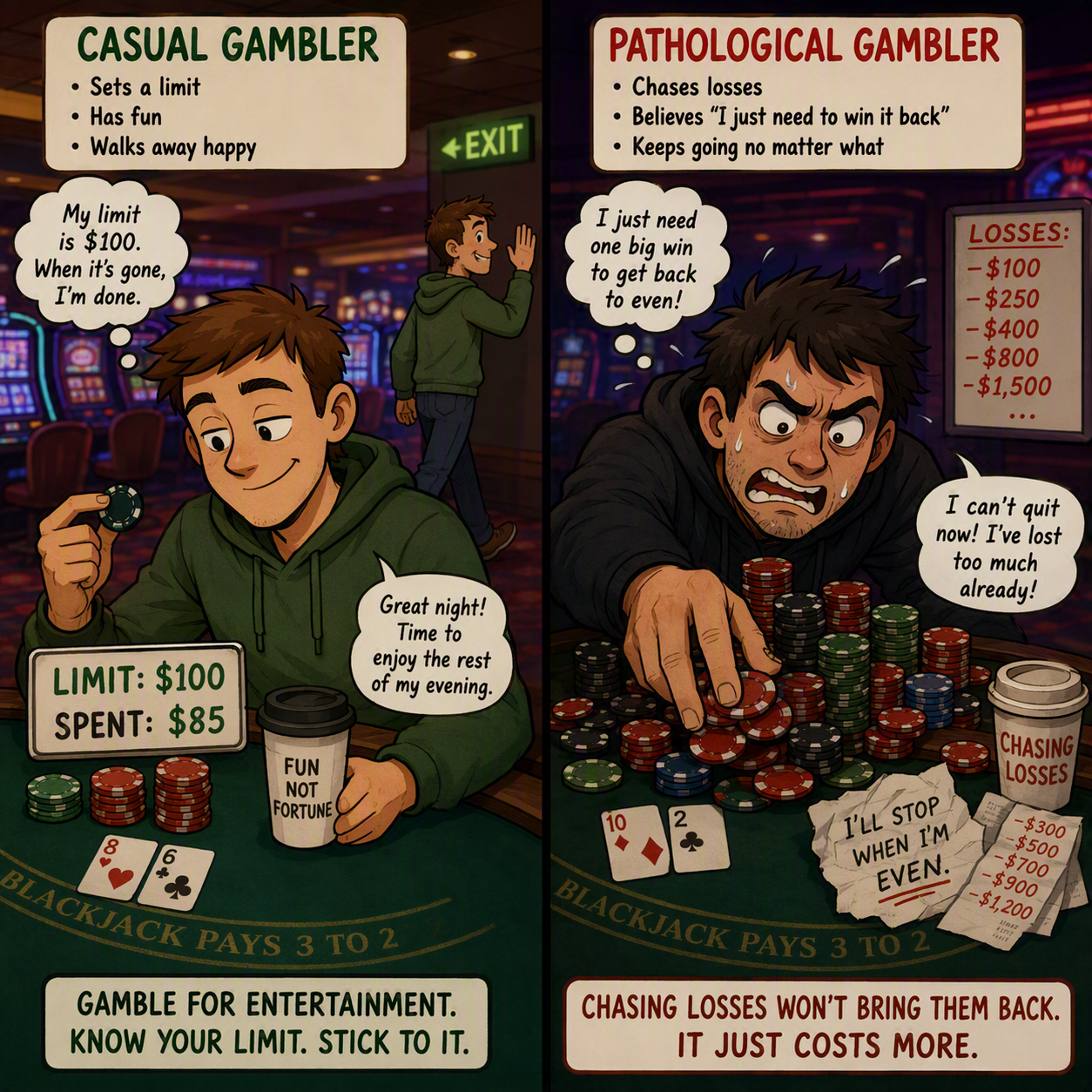
Limits or Chase Losses
The Casual Gambler: Operates with a fully functional conscious ego that regulates logic. They set a budget (e.g., $100). Once that money is gone, their internal boundary holds firm, they accept the reality of the loss, and they walk away.
The Pathological Gambler: Experiences a total breakdown of the ego when losing. Instead of walking away, they engage in “chasing losses”. Because losing wounds their infantile ego, they must immediately play again to force “Fate” to love them. This dynamic inevitably accelerates toward financial ruin.
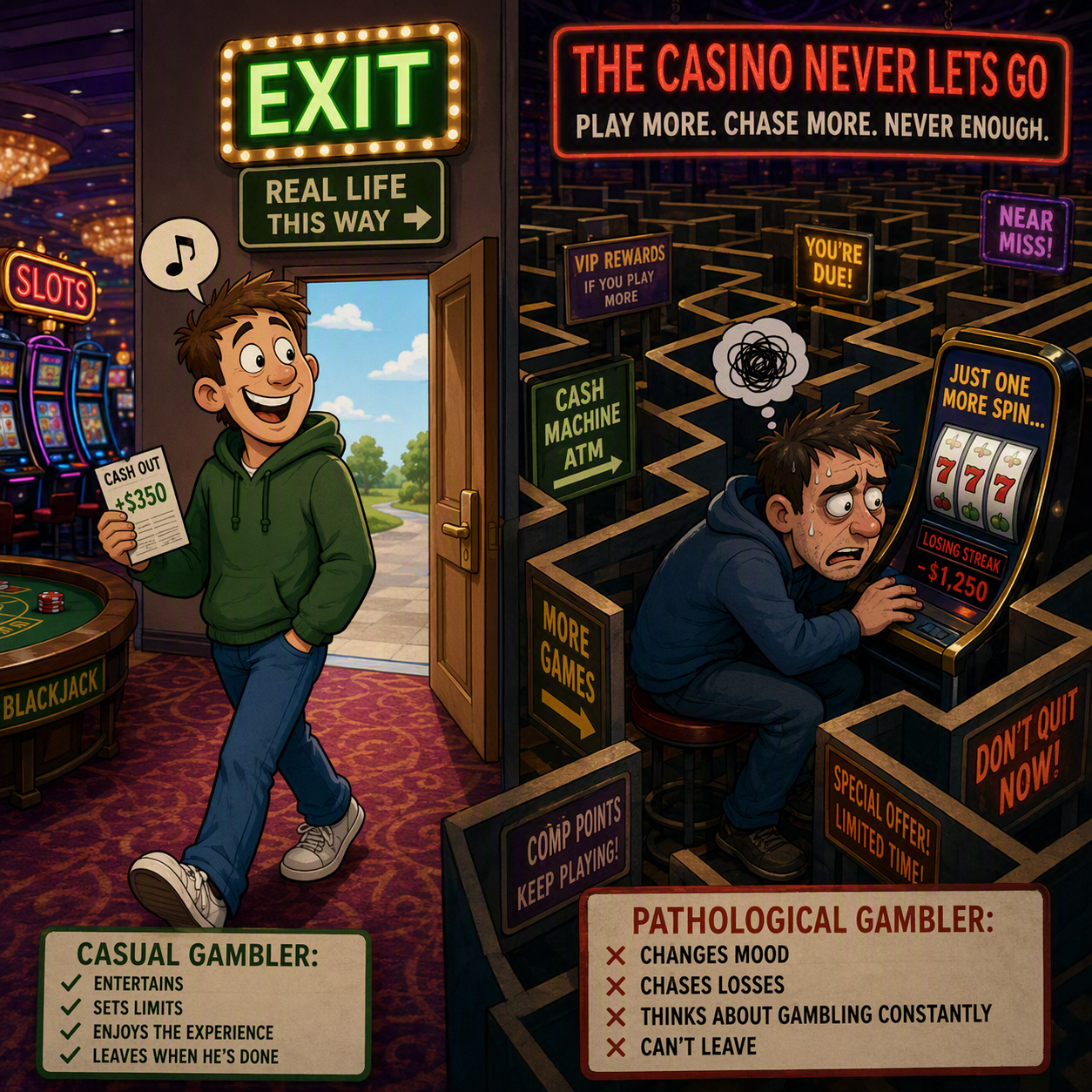
Casinos trap pathological gamblers in
Ultimately, early analysts viewed excessive gambling not as a disease caught by walking into a casino, but as a surface symptom of a deep, pre-existing neurosis.
If a healthy, well-adjusted person gambles, they are immune to the addiction because they lack the underlying pool of repressed guilt, childhood trauma, or Oedipal conflicts that the gambling mechanism feeds on. The game remains just a game. For the neurotic, however, the casino layout perfectly aligns with their inner chaos, trapping them in a cycle they cannot break.
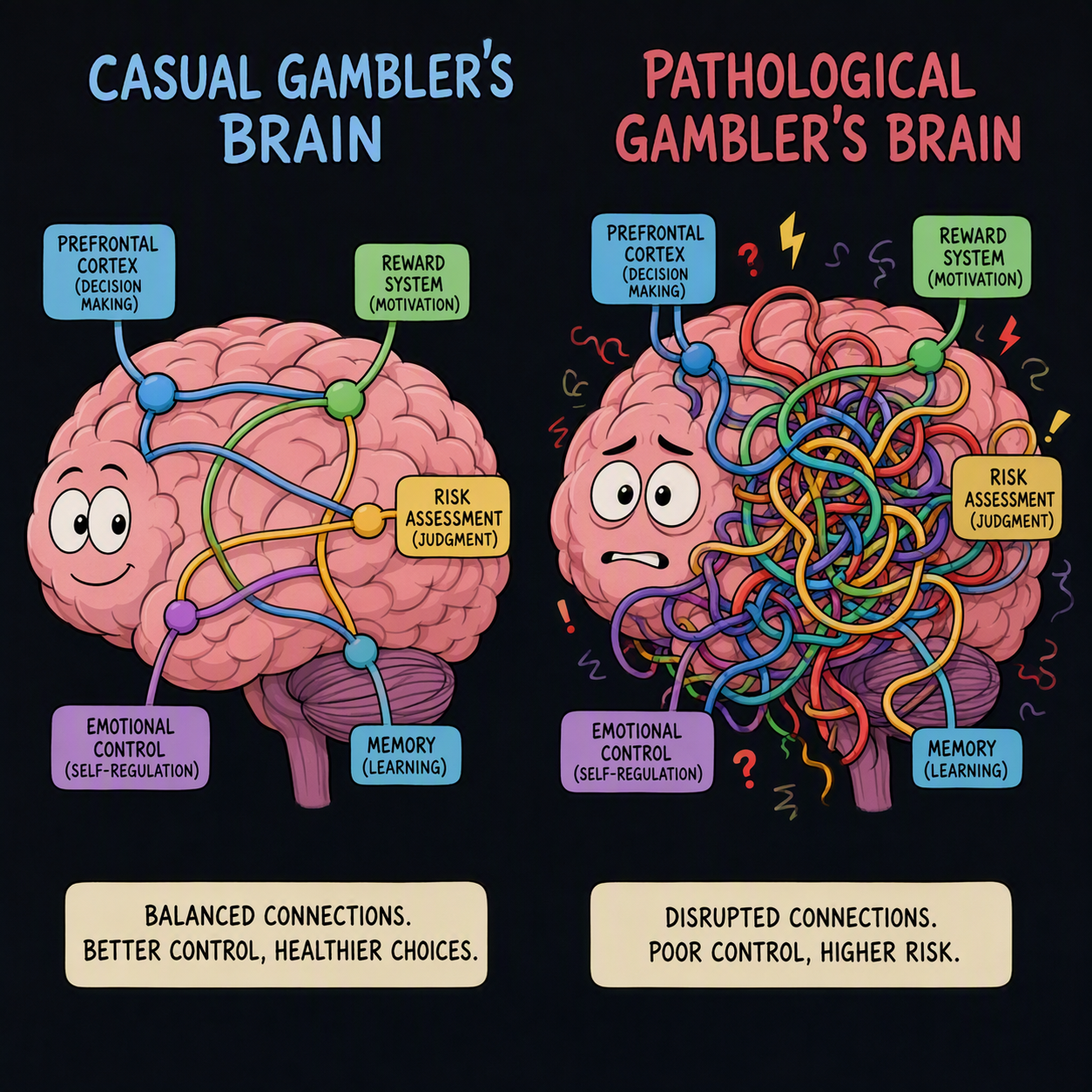
Gambler’s brains are different
So for normal well-adjusted people gambling does not represent a real problem. So why do some people and not others suffer from this gambling addiction?
To answer this, modern neuroscience defines addiction is a structural brain disease, meaning a person’s vulnerability to becoming hooked depends heavily on their baseline neural wiring. When you look under an MRI brain scanner, a compulsive gambler’s brain reacts to a slot machine payout exactly the same way a drug addict’s brain reacts to a hit of cocaine.
The line between a casual gambler and someone who gets dangerously hooked is drawn by a combination of dopamine baseline delivery and prefrontal cortex impulse control.
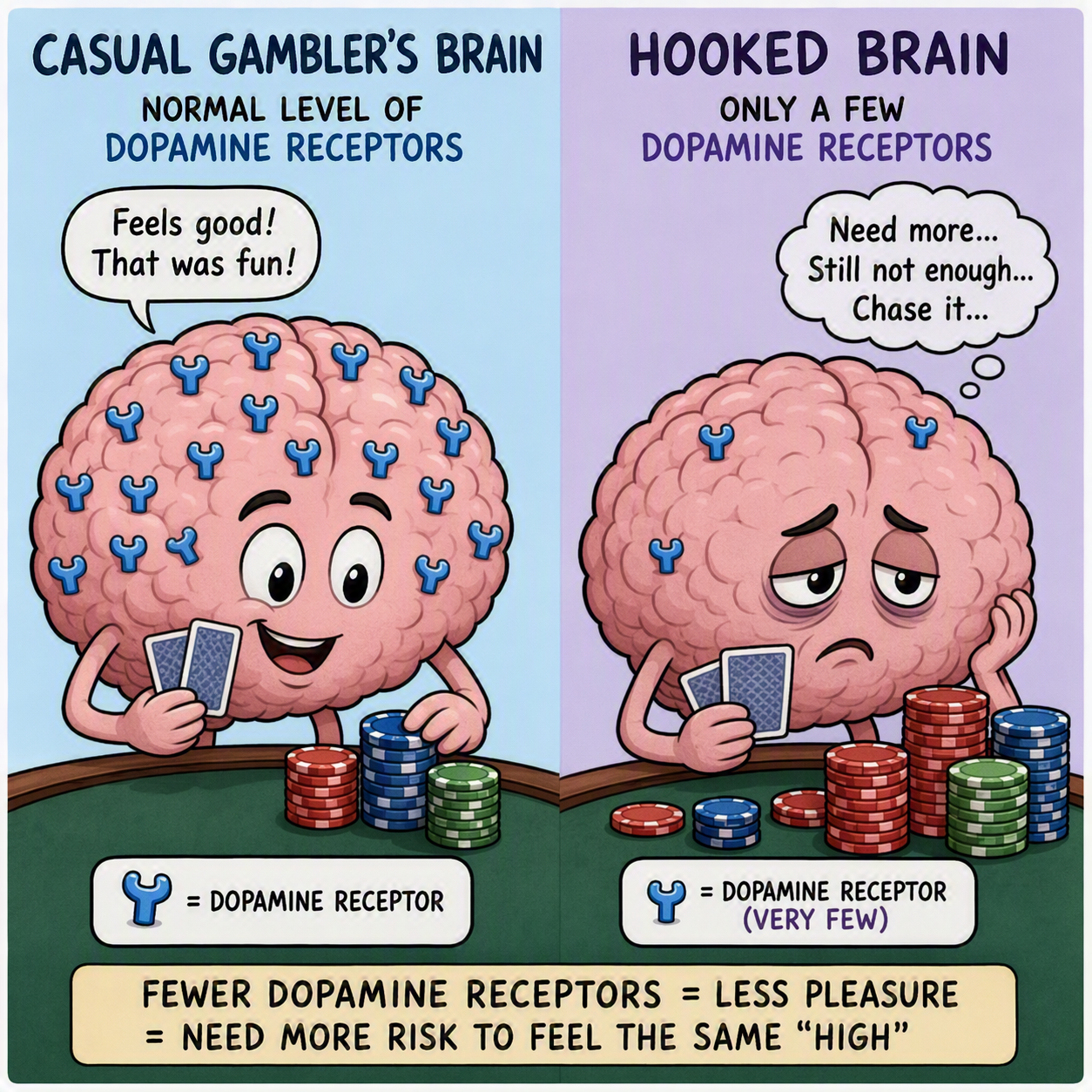
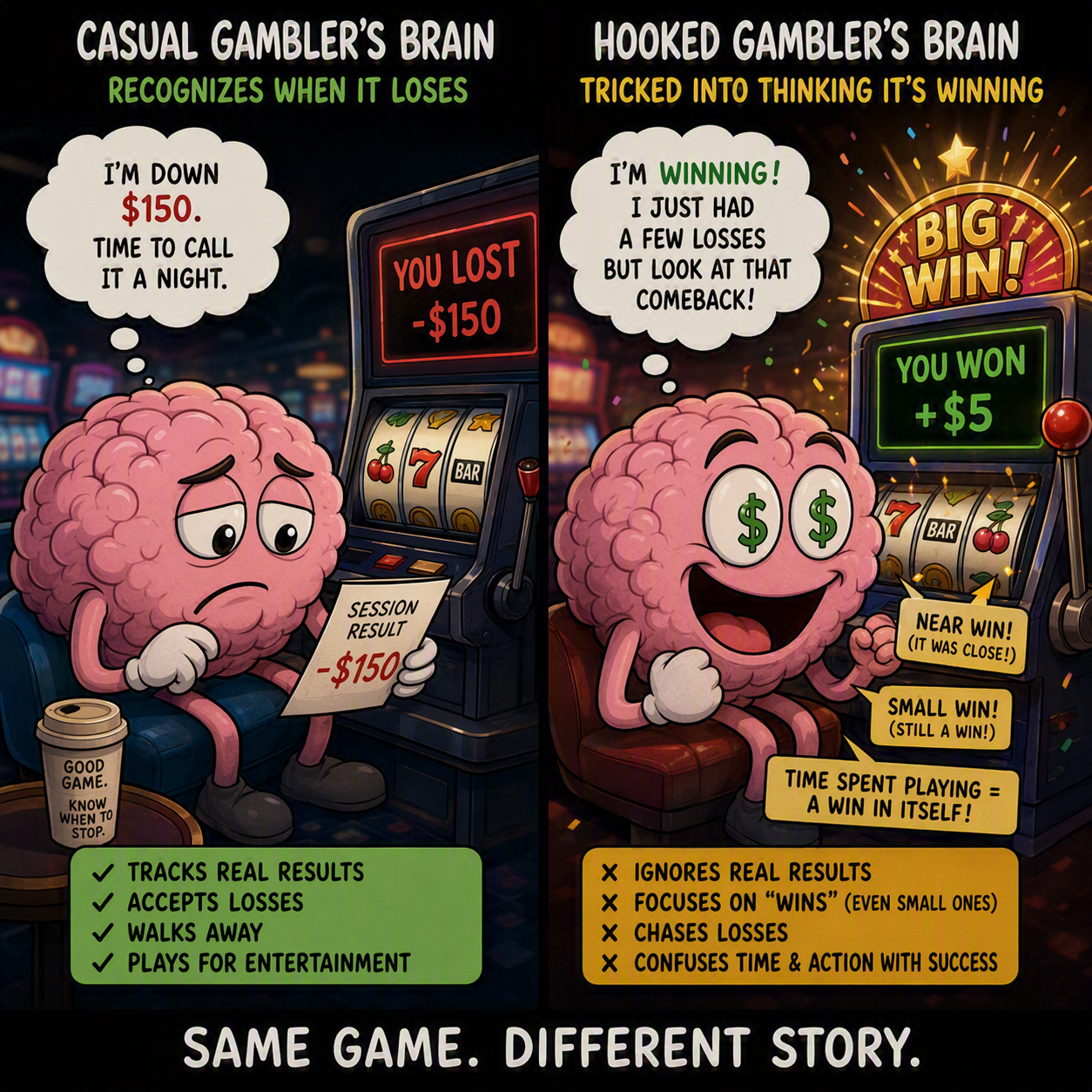
A casual gambler’s brain has more dopamine receptors
Dopamine is not the chemical of pleasure; it is the neurotransmitter of anticipation, risk, and motivation. It spikes when your brain encounters an unpredictable reward.
The Casual Brain: Has a healthy, standard amount of dopamine receptors. They experience a normal chemical spark when they win, but their brain quickly returns to baseline. Everyday activities—like a good meal, a conversation, or a movie—provide plenty of stimulation to keep them happy.
The Hooked Brain (Reward Deficiency): Many individuals born with a vulnerability to addiction have a genetic variant (such as the DRD2 gene) that gives them fewer dopamine receptors. Their baseline everyday life feels chemically “quiet” or muted. When they gamble, the unpredictable rush of winning forces a massive flood of dopamine that finally lights up their starved reward centre. Because it is the only thing that makes them feel truly alive, their brain registers it as a survival mechanism.
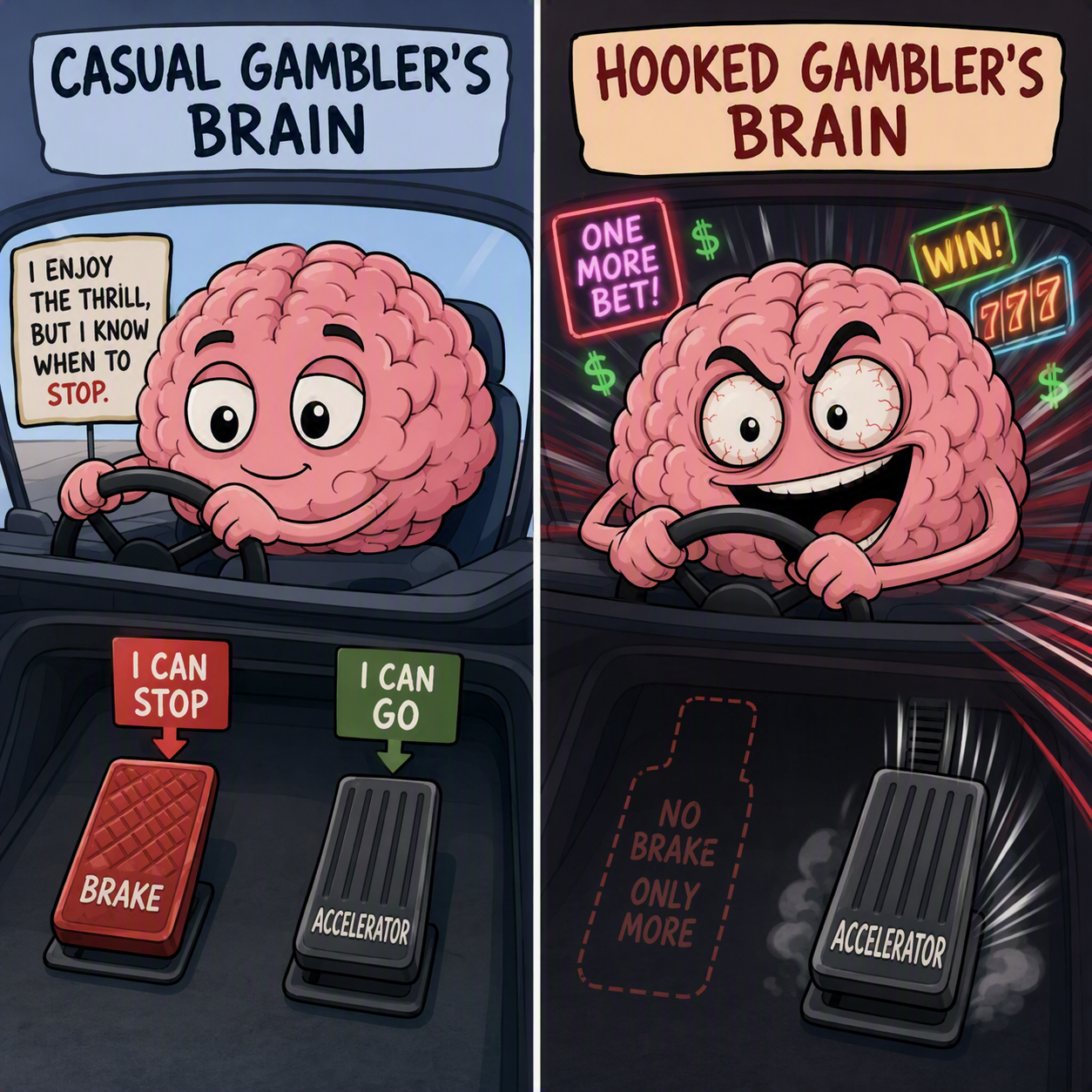
Gambling is like driving
The prefrontal cortex (PFC) is the brain’s executive control centre. It is responsible for long-term planning, measuring consequences, and slamming the brakes on risky impulses.
The Casual Brain: Has high operational connectivity between the reward system and the PFC. When a casual gambler hits their $100 loss limit, the prefrontal cortex successfully sends a commanding signal: “Stop, this is financially bad.” The impulse is silenced.
The Hooked Brain: Neuroimaging shows that problem gamblers have significantly reduced grey matter and weakened activity in the prefrontal cortex. Their “brakes” are physically worn down. Even if they logically understand that they are destroying their lives, the weakened PFC cannot stop the overactive emotional signals exploding from the deeper, survival-driven parts of the brain (the striatum and amygdala).
Casual gamblers can take a loss
Casinos and online betting apps are explicitly engineered to exploit the brain vulnerabilities of those prone to addiction:
Near Misses: When a slot machine stops just one symbol short of a jackpot, a casual gambler thinks, “I lost.” However, an addicted brain processes a near miss identically to a win, releasing a fresh wave of dopamine that demands another spin.
Losses Disguised as Wins (LDWs): If you bet $5 on a digital machine and it pays back $2 with flashing lights and celebratory sirens, you actually lost $3. A healthy prefrontal cortex calculates the net loss instantly. An addicted reward system only registers the sensory inputs and the dopamine burst, tricking the individual into feeling like they are winning.
My brain is downregulated
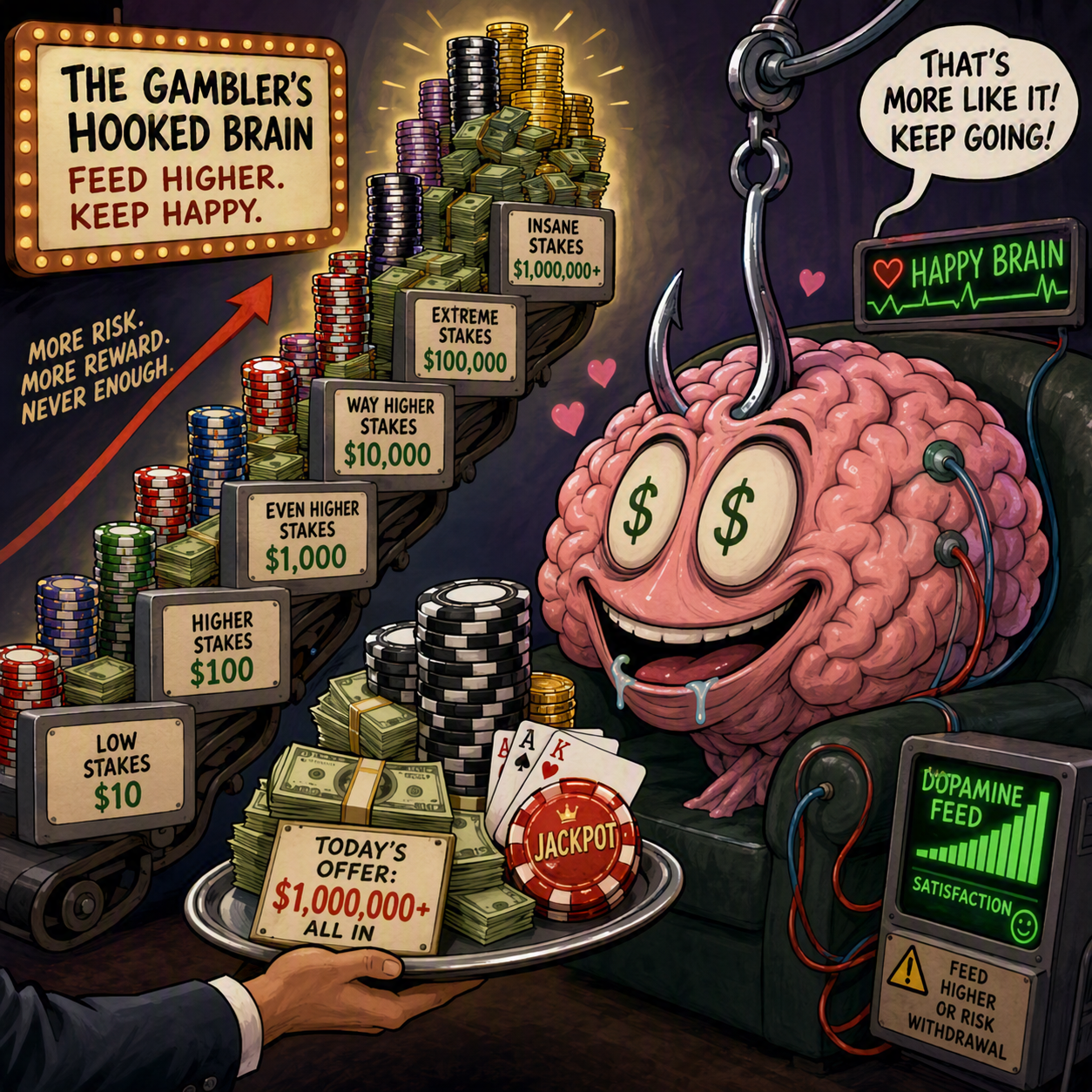
The longer a vulnerable person gambles, the worse the physical imbalance becomes. To protect itself from toxic overstimulation, the brain undergoes downregulation – it destroys even more dopamine receptors to quiet the noise.
This creates a severe tolerance. Now, the gambler needs to make increasingly massive, high-stakes bets just to feel the normal baseline buzz they used to get from small stakes. At this point, normal life feels utterly hollow, and the behaviour becomes a compulsory reflex rather than a conscious choice
Not addicted but loyal
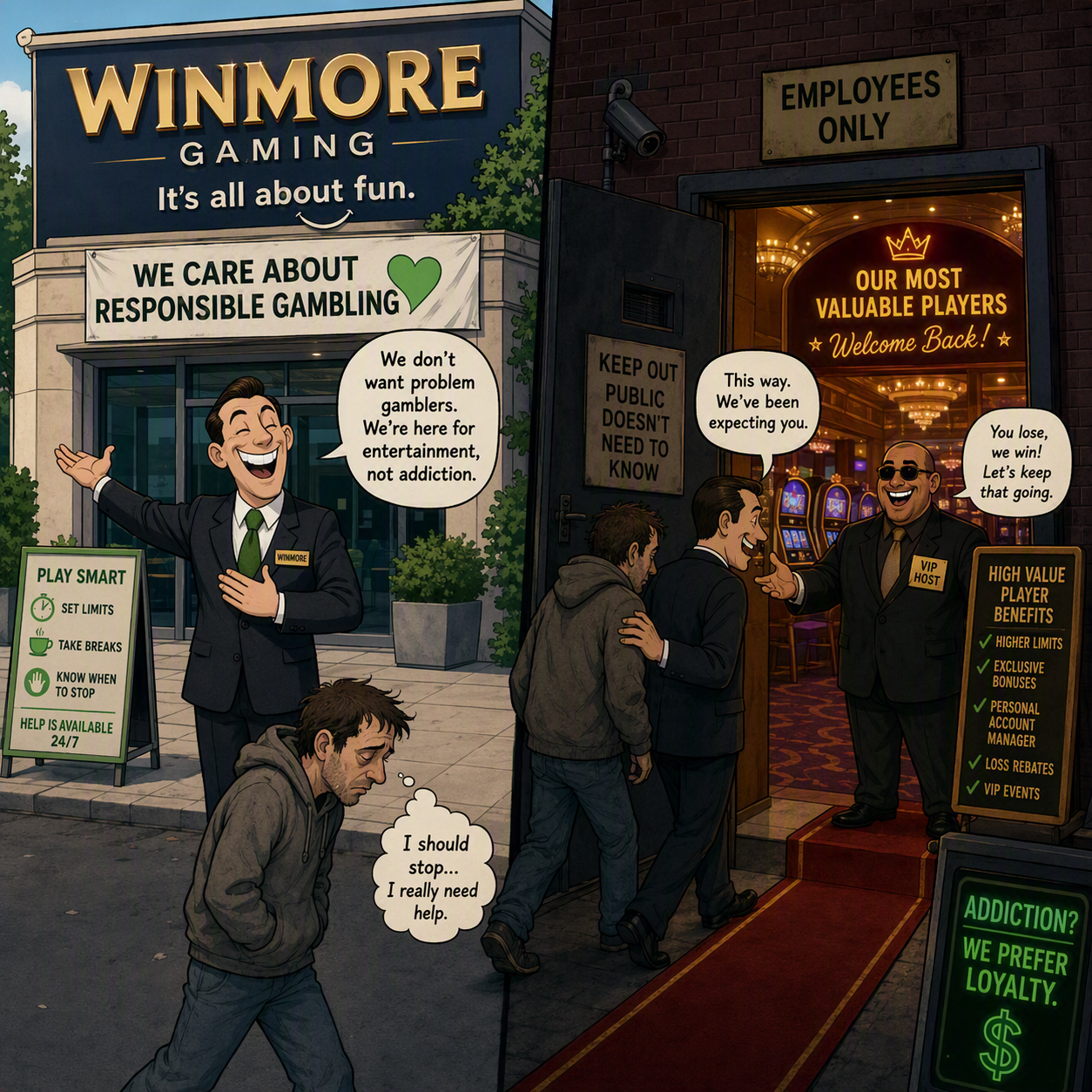
Obviously, it’s not a lot of fun being a gambling addict. An inevitable road to ruin one might say. On the other hand, the gambling industry must love these people – or not?
The “love-hate” dynamic between gambling companies and addicted players is the single biggest open secret in the modern commercial betting industry. While companies publicly advocate for “Responsible Gambling”, their actual economic survival is fundamentally intertwined with the very people who are losing control.
This corporate dilemma is defined by a clash between economic dependency and shifting regulatory crackdowns:
5% of gamblers generate 86% of revenue
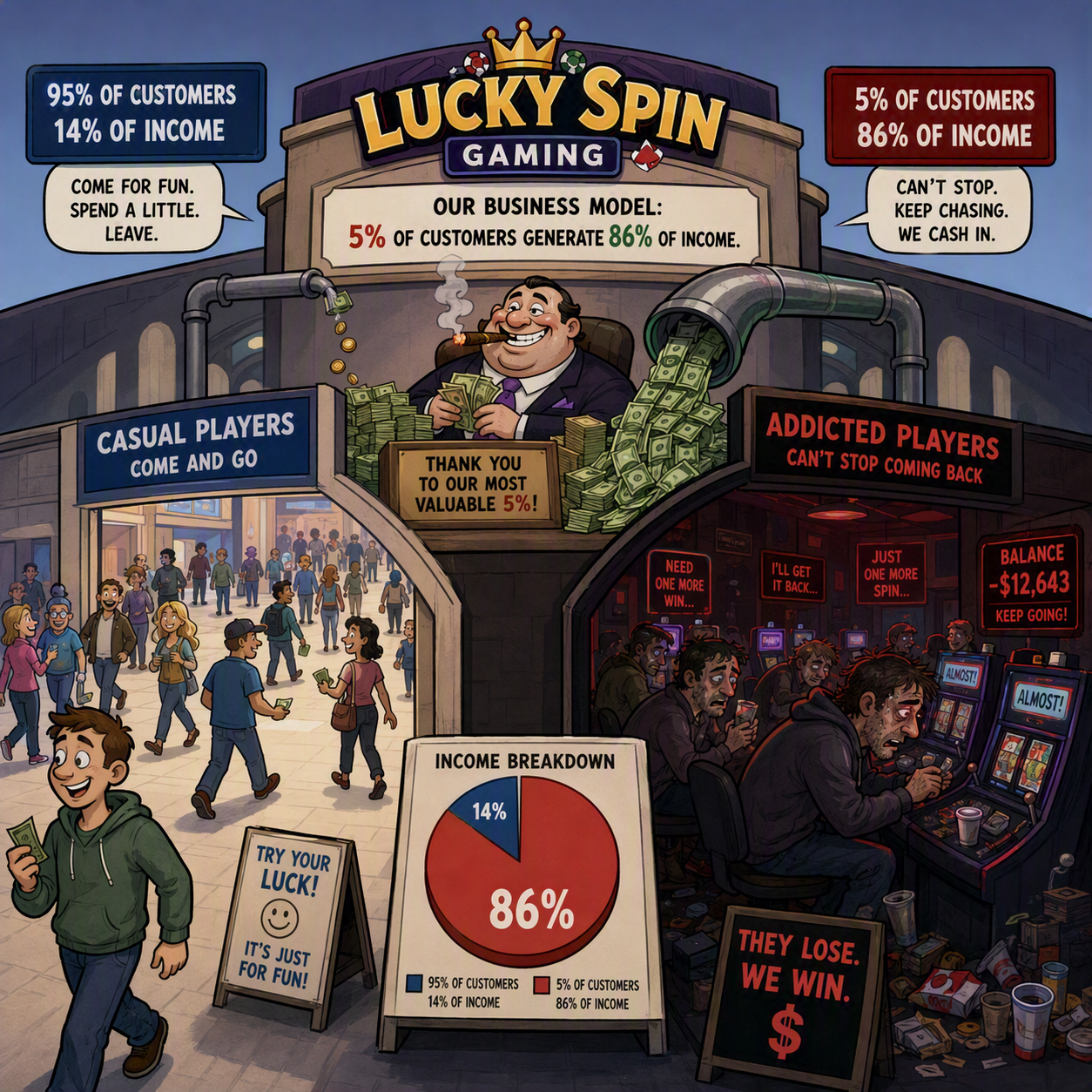
The core of this relationship comes down to revenue distribution. Independent research shows that the vast majority of a gambling company’s revenue is generated by a tiny minority of problem gamblers.
The Pareto Principle on Steroids: Studies reveal a staggering concentration of revenue, with data indicating that just 5% of gamblers generate upwards of 86% of total industry revenue.
The Failure of the “Casual” Model: If a casino or betting app relied entirely on the casual social gambler who walks away after losing $50, the company would go bankrupt. Their entire corporate infrastructure, high-tech marketing, and profit margins are optimized to cultivate and retain high-volume, continuous players.
Free bets are anything but
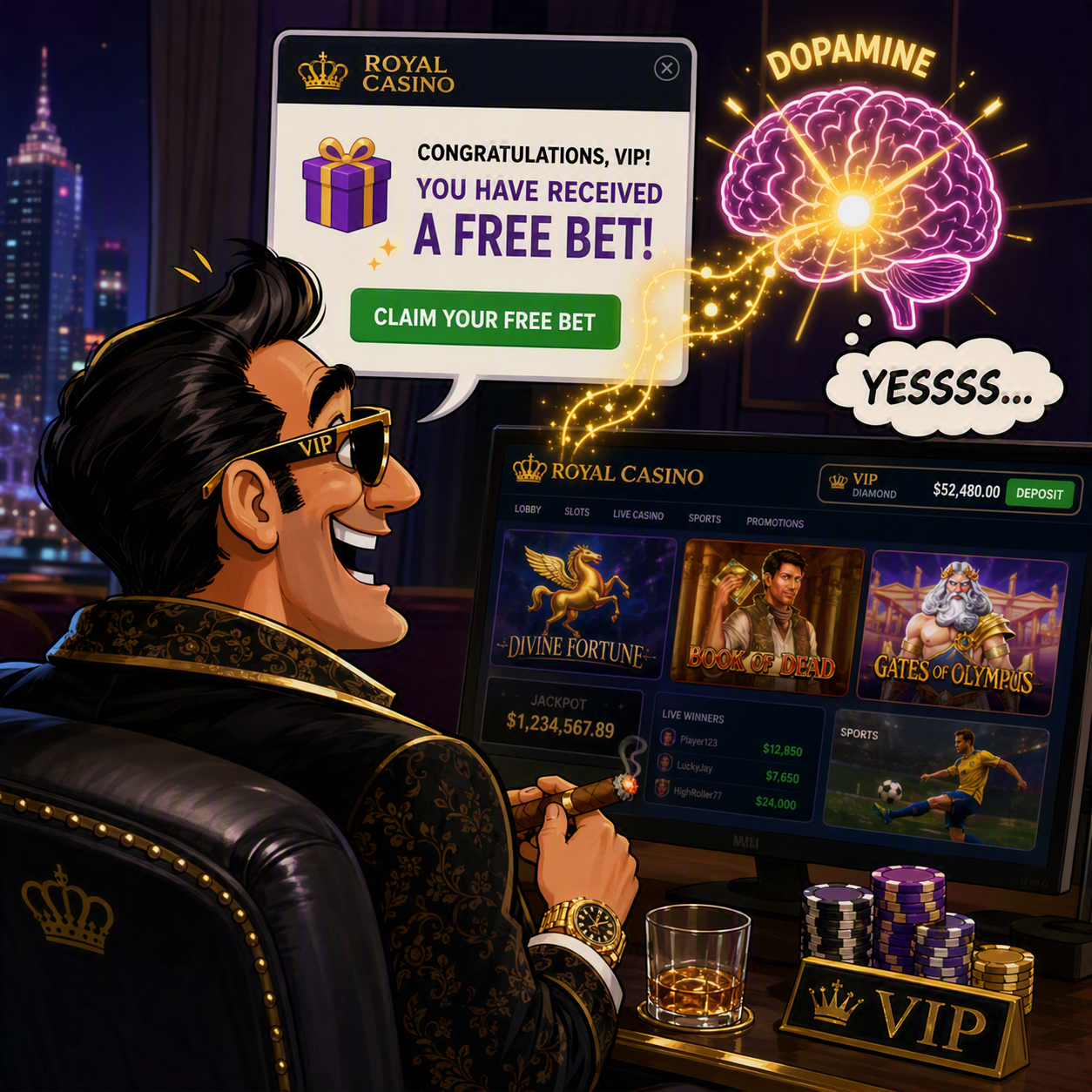
This is where the “love” part of the equation reveals itself as highly predatory. Modern gambling apps do not passively wait for an addict to play; they use sophisticated AI tracking algorithms and machine learning to identify vulnerable behaviour in real-time.
If data shows a player is beginning to slow down or log off, the system automatically triggers a personalized push notification offering “free bets” or deposit bonuses to spark a fresh dopamine spike.
Historically, these companies routed their most addicted players into “VIP Schemes,” giving them personal account managers whose sole job was to encourage them to keep playing, despite clear signs of financial distress.
Too much is a bad thing for both parties
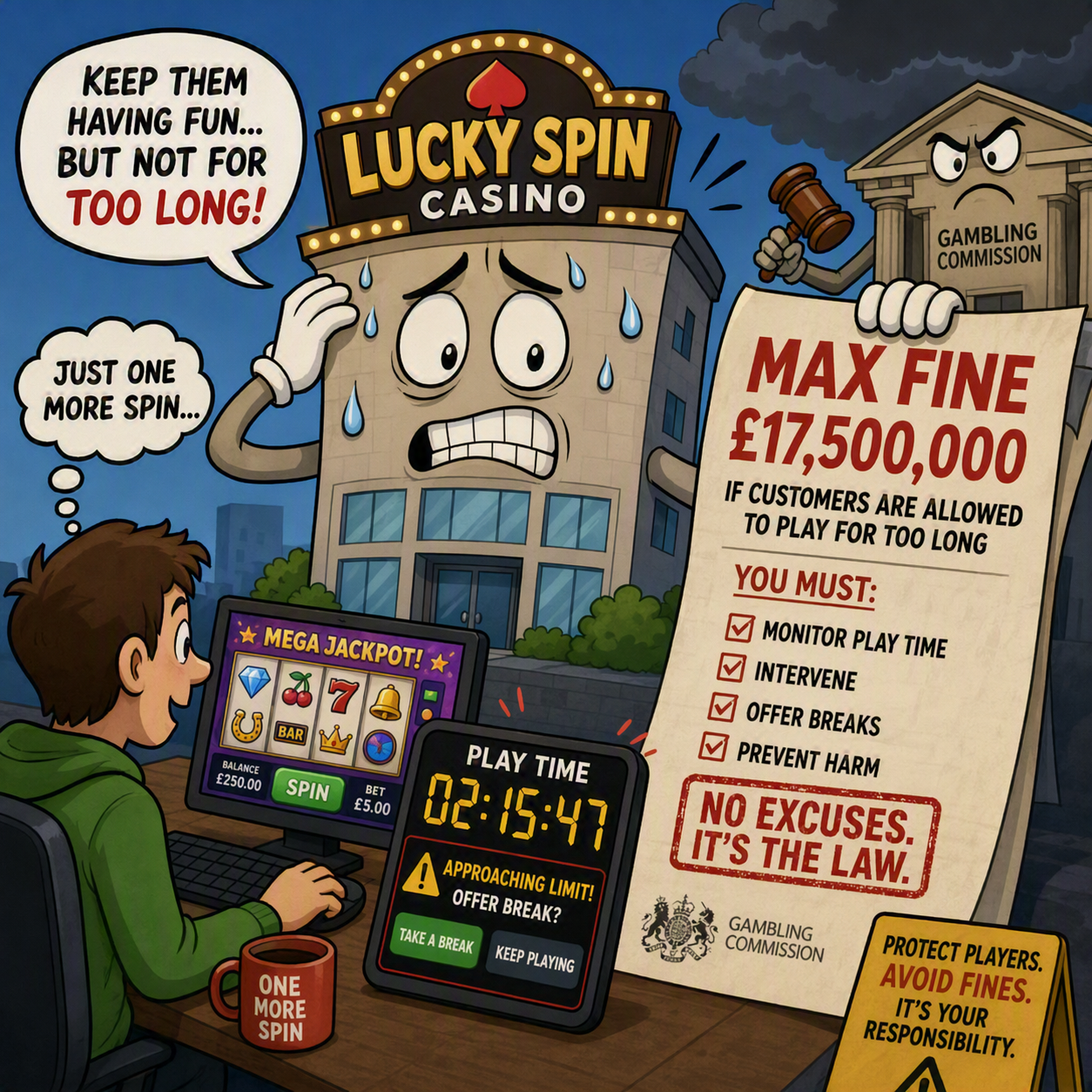
The “hate” side of the equation is driven by the reality that addicts have become a massive liability. Global regulators have rapidly evolved from a voluntary approach to a highly aggressive stance on enforcement.
The “Duty of Care” Mandate: Regulators like the UK Gambling Commission and the Dutch Kansspelautoriteit (KSA) now legally require operators to act as a algorithmic referee. If a customer starts gambling for 12 hours straight or rapidly deposits life-savings, the company is legally obligated to automatically intervene and freeze the account.
The Financial Penalty Epidemic: Failure to enforce this duty of care now results in corporate devastation. Regulators are regularly handing down eye-watering penalties—such as Spain’s landmark €77.4 million in combined penalties and individual multi-million dollar fines for anti-money laundering and player-protection failures.
The Operator’s tightrope
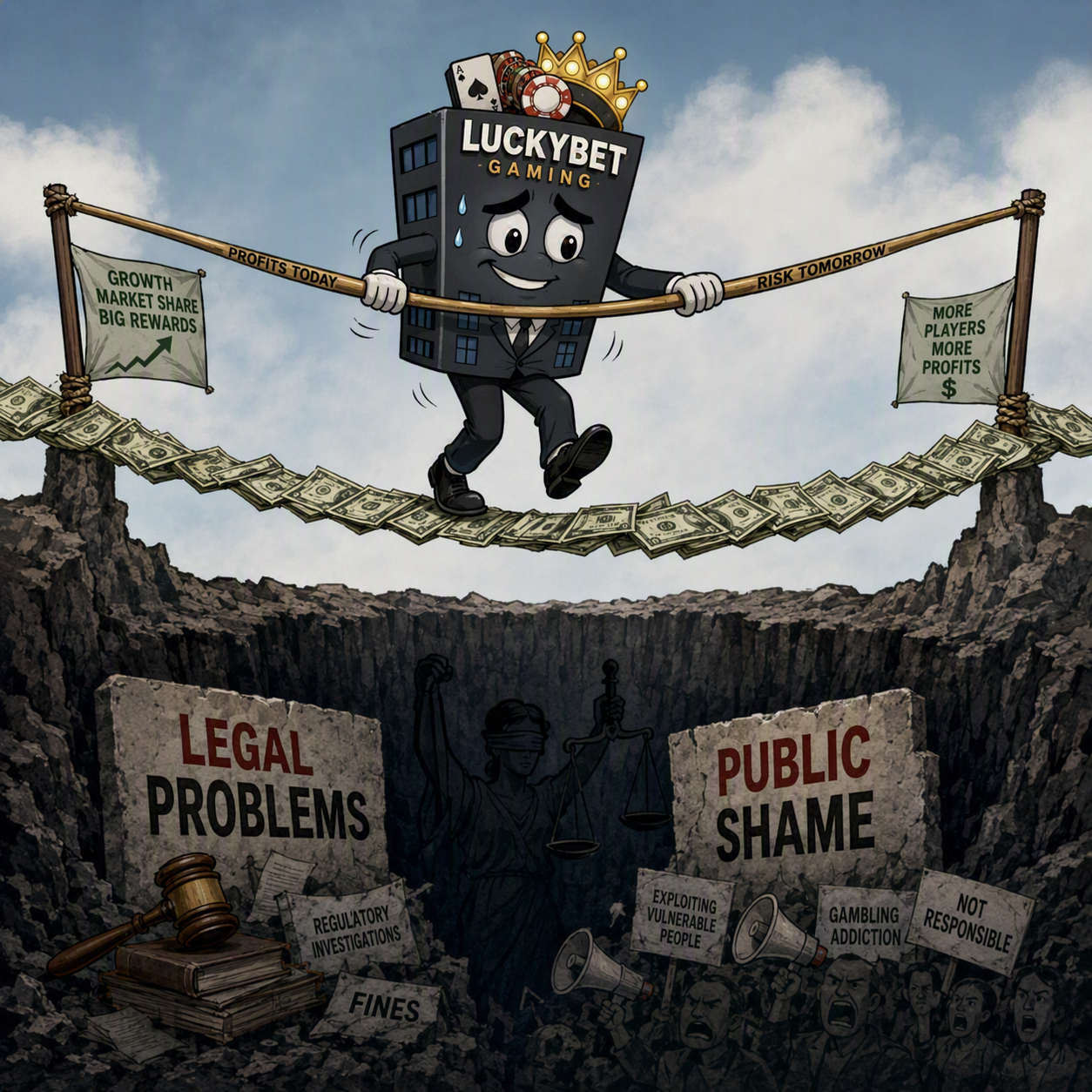
Gambling companies are currently trapped in a toxic catch-22: their algorithms are designed to maximize player engagement, but their compliance teams are being fined millions if players engage too much.
They essentially love the money an addict provides, but hate the severe legal heat, public shaming, and catastrophic fines that come attached to that money. This tension has forced companies into a cynical balancing act: trying to intervene just enough to keep the regulators off their backs, while trying not to completely choke off the 5% of their customer base that keeps the lights on.
Multiple account will satisfy the gambling addict?
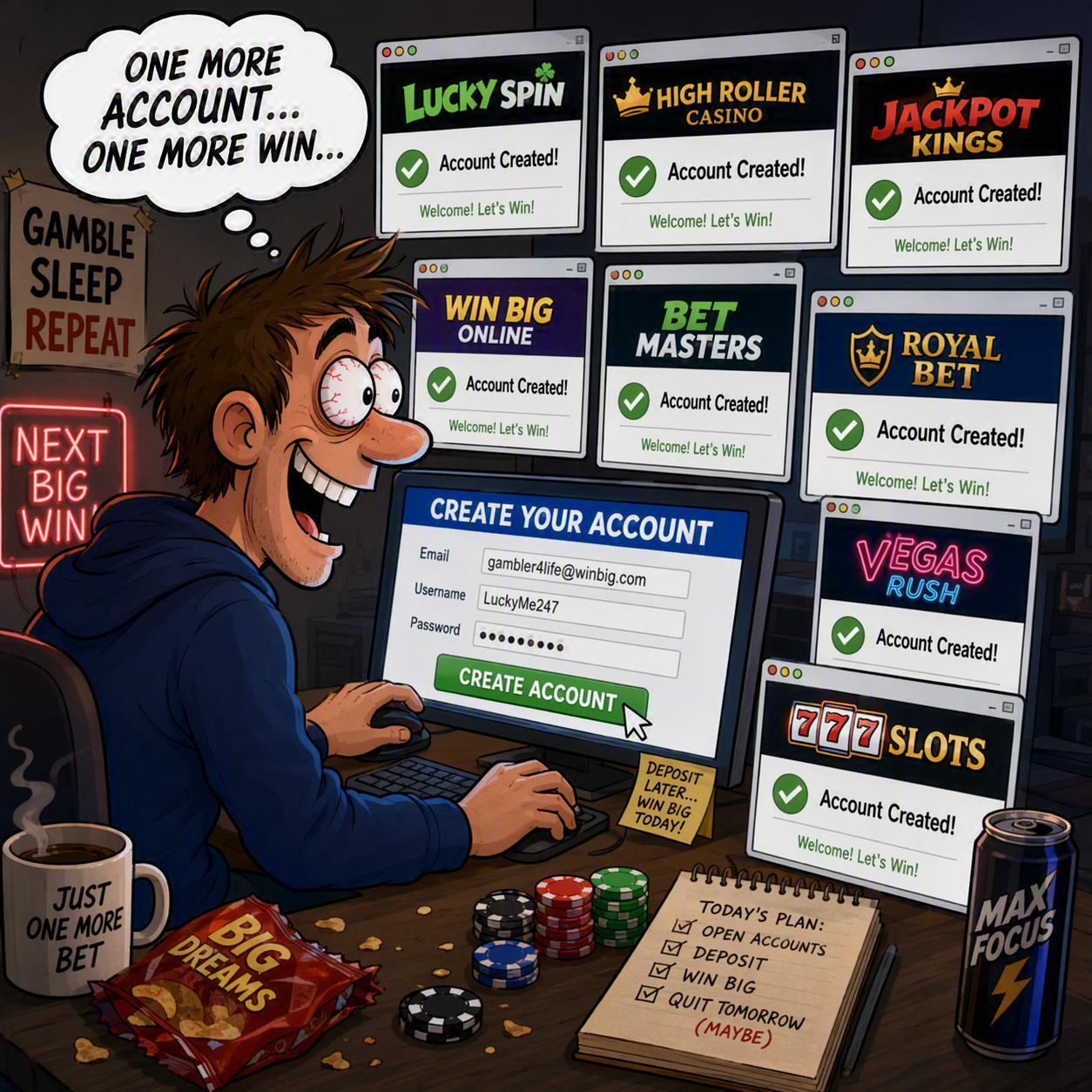
The single biggest flaw in old-school gambling regulation is that traditionally, a frozen account just meant the player would open a new one on a competitor’s site five minutes later.
To fight this, governments and regulators had to completely redesign the system. Today, if a site freezes a problem gambler, or if a player decides to quit, they no longer get blocked from just one website. Instead, they are entered into national, centralized database networks that freeze them across the entire country simultaneously.
The modern system uses a multi-layered approach to try and close that loophole, though a dangerous alternative path still remains.
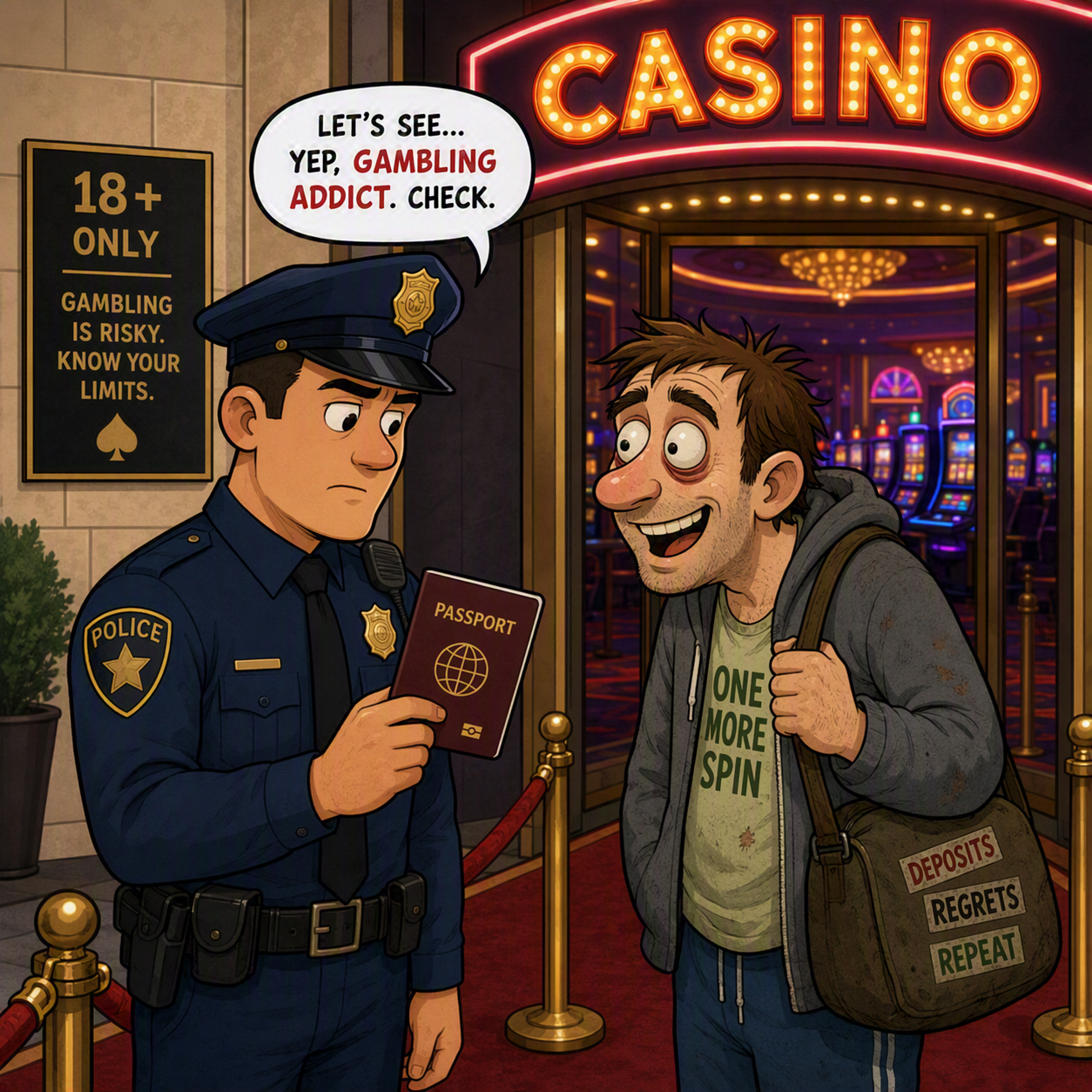
Gamblers are checked before they can enter
In modern regulated markets, governments have made it mandatory for every single licensed gambling company to plug into a single, shared national database. If an account is frozen for problem gambling on one site, the player is automatically banned from all of them across the country.
GAMSTOP (United Kingdom): A single request blocks a player from every legal online gambling site in the UK at once.
CRUKS (Netherlands): Links a player’s ban directly to their government-issued identity (DigiD/BSN). It blocks them from all Dutch online casinos and physically bars them from entering land-based casinos and slot arcades.
OASIS (Germany): A cross-game player blocking system where either the player or the casino operator can trigger a nationwide ban across all German betting platforms.
Because these systems require rigorous identity verification (checking passports, national IDs, and tax numbers) before anyone can even make an account, a banned user cannot bypass it simply by using a fake name or a different email address.
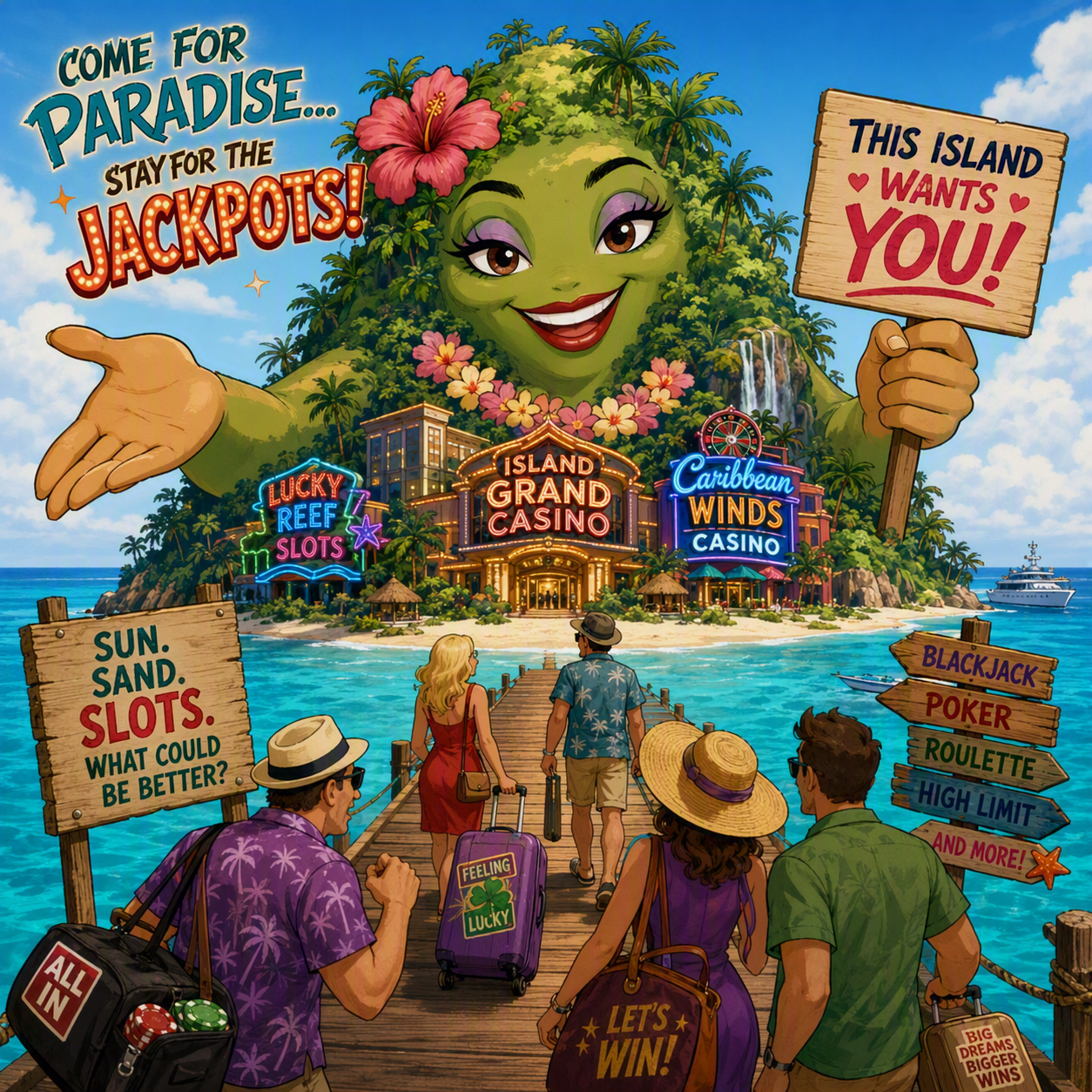
The Caribbean welcomes you
While national registers work well for legally licensed sites, there is virtually no protection when it comes to the offshore black market.
If a player is frozen on all licensed sites in their country, a highly addicted brain will often seek out unregulated, offshore websites (frequently based in jurisdictions like Curaçao or using cryptocurrency). These “black market” sites do not check national databases, require very little identity verification, and openly profit off desperate players who have been banned elsewhere. This is the biggest hurdle modern regulators face.
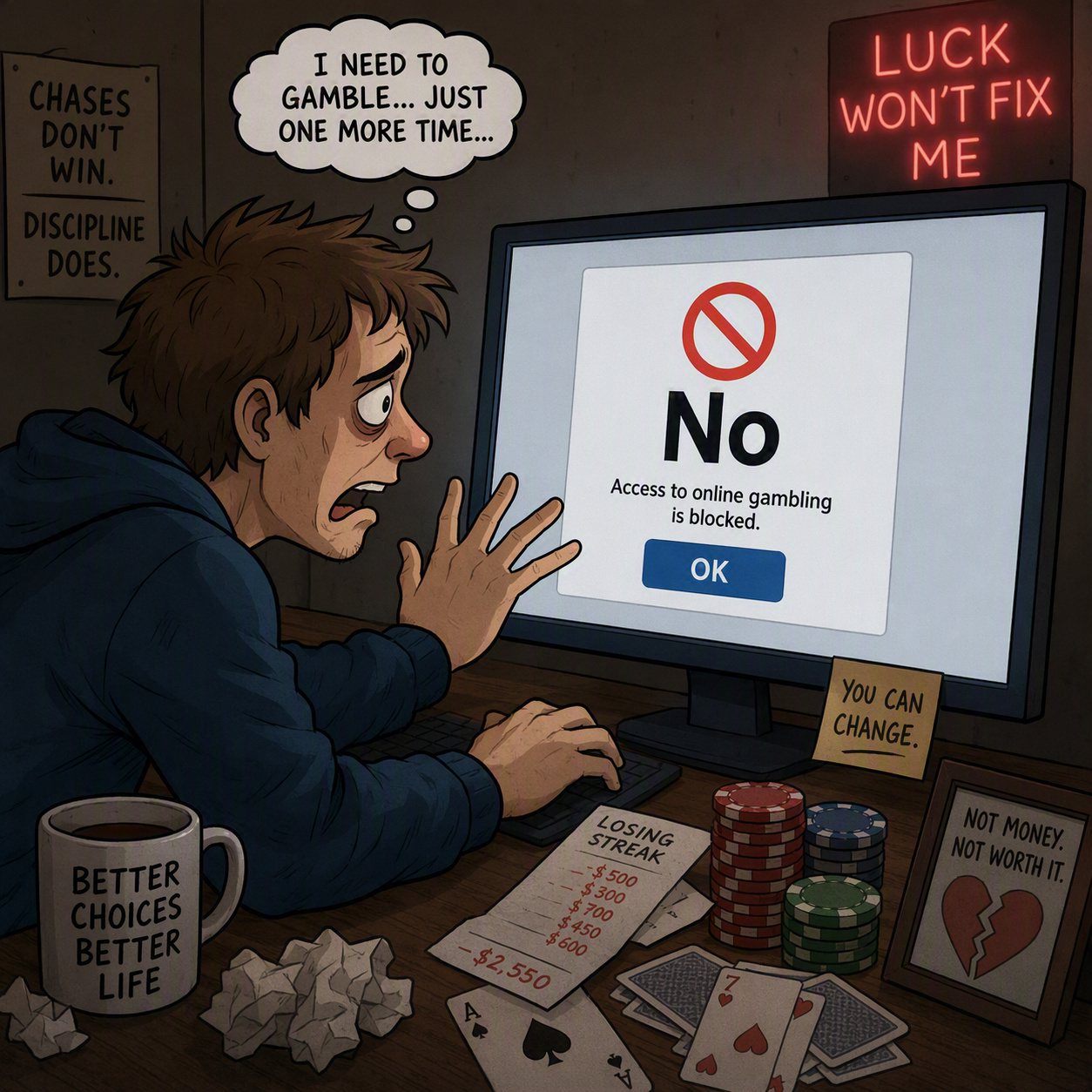
The computer says ‘No!’
Because centralized site bans can be bypassed via the black market, effective modern addiction treatment relies on blocking the player at the device level and the money level, rather than just the casino level:
Blocking the Device (Gamban / BetBlocker): This is software installed directly onto an addict’s phone or computer. It uses an army of web-crawlers to identify and completely block access to over 500,000 gambling domains globally—including illegal, offshore, and crypto casinos. It cannot be easily uninstalled by the user.
Blocking the Money (Bank-Level Blocks): Most major retail banks now offer a “gambling block” feature in their mobile apps. Once turned on, the bank’s system automatically detects the merchant code for any gambling transaction (legal or illegal) and instantly rejects the payment. To prevent impulsive overrides, banks usually enforce a mandatory “cooling-off period” of 48 to 72 hours before the block can be turned off
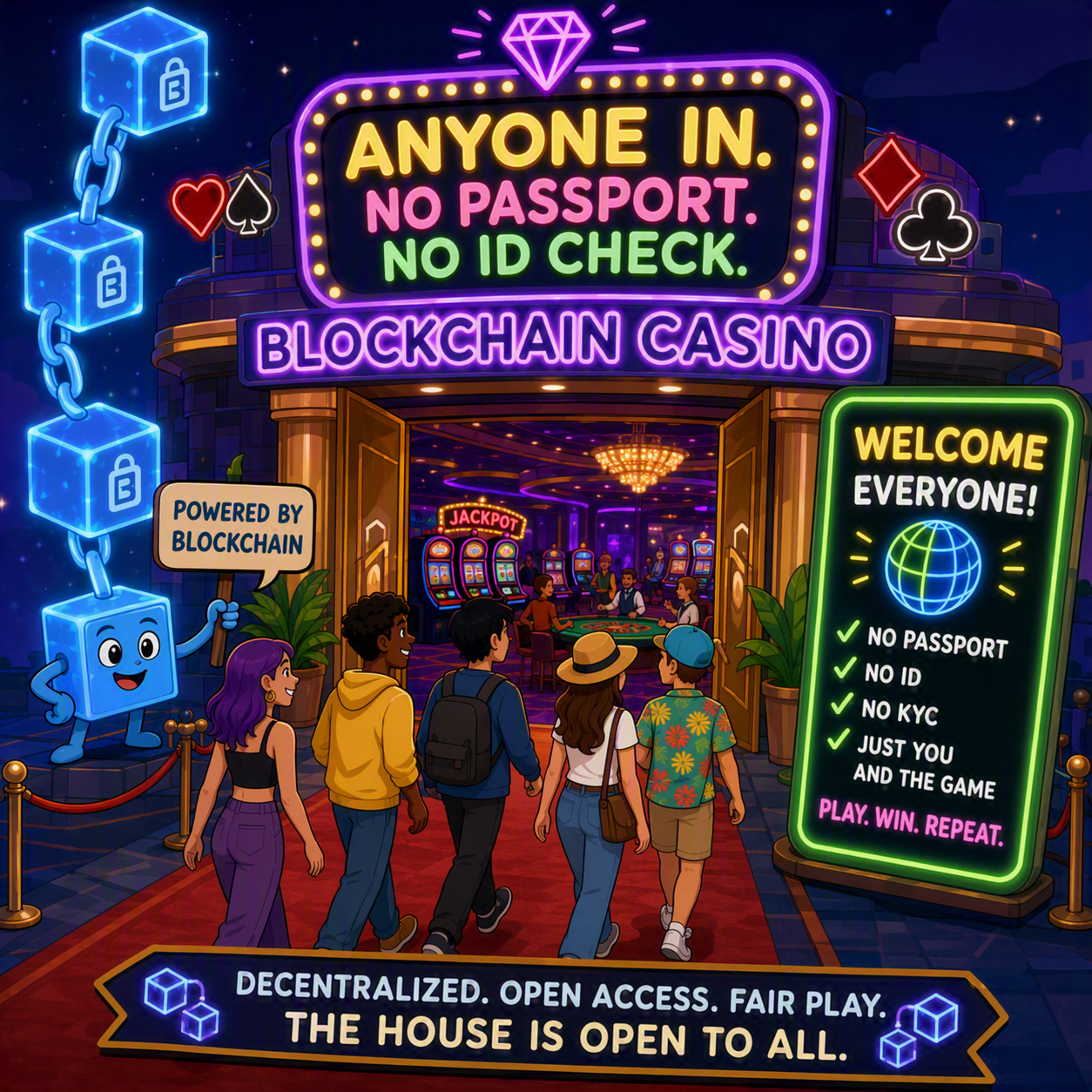
Anyone can play
When national, centralized registries like GAMSTOP or CRUKS began successfully shutting problem players out of legal sites, it inadvertently created a massive “regulatory arbitrage”. Highly addicted players who were desperate to bypass their self-exclusions needed somewhere to go, and offshore blockchain operators were built to welcome them with open arms.
This massive growth – with global crypto gambling revenue skyrocketing – is driven by a specific set of features engineered to bypass government regulations entirely:
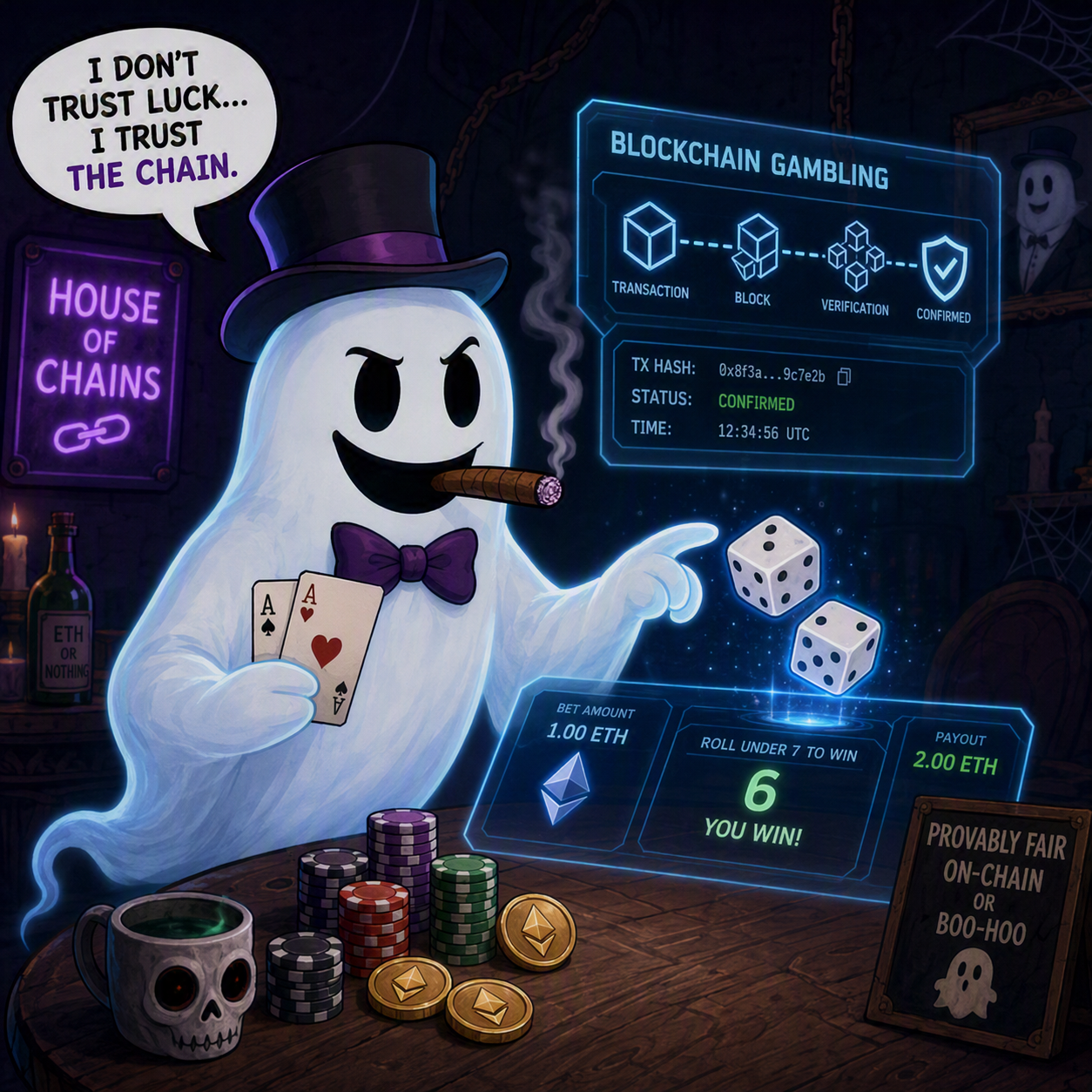
Gamblers become ghosts on the blockchain
On a regulated website, you must upload a passport, a utility bill, and sometimes a tax number before you can play. This allows the site to verify your identity against the national banned list.
The Blockchain Loophole: Most offshore crypto casinos operate under what are called “No KYC” policies.
Anonymous Access: Because players connect their accounts directly to decentralized crypto wallets rather than a traditional bank, they can sign up with nothing more than an email address. There is no name or national ID number for a system like GAMSTOP to match against, making self-exclusion lists completely useless.
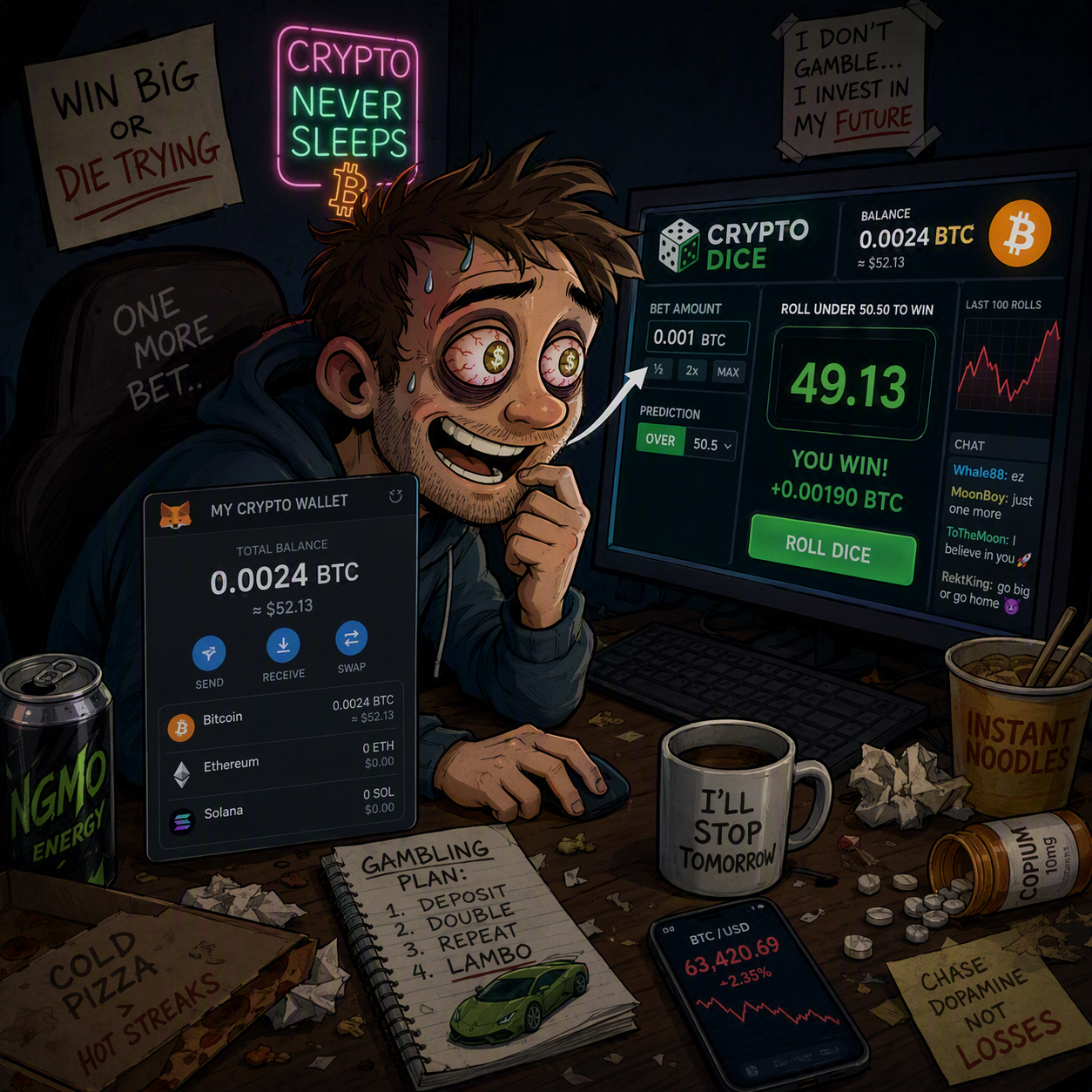
All you need is a crypto wallet
As mentioned earlier, major retail banks have become highly effective at blocking gambling transactions by automatically flagging specific industry code markers.
The Blockchain Loophole: Blockchain transactions bypass the traditional banking infrastructure altogether.
Unstoppable Flow: When a player deposits Bitcoin, Ethereum, or Stablecoins (like Tether) directly into an offshore casino’s crypto wallet, no bank, credit card company, or domestic regulator can intervene or freeze the transaction.
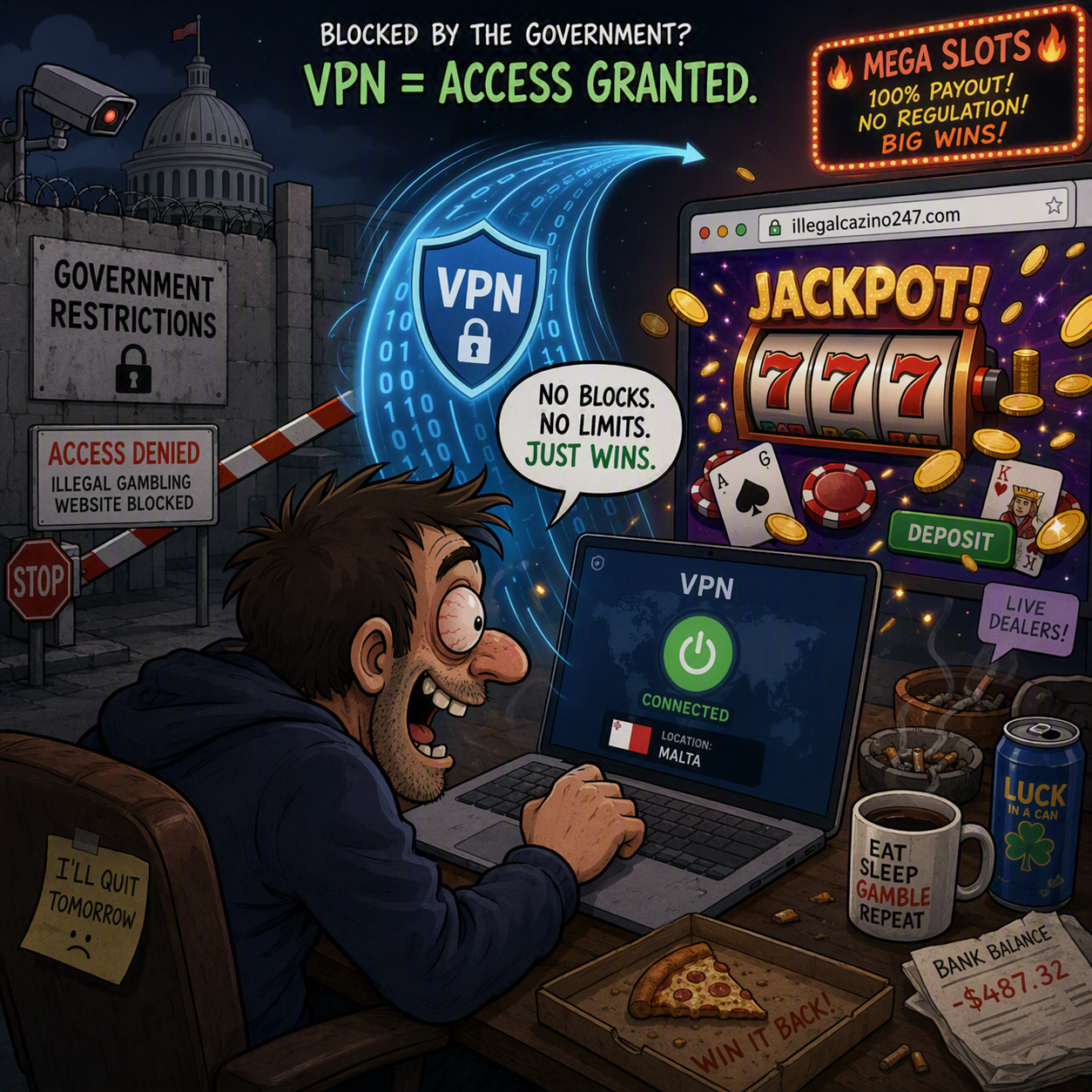
A VPN unlocks the offshore
Most of these prominent crypto platforms operate entirely out of offshore tax havens (like Curaçao or Costa Rica).
No Enforcement Power: Domestic gaming commissions have absolutely no legal authority over an operator running a server on a small Caribbean island.
The VPN Defiance: If a government tries to block the website domain locally, the casino simply sets up “mirror domains” or tells players to access the site via a Virtual Private Network (VPN) to spoof their location.
The Danger: Zero Safety Nets
This is where the situation becomes deeply tragic for a compulsive gambler. On a regulated domestic site, a player has a right to be cut off if they spiral. On an unregulated offshore blockchain site:
Ultimately, the aggressive regulation of domestic markets acts as an economic funnel, driving the most vulnerable, high-spending addicted players straight into an un-regulatable, borderless, digital Wild West.

Professionals can help
There are highly effective medical treatments and objective diagnostic screening tools available today to help compulsive gamblers.
Because modern neuroscience views gambling addiction as a brain-based reward disorder rather than a moral failure, the medical community relies on a combination of pharmacological treatments to stabilize brain chemistry and standardized psychometric screeners to catch and warn individuals before they face total ruin.
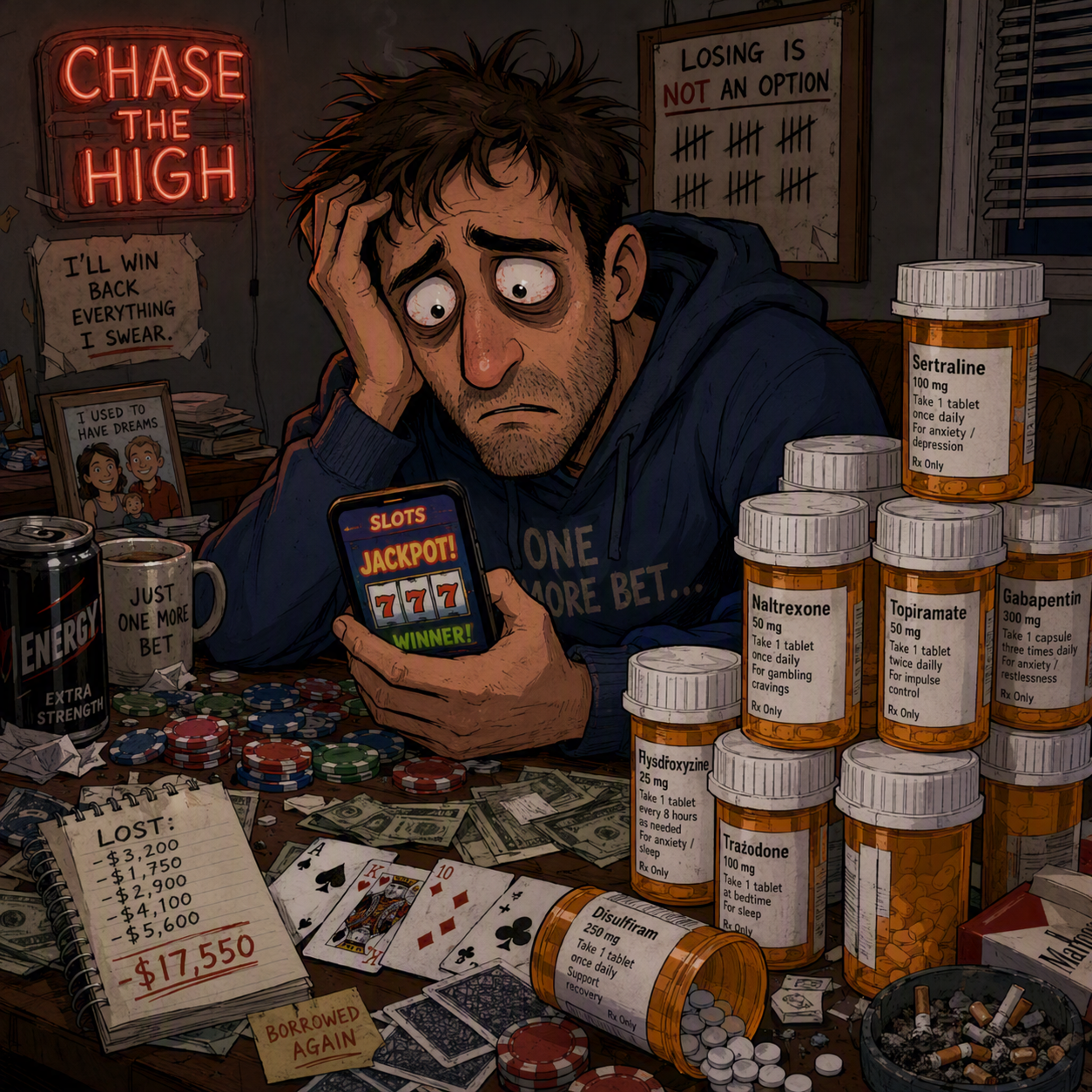
There’s a drug for everything
While the U.S. Food and Drug Administration (FDA) has not yet approved a medication specifically labelled only for gambling disorder, doctors and psychiatrists frequently prescribe several classes of medication “off-label” to correct the underlying brain imbalances:
Opioid Antagonists (The “Joy-Blockers”) – The Medication: Naltrexone.
How it helps: Naltrexone is traditionally used to treat alcoholism. It works by blocking the opioid receptors in the brain. For a gambler, this physically dampens the massive dopamine spike and intense “rush” of anticipation. If they do gamble, they feel nothing – the game becomes boring, effectively breaking the chemical loop.
Selective Serotonin Reuptake Inhibitors (SSRIs) – The Medications: Fluvoxamine or Paroxetine.
How it helps: These anti-depressants help stabilize serotonin levels. They are highly effective for gamblers whose compulsion is driven by severe underlying depression, anxiety, or Obsessive-Compulsive Disorder (OCD) tendencies. It reduces the urge to use gambling as an emotional escape.
Mood Stabilizers – The Medication: Lithium or Topiramate.
How it helps: Compulsive gambling is highly comorbid with Bipolar Disorder. Mood stabilizers reduce the extreme impulsivity, manic highs, and reckless risk-taking behaviour during a manic phase.
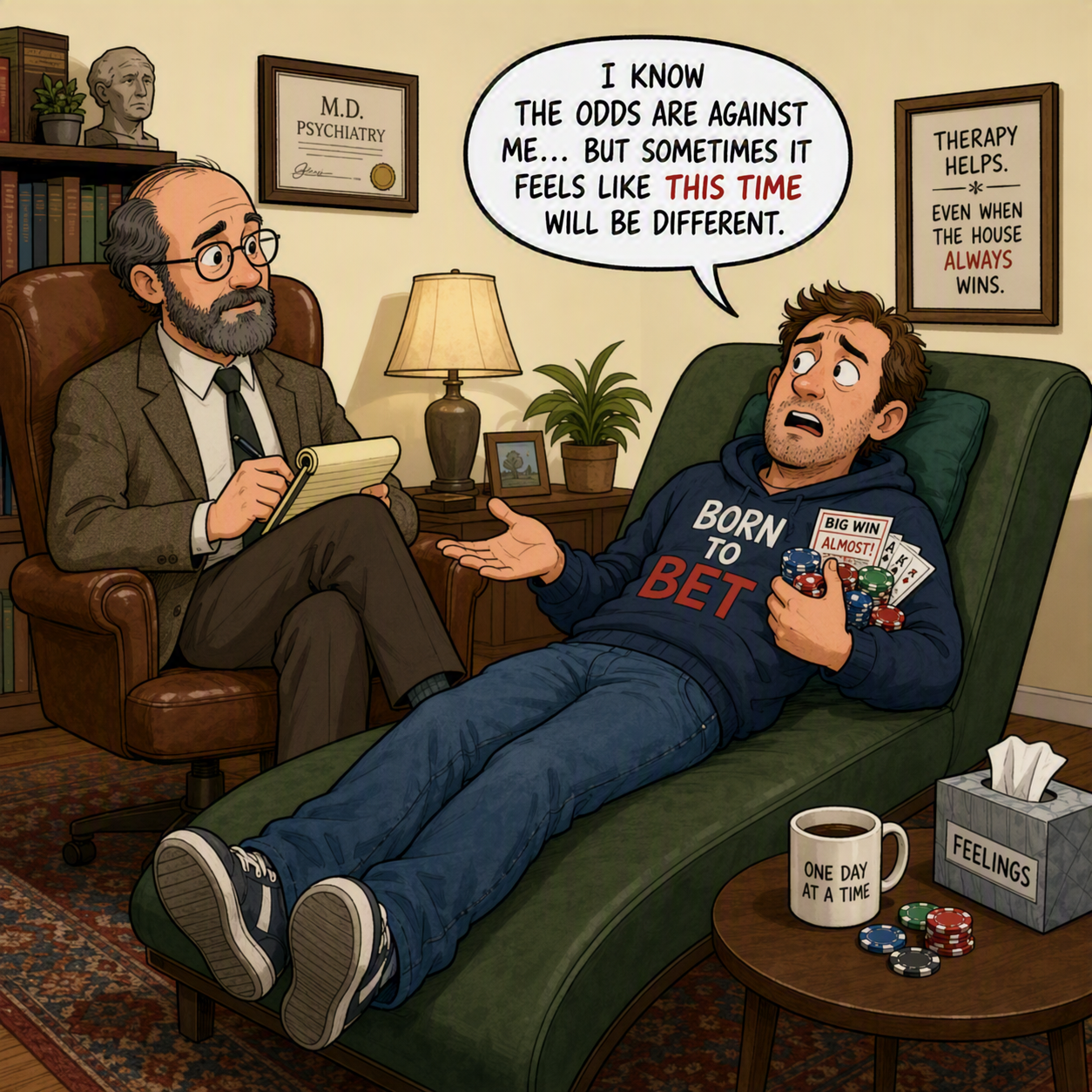
Tell it as it is
Psychiatrists and clinical psychologists use standardized, evidence-based questionnaires to objectively diagnose a problem player. If a person, family member, or medical professional is worried, they use these screens to provide a clear, undeniable warning.
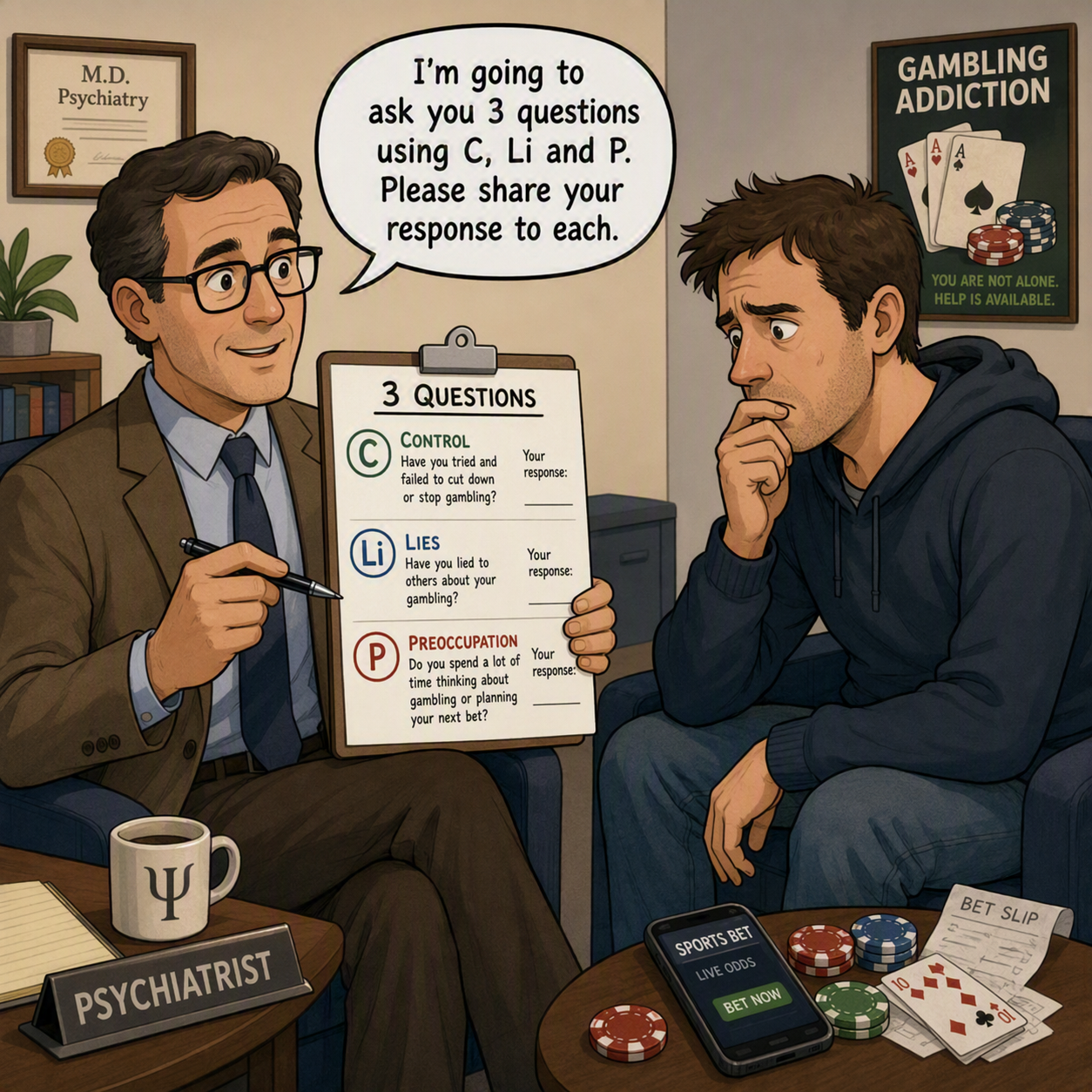
Just a simple three questions
This is a hyper-efficient, scientifically validated tool used by clinics to screen patients in under a minute. Answering YES to just one of these questions is a major warning sign of a clinical problem:
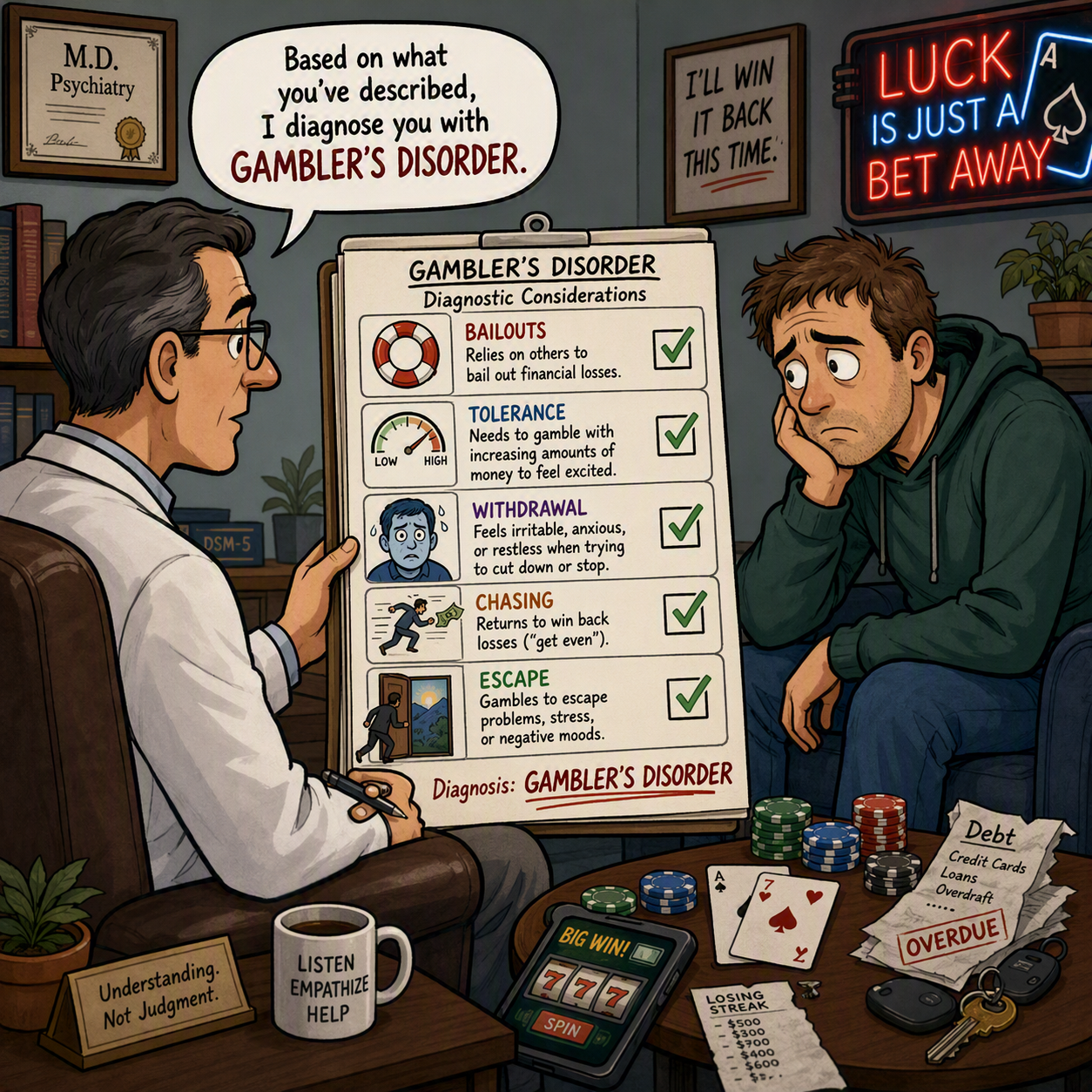
Bad behaviours
For a formal medical diagnosis, a psychiatrist evaluates a patient against the American Psychiatric Association’s DSM-5 criteria. A person must exhibit 4 or more of the following behaviours over a 12-month period to be diagnosed with a Gambling Disorder:
Bailouts: Relying on others to provide money to relieve desperate financial situations.
Tolerance: Needing to gamble with increasing amounts of money to achieve the desired excitement.
Withdrawal: Feeling restless or irritable when attempting to cut down or stop.
Chasing: Returning another day to get even after losing money.
Escape: Gambling when feeling distressed, anxious, or depressed.
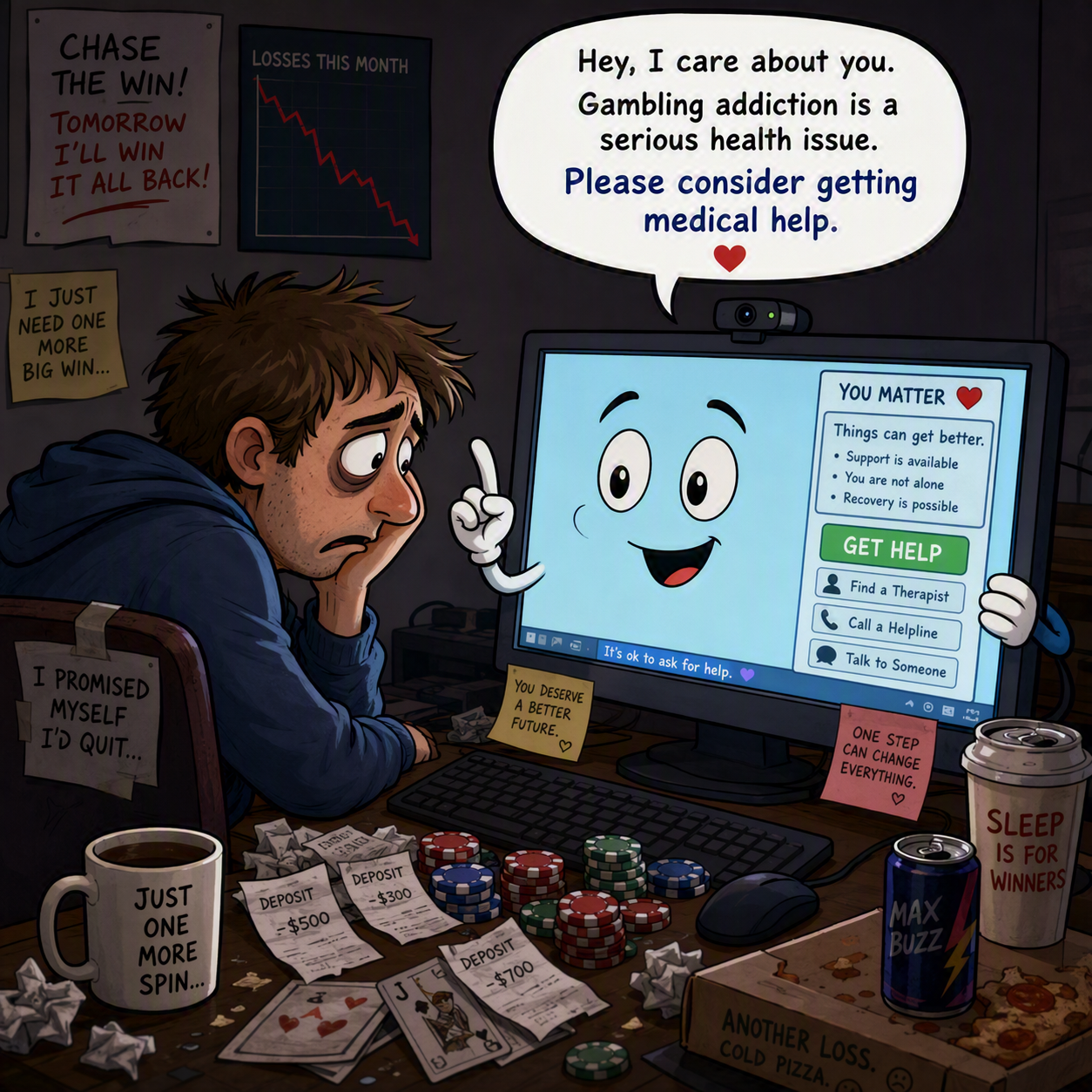
Listen to your PC
In a medical setting, a doctor can only treat a patient once they walk through the clinic door. To solve this, researchers are working with digital platforms to use predictive behavioural biomarkers as an early warning system. By analysing a user’s data pattern – such as a sudden spike in late-night betting, fluctuating deposit sizes, or chasing behaviour – an AI can flag a user as “high risk” and force a mandatory medical / counselling pop-up warning on the user’s screen.
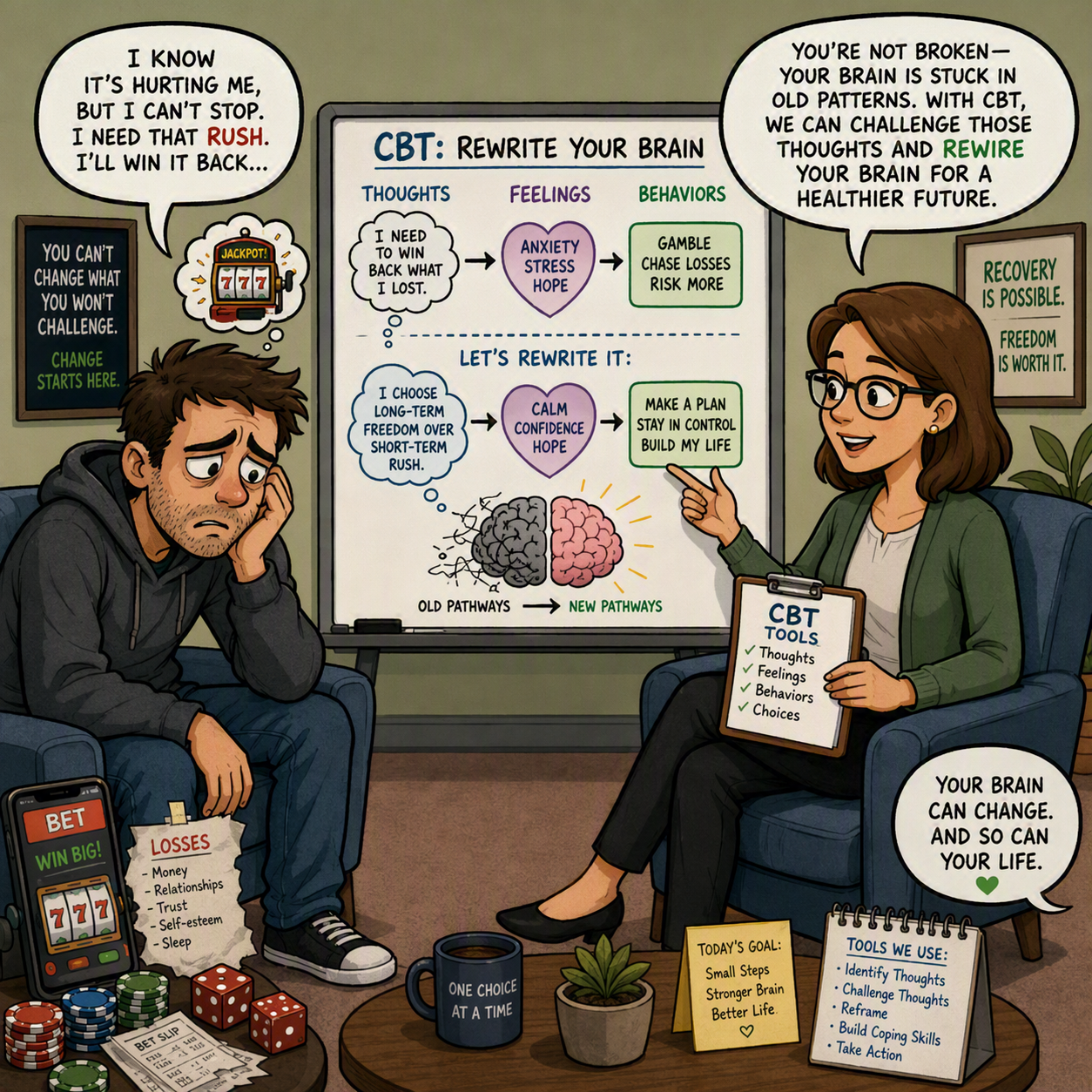
Rewrite your brain
CBT s the absolute gold standard of psychological treatment for gambling addiction because it treats the disorder as a “thinking problem” rather than just a behavioral one.
While medications like Naltrexone fix the chemical reward system in the brain, CBT works to dismantle the deeply ingrained, irrational math and faulty logic that the gambler uses to justify their addiction.
Here is exactly how a clinical CBT therapist works to rewrite a gambler’s cognitive patterns:
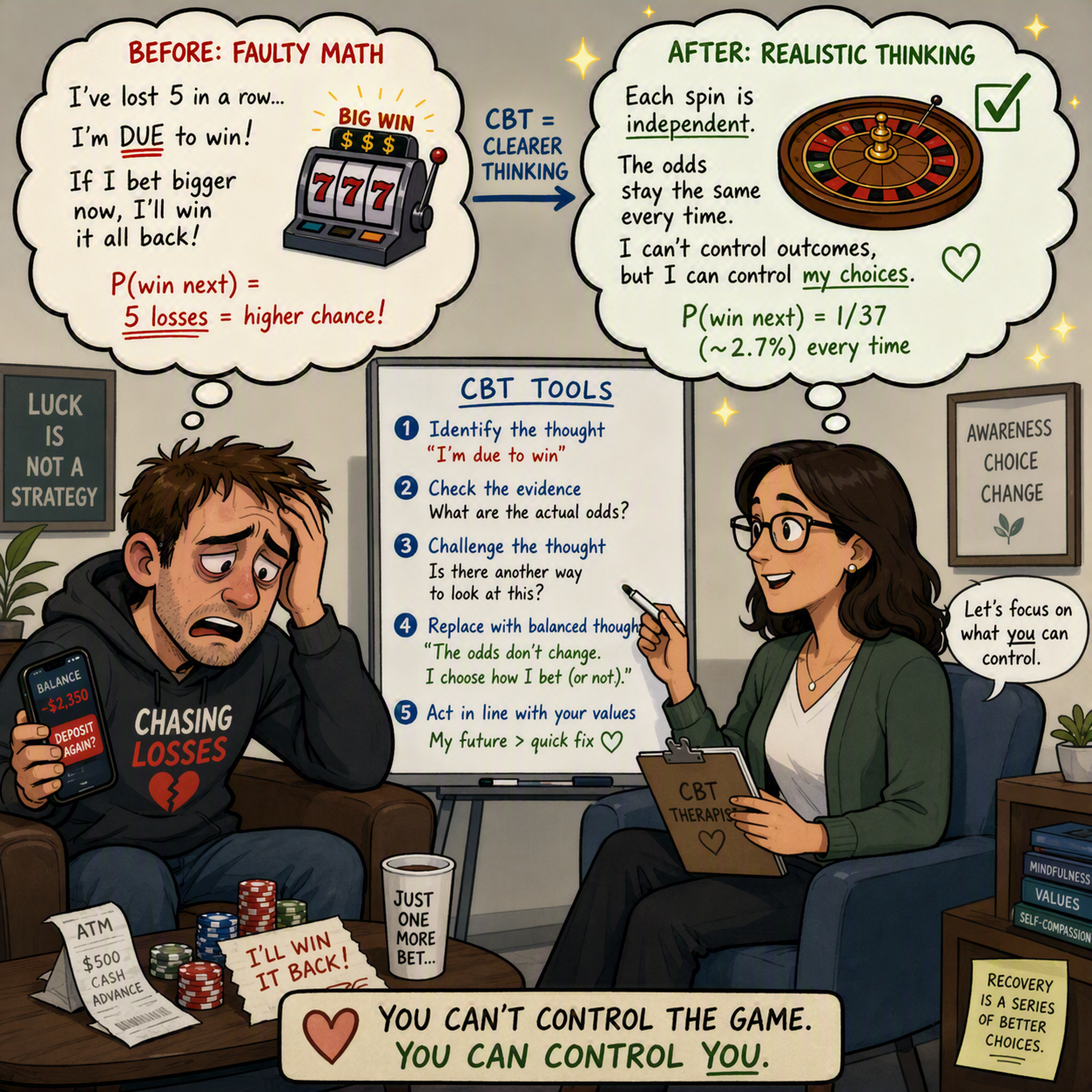
Sort out the mathematics first
An addicted brain creates an elaborate web of logical fallacies to trick itself into thinking a win is always right around the corner. A CBT therapist directly challenges these specific distortions:
The Gambler’s Fallacy: This is the belief that if a roulette wheel hits black five times in a row, red is “due” to hit next. The therapist uses basic probability education to force the brain to accept that a roulette wheel, card deck, or digital slot machine has no memory. Each spin is completely independent of the last.
The Illusion of Control: Gamblers often believe that blowing on dice, wearing a “lucky” shirt, or using a specific button-pressing rhythm increases their odds. CBT teaches the patient to objectively separate skill (like chess) from chance (like slot machines), shattering the delusion that they can outsmart the system.
Biased Evaluation: Gamblers vividly remember their massive wins but completely minimize or forget their catastrophic losses. Therapists have patients meticulously write out a financial balance sheet to force the conscious ego to face the true, unvarnished math of their habit.
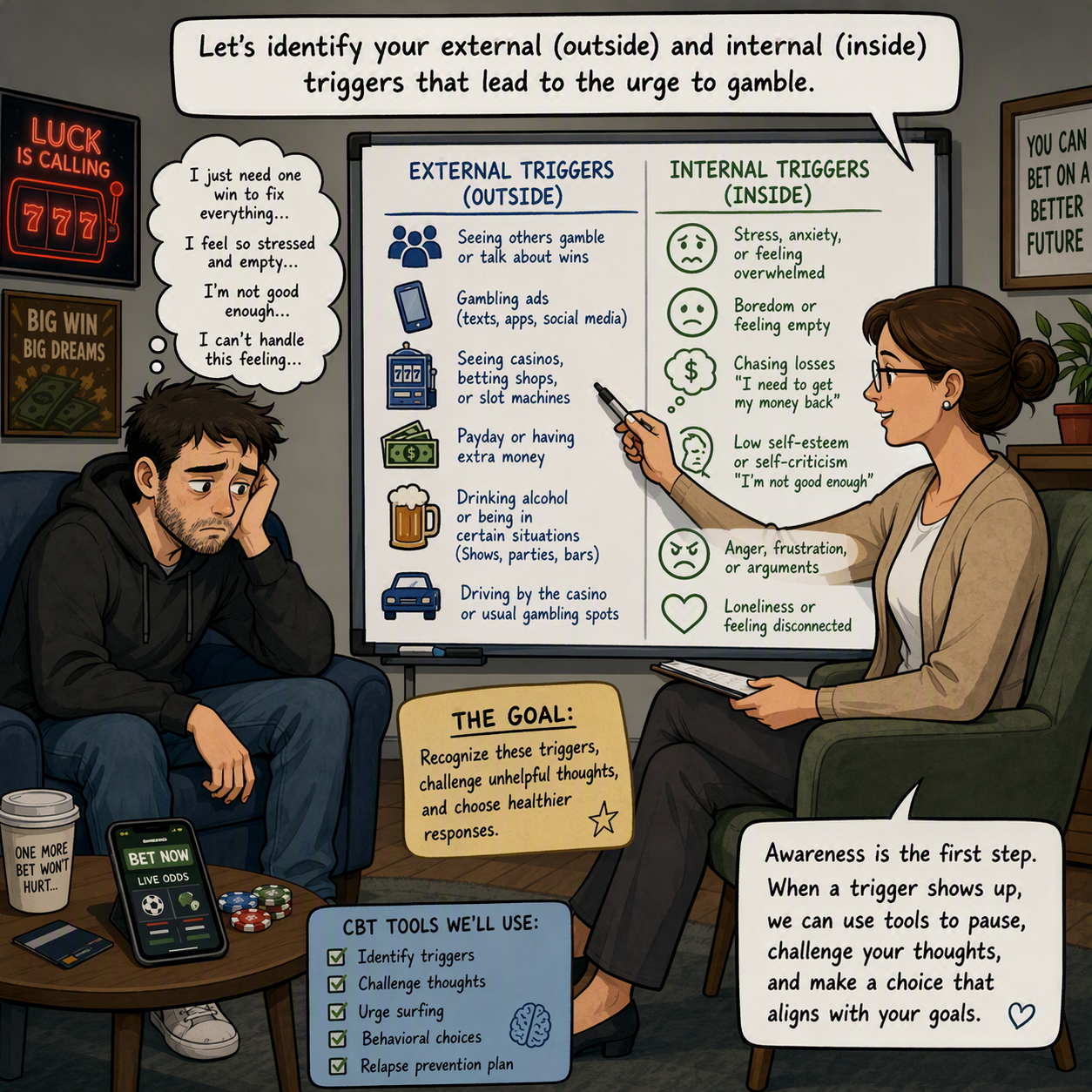
The identify the triggers
CBT maps out a patient’s unique internal and external triggers that lead to the urge to play.
External Triggers: Seeing a sports commercial, driving past a casino, or receiving a push notification from a blockchain betting site.
Internal Triggers: Feeling bored, lonely, financially stressed, or celebrating a major achievement.
Once these triggers are identified, the therapist helps the patient design a “Trigger Action Plan”. If they feel the wave of anxiety or excitement hit, they have a pre-rehearsed, healthy replacement behaviour to immediately pivot to (such as intense exercise, calling a sponsor, or using an app blocker) until the chemical wave passes.
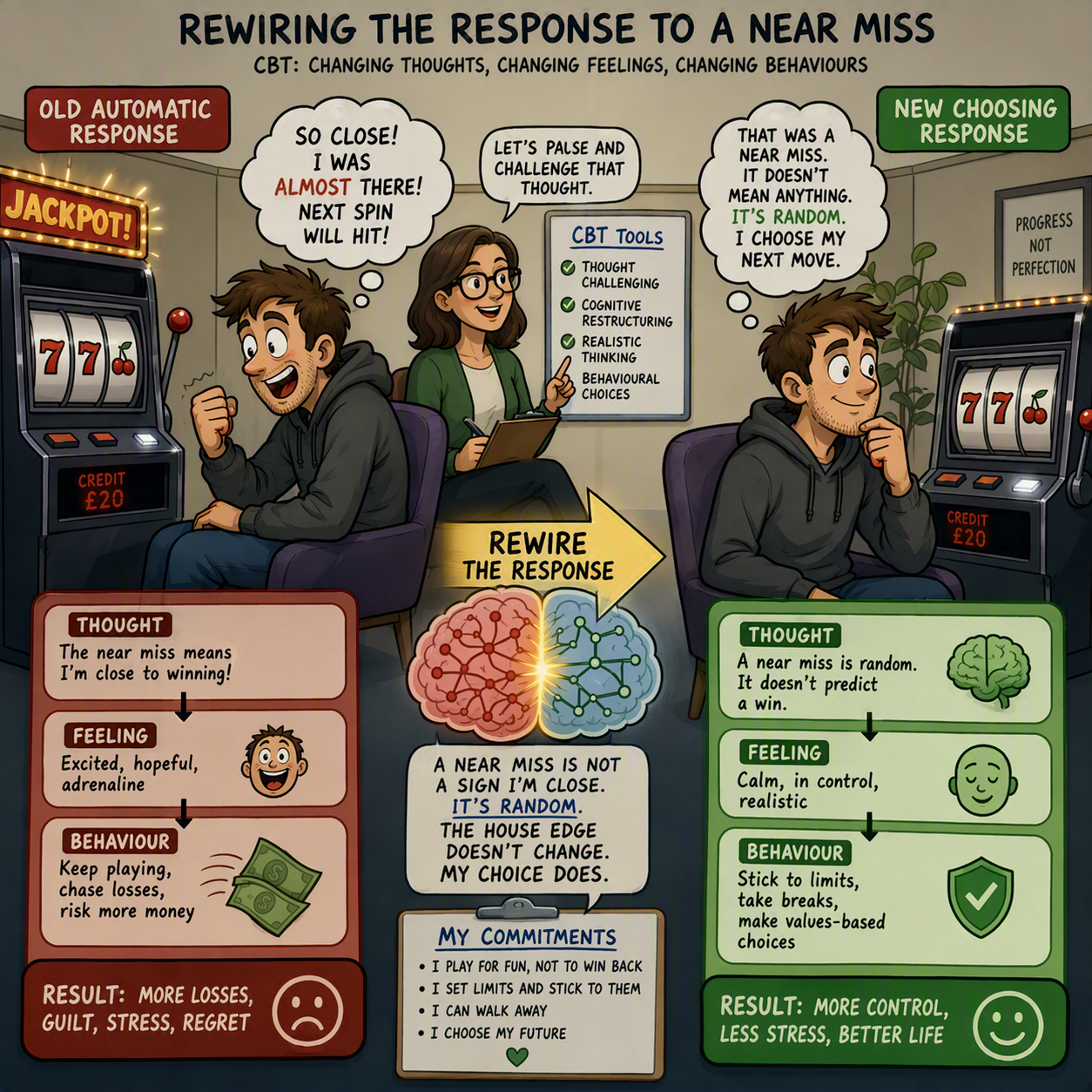
Handle near misses
As mentioned earlier, an addicted brain interprets a near miss (like getting 2 out of 3 matching jackpot symbols) as a sign that they are “close to winning.” In CBT, patients are taught to cognitively re-frame this event. Every time a near miss happens, the therapist trains them to loudly repeat a realistic mantra: “A near miss is not a close win. A near miss is a standard loss explicitly designed by a programmer to steal my money.” Over time, this actively changes how the brain reacts to the cue.
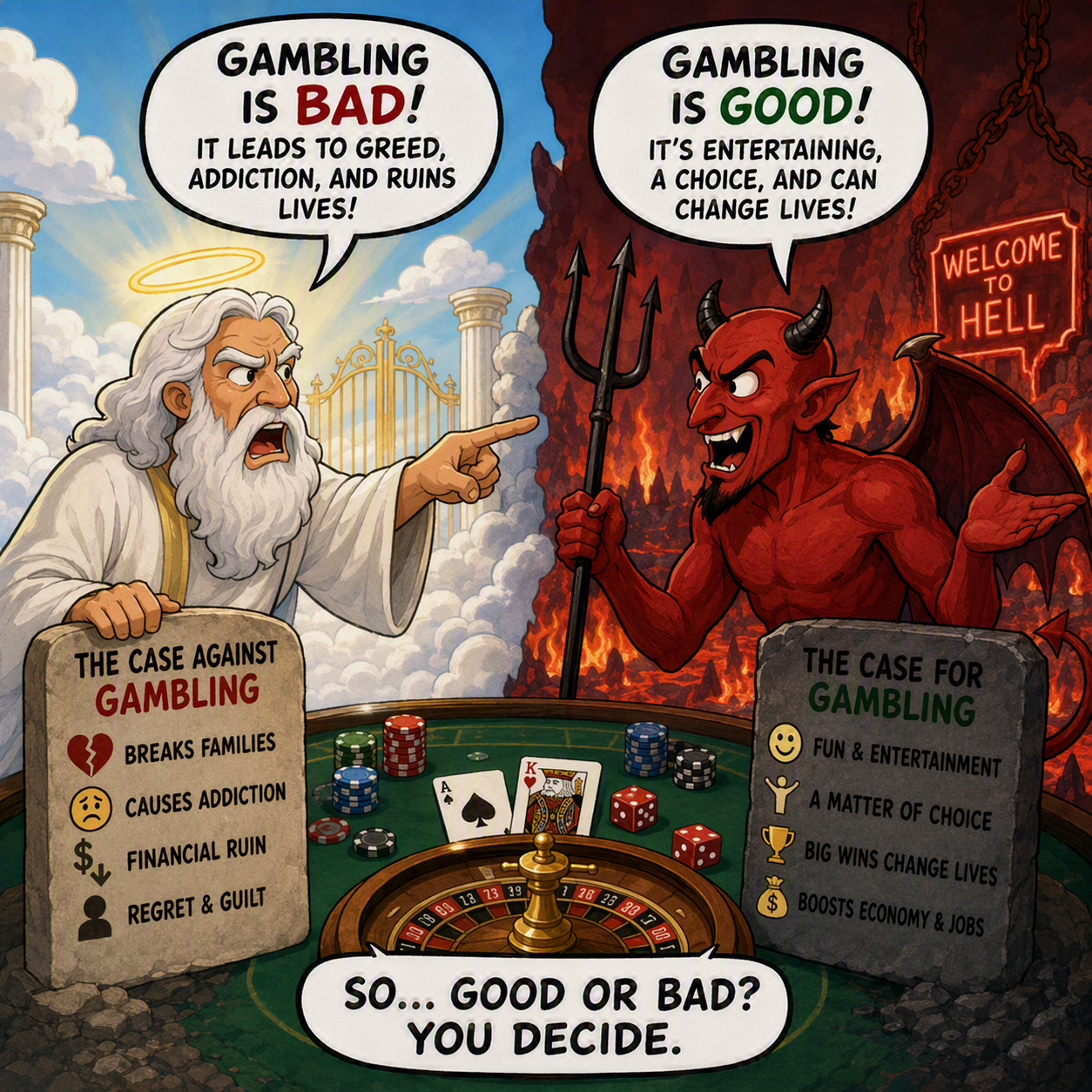
Good or Bad?
When answering the ultimate question, “Is gambling good or bad?”, the most honest answer is that gambling is neither inherently good nor bad; rather, it is a powerful economic and psychological tool that serves as a harmless form of entertainment for the majority, while functioning as a devastating wealth-extraction machine for a vulnerable minority.
Let’s summarise the argument objectively by splitting it into its two competing realities:
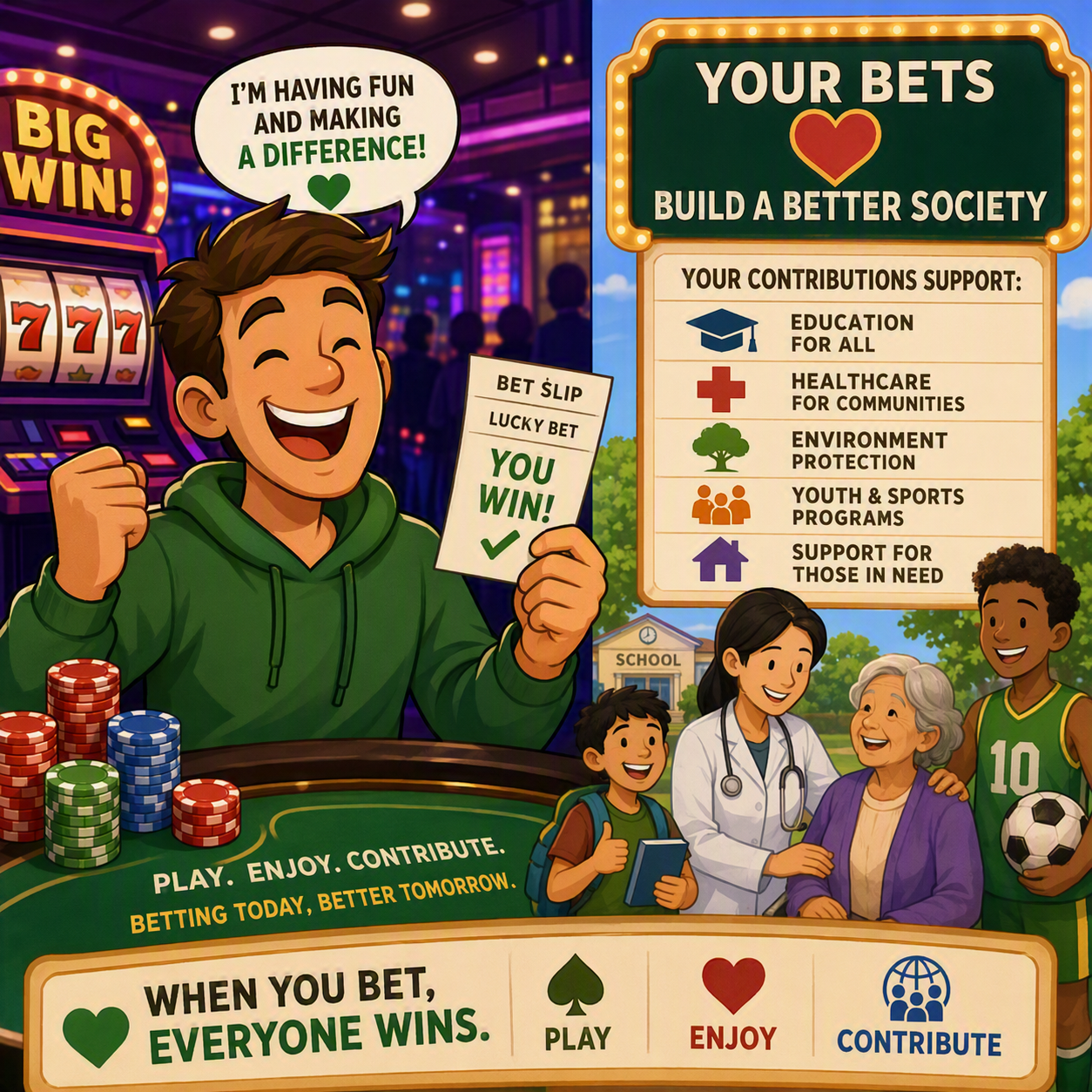
It’s certainly good for some
For the vast majority of the population who are casual social gamblers, the activity provides legitimate, positive benefits:
Entertainment Value: For a casual fan, putting a small, affordable wager on their local sports team adds a massive layer of excitement, anticipation, and social connection to the game. It is a form of paid recreation, no different than buying a ticket to a concert or an amusement park.
Economic Funding for Society: Legalized gambling acts as a massive voluntary tax. Globally, billions of dollars in gambling tax revenues are directly funnelled into building public schools, upgrading infrastructure, funding veterans’ programs, and supporting local charities.
Job Creation: The industry employs millions of people worldwide, from hospitality workers, dealers, and chefs in resort casinos to tech developers and software engineers in digital apps.
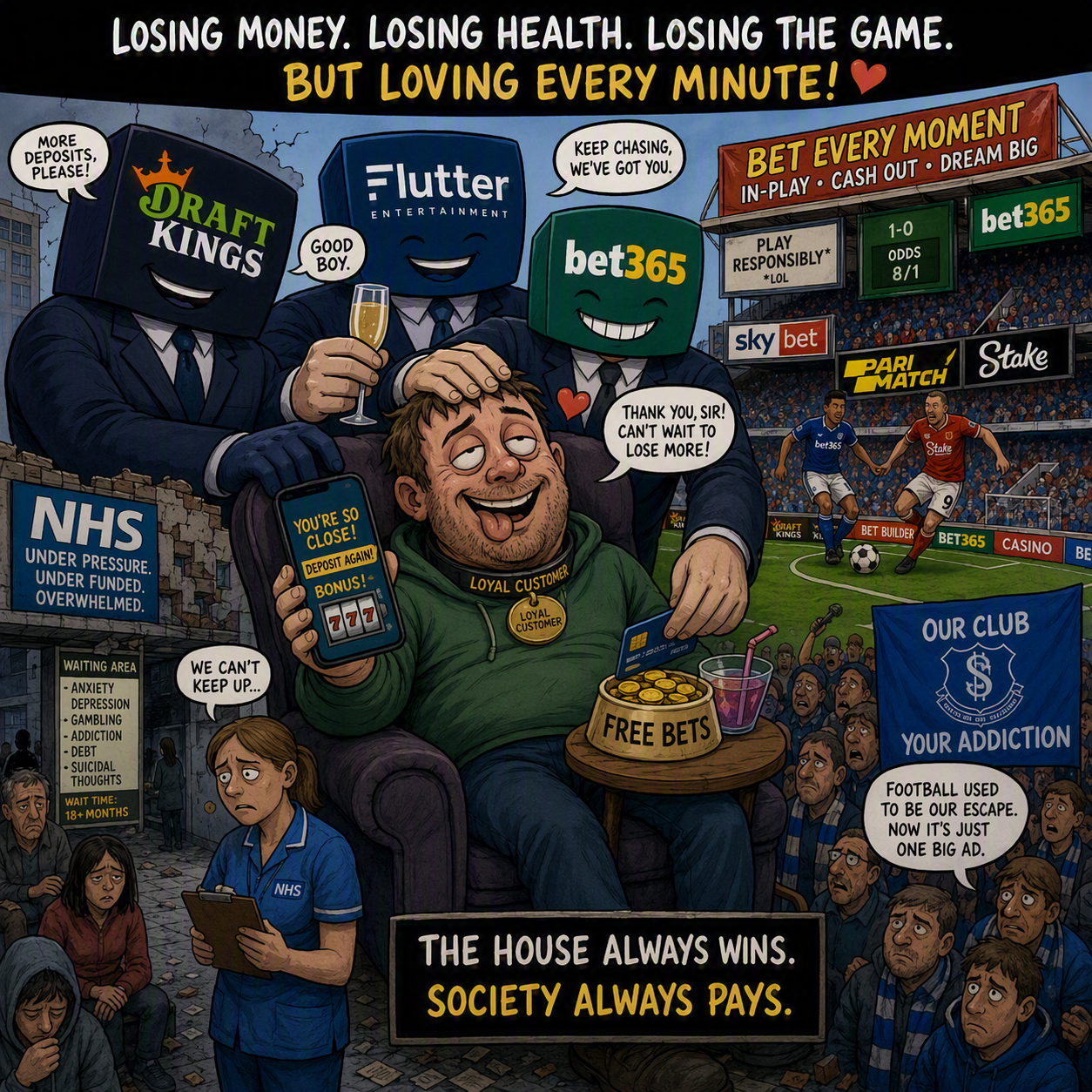
And bad for others
Conversely, when gambling is unregulated or aggressively optimized by modern technology, its societal costs are catastrophic:
The Regressive Tax on the Vulnerable: The gambling industry relies on 5% of players for the majority of its profits. These players are identified as gambling addicts. The industry business model inherently extracts wealth from the people with a serious medical issue and can probably least afford to lose their money. This leads to societal wealth inequality.
The Ripple Effect of Addiction: A gambling addiction rarely destroys just one person. It leads to broken families, bankruptcy, domestic stress, embezzlement, and a massive strain on public healthcare systems and the courts.
The Loss of Pure Sports Culture: The hyper-commercialization of betting has fundamentally shifted sports culture. Many sports fans now feel that games have been hijacked by constant betting odds, push notifications, and gambling commercials, stripping away the simple, pure joy of supporting a local club.

Forget heaven it seems
My role creator of the first ever online sportsbook – Intertops.com – reduced friction, increased accessibility and helped popularise gambling that is for sure. But, to be honest, while I was writing the website software I had my doubts as to whether or not anyone would actually use it. Who in their right minds would use the Internet to place a bet?
Those doubts just showed my complete lack of understanding of gambling and gamblers. As soon as Intertops went live in January 1996, it unleashed a massive amount of betting traffic that often overwhelmed the servers. People just wanted to bet and they wanted to bet in anyway they could. I had completely underestimated people’s desires – and addictions it seems.
Initially Intertops.com was a sports betting only website. And it was very simple – no in-play and quite low limits. We made a nice crust but nowhere near as much as when we integrated Microgaming casino software. Then the big bucks really started to roll in. I conclude that, although sports betting is attractive to gambling addicts, it’s much less so than casino games where instant resolution is the norm.
Intertops was licensed and had a good reputation for paying out winners in a timely manner and, most importantly, for treating customers with respect. Our sweetheart of a boss, Detlef Train, would often hear some pretty sad stories of gamblers that had, well, over-gambled shall we say. He would nearly always pay them back what they could not afford to lose – and then ban them to prevent them repeating their irresponsible behaviour. His attitude was commendable in this respect.
Not many other companies are like that though. And during the writing of this article, I realise that, ultimately, gambling is like alcohol or fire – it is a volatile element. When it is strictly regulated, kept local, and treated as a minor social pastime, it can be a “good” source of entertainment and public revenue. However, the moment it is supercharged by frictionless smartphone apps, predictive AI algorithms, and predatory offshore blockchain systems, the balance tilts towards “bad.” It stops being a game of chance and becomes a highly engineered trap designed to break human willpower.
Of course I want the gambling industry to continue to exist. A gambling ban would not work and it would simply retreat underground as it always has. And, I’m very mindful of the positive benefits that gambling can bring to society.
However, the gambling ‘trap’ had been around forever and it’s just going to get more complex and enticing.
Having said that, I do believe that nobody in the gambling industry actually wants to destroy lives. So, my thinking is that the only way to mitigate the damage to society (and to the industry itself), is to better educate the masses – teach them how to gamble responsibly.
Easily said I know, But I think people need to be taught cynicism and not to be wooed by flashing lights and hollow promises of easy money. And most importantly, to know the odds! Maybe no-one should be allowed to gamble unless they have passed a ‘gambling proficiency test’. Am open to discussion on that one.
Meanwhile. Despite my naivety, I’m pretty sure I’m not going to pass that heavenly entrance exam. See you on the other side.