Physical Address
304 North Cardinal St.
Dorchester Center, MA 02124
Physical Address
304 North Cardinal St.
Dorchester Center, MA 02124


From destinations to networks, gambling evolved rapidly
Series – The Online Gambling Industry

Evolution ultimately gave power to the people
As we all know, gambling has been around in one form or another since time immemorial. The emotions that participation in gambling evoke have not changed. But how we gamble and where we gamble certainly has.
In the last 100 years or so, gambling has evolved from a pastime that was always popular, but was largely inaccessible to the majority of the population, to one that nearly everyone can participate in.
In this article, I will attempt to sectionalise and rationalise the phenomenal growth of our complicated and historied industry. My tentative plan is to demonstrate that there are three distinct evolutionary eras the gambling industry has gone through; the Destination, Distributed and Network eras. I will also attempt to tie these to some common sense economic theories.
Also, we will meet some interesting characters who helped mould the industry and I will hopefully shed some light on what exactly happened and draw some interesting conclusions.
Off we go!
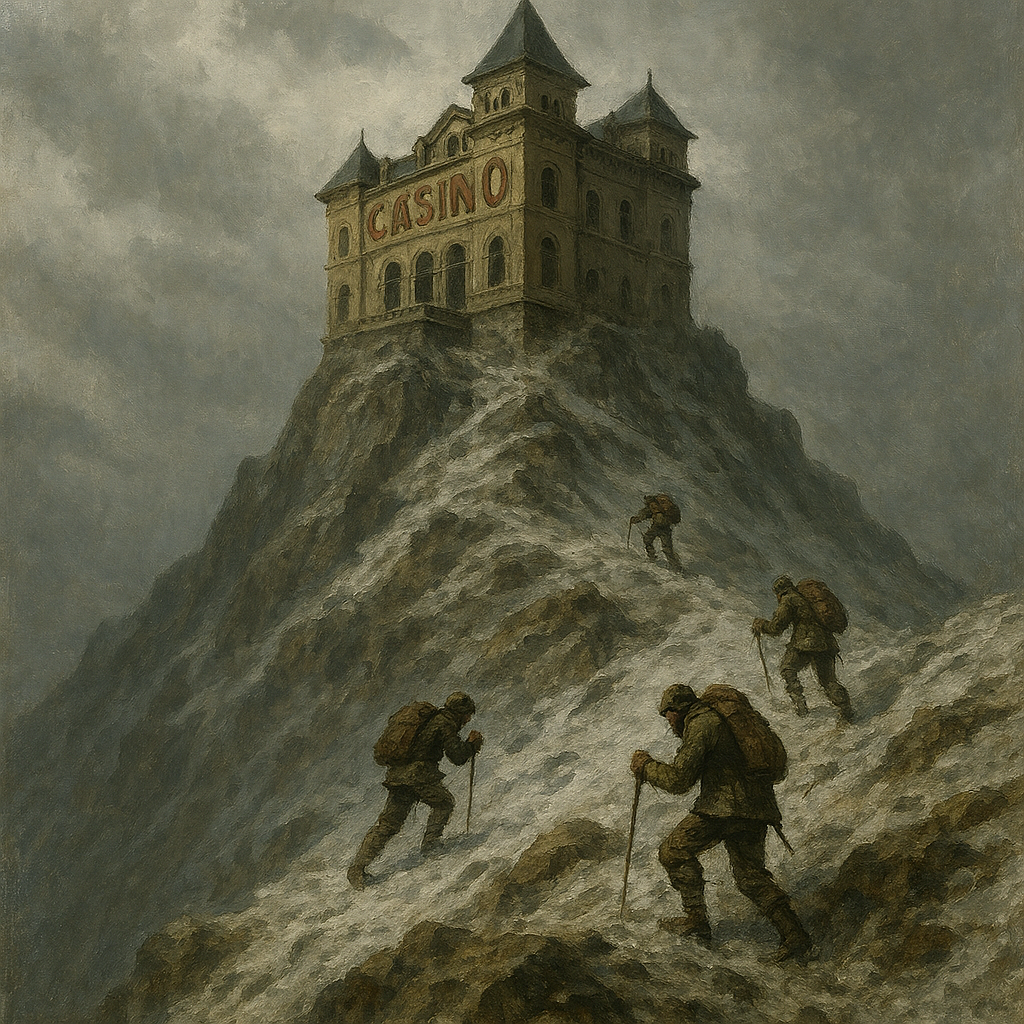
It was not easy in the old days
I consider the first modern era of gambling to begin in the 1930s. Commercial gambling then was built around physical destinations. It was possible to legally gamble but you had to travel to one of only a few destinations, one of which was Las Vegas.
When Nevada legalized casino gambling in 1931, the city of Las Vegas became a focal point for the entire industry.
Interestingly, Nevada was already a gambling state but informally. It had been legal way earlier but was then restricted in 1910. Illegal gambling was rife in many of the ‘wild west’ towns as we would refer to them and the 1931 law was partly about bringing an existing activity into a regulated and (of course) a taxable framework. It was also a response to the Great Depression as Nevada’s economy had collapsed, unemployment was extremely high and tax revenues had dried up.
The state-level political decision to legalise gambling was also taken to increase visitors which was seen as an essential revenue source for the state – Nevada had few natural industries. State leaders realised they needed to differentiate themselves from other states who had banned casinos from operating.
Coincidentally, the Hoover Dam (then called the Boulder Dam) was under construction which brought in thousands of workers with disposable income into Las Vegas – which was the nearest town to the dam’s construction site. Legal gambling gave those workers something to spend their money on.
The law was passed by the Nevada Legislature and signed into law by Fred B. Balzar, Governor of Nevada. So unlike later gambling expansions (like Atlantic City), this wasn’t a referendum or a single campaigner — it was a state-level political decision during a crisis.
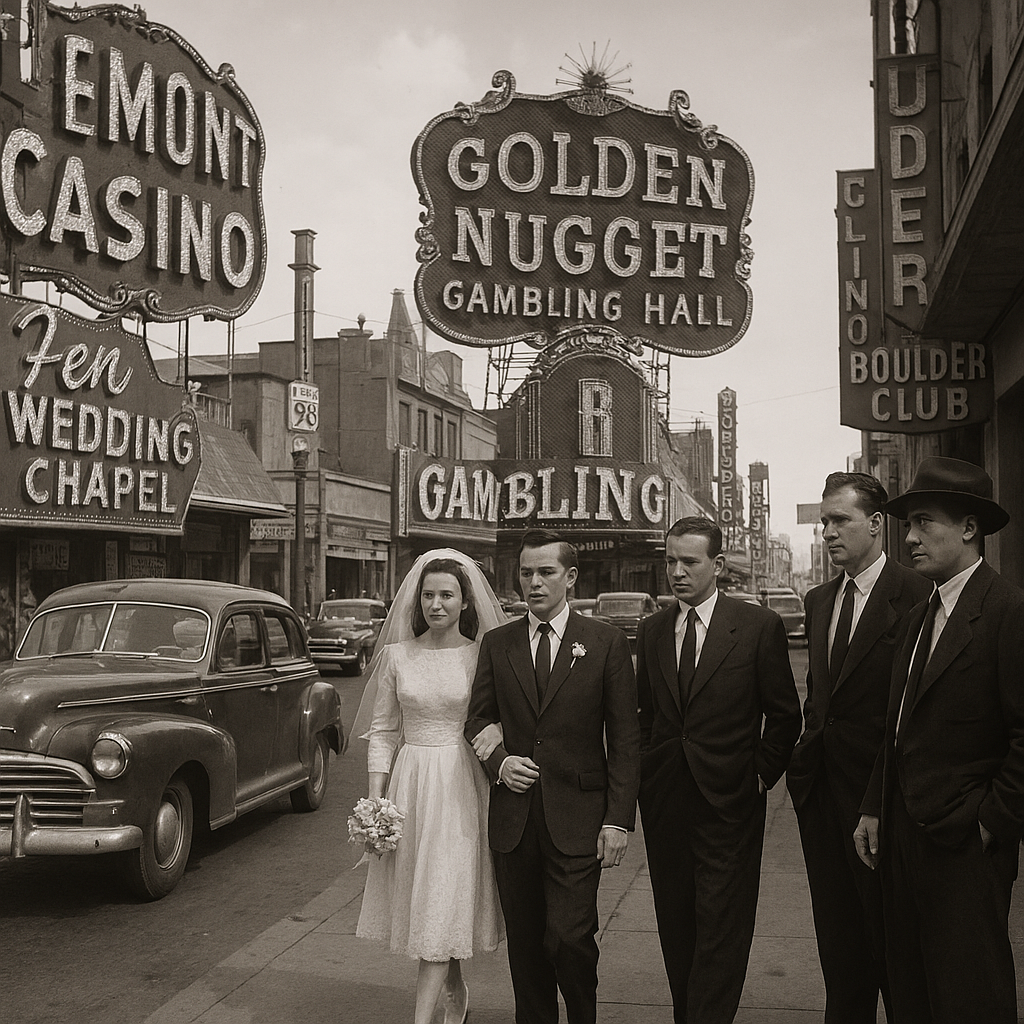
Las Vegas liberalised and criminalised
As governor of Nevada, Balzar’s role was legal and structural. As mentioned, in 1931 Balzar signed the gambling legislation into law but he also signed another critical law to liberalise divorce, which made Las Vegas the easiest place in the US to obtain a divorce.
Balzar’s policies created a low-friction life-event economy where divorce, remarriage and entertainment was all possible in just one place.
On the other hand, as Balzar created the conditions, Benjamin ‘Bugsy’ Siegel imagined the scale. In the 1940’s Siegel developed the Flamingo Hotel in Las Vegas. This was the first luxury resort concept which combined casinos, hotels and entertainment and targeted out-of-state visitors.
Even though the Flamingo struggled financially and Sigel was killed shortly after its opening, Siegel had taken Las Vegas from being a rough gambling stopover to become a destination resort city. His model became the blueprint for modern casino resorts and ultimately the Las Vegas Strip.
Elite extraction
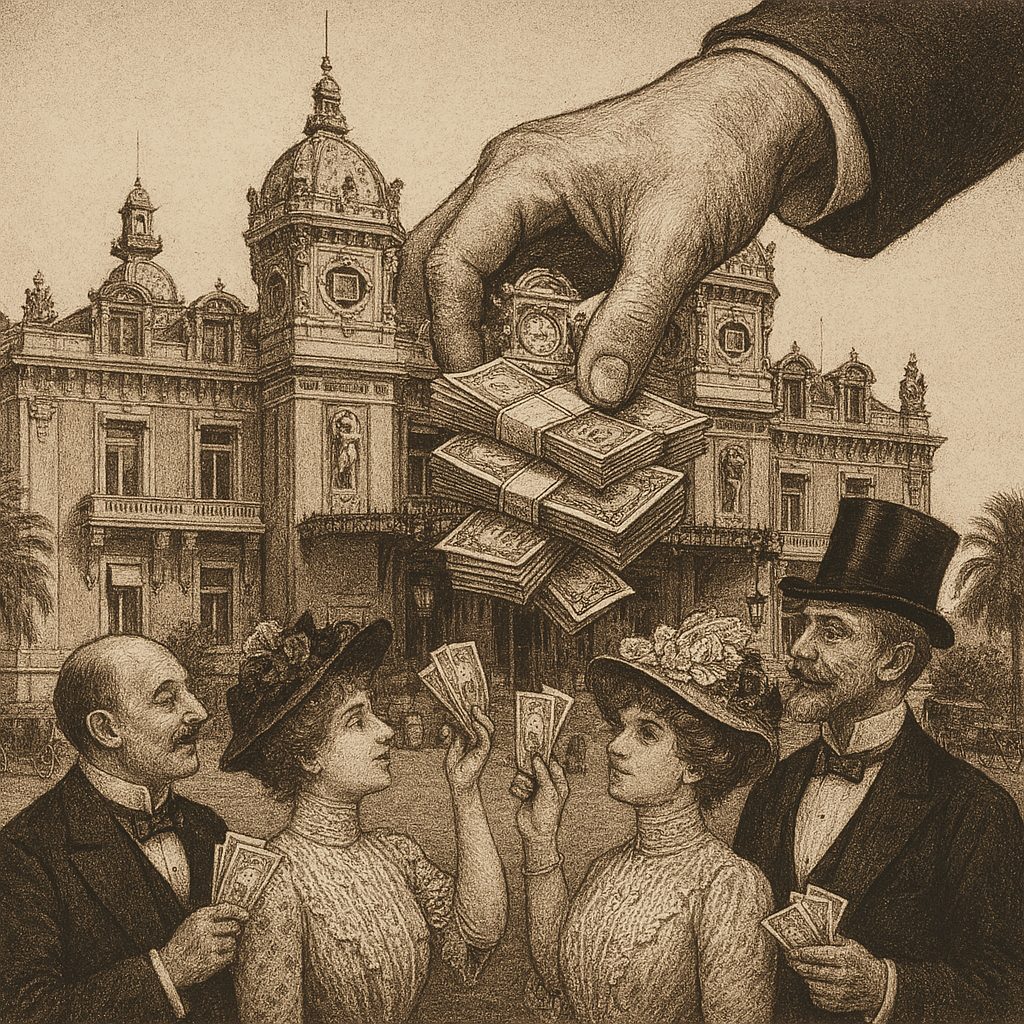
Approaching the market from the opposite end was Europe. Here the entitled elite were relieved of their (in some cases perhaps) hard earned money by high-end, respectable and generally pretty snooty establishments that nevertheless had a lot in common with their grubbier counterparts in Nevada – that was to simply extract cash.
Italy: Italy has one of the oldest casinos in the world: the Casino di Venezia in Venice. Founded in 1638, originally as a theatre called Teatro San Moisè. By the 18th century it had evolved into a proper gambling house for Venetian nobles and visitors. By the 1930s, it was still operating, though on a smaller scale compared to Monte Carlo. It’s considered the world’s first legal casino, and it’s still in operation today.
Monaco: The Monte Carlo Casino in the tiny principality of Monaco had been operating since the 1860s. By the 1930s, it was already a world-famous luxury destination attracting high rollers from across Europe. Monaco’s casino focused on the wealthy elite, with games like roulette, baccarat, and poker. It was legally permitted and heavily regulated, with revenues supporting the principality.
France: Various seaside casinos along the Riviera (Nice, Cannes) existed, catering to tourists.
Germany: Small casino-style venues existed in cities like Baden-Baden, though limited.
The key characteristics of this era are that gambling concentrated in a few locations with travel required to participate. Generally access was limited by limited opening hours and there were a relatively small number of betting opportunities.
Demand for gambling existed widely, but access was physically constrained.

The UK went nuts!
The second era began when gambling expanded beyond destination resorts and became geographically distributed.
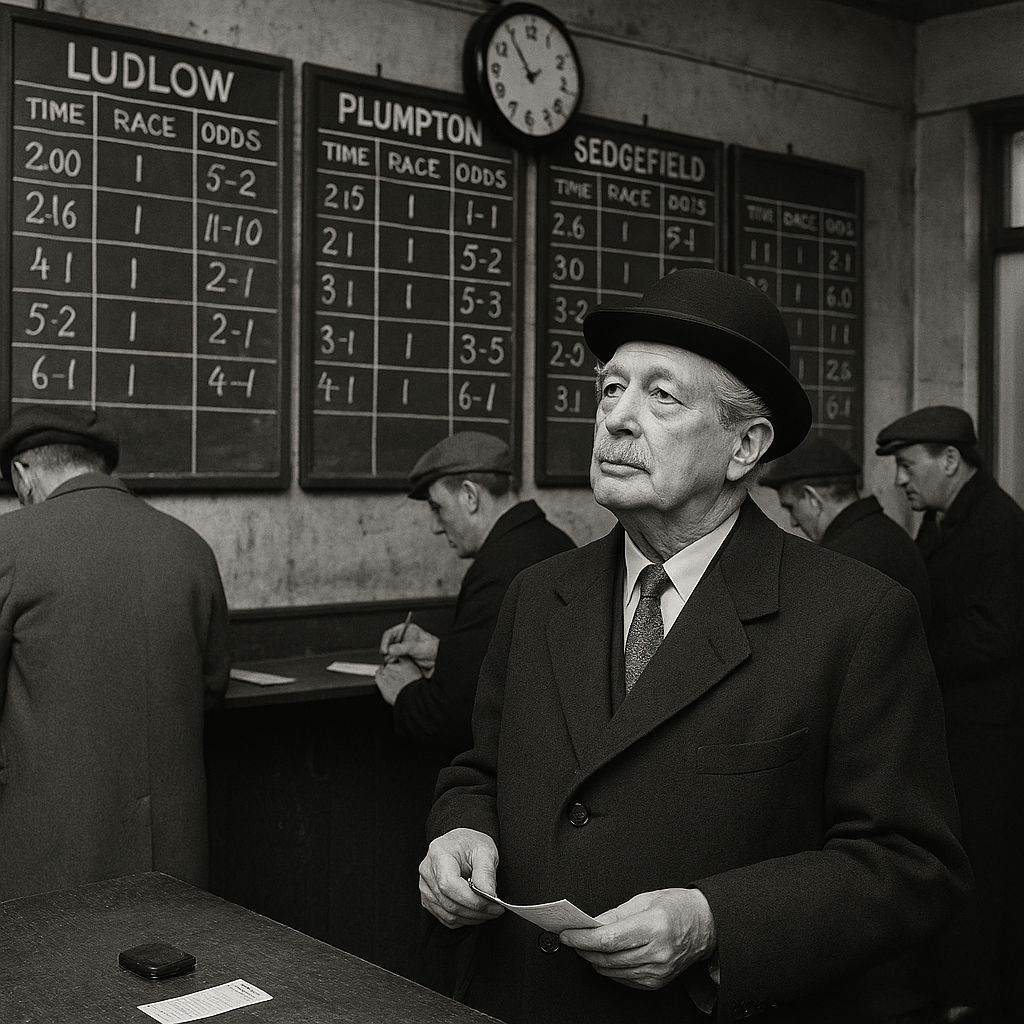
In the UK most forms of gambling were illegal but in 1960 the UK parliament passed the Betting and Gaming Act which legalized off-course betting shops for the first time. This allowed bookmakers to take bets outside racetracks and popular chain bookmakers like William Hill expanded rapidly.
The impact of this act to the UK population was huge – gambling became accessible to the general public without having to visit a racetrack.
This marked the first time betting could reach ordinary people in towns and cities, rather than only at tracks or casinos. As a consequence, the number of betting shops grew quickly: within a few years, thousands of shops operated across the UK. Also, after the 1960 Act, a large number of private casinos and gambling clubs appeared, often operating in legal grey areas.
Many of these venues were unfortunately linked to organized crime or questionable ownership structures. The government became concerned that the industry was growing too quickly and without proper oversight. These concerns were not without merit.
The UK legislation process followed a similar path as Nevada did in the 1930’s. That is, firstly there was an unregulated market that proved the demand which was then liberalised and then , secondly, regulated.
Before 1960 street betting and bookmakers were technically illegal. But millions of people still bet regularly. The government’s logic was that the demand existed at scale, so they should regulate and control it.
It was also a reflection of changes in society as a whole. At that time, the UK was experiencing post-war economic growth, rising consumer culture and gradual social liberation.
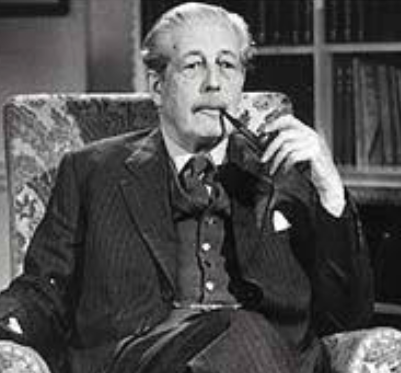
Harold Macmillan – also known as Super Mac!
The Prime Minister of the UK, Harold Macmillan who then presided over the country, was often associated with a pragmatic, centrist conservatism which was sometimes referred to as “Middle Way” politics. He believed in balancing free markets with state responsibility and adapting institutions to modern society whilst avoiding ideological extremes.
Macmillan’s famous line captured the mood of the time: “Most of our people have never had it so good.”
Certainly the bookmakers never had it so good. Macmillan opened the market which became a free-for-all. And it would take another politician to stabilise and regulate it – Roy Jenkins.

Roy Jenkins took a more sensible stance
Home Secretary Roy Jenkins was one of the leading reformers of the 1960s in the UK. He was a senior figure in the Labour Party and was known for combining social liberalism with strong institutional regulation. Jenkins presided over a wave of major social reforms including decriminalisation of homosexuality, abolition of theatre censorship and reform of divorce laws.
By the late 1960’s, the earlier Betting and Gaming Act of 1960 was considered by Jenkins to be too permissive and poorly supervised. So Jenkins introduced the 1968 Gaming Act which didn’t reverse the liberalisation but stabilised it.
Jenkins didn’t oppose gambling, he opposed uncontrolled gambling markets. His approach can be summarised as “If an activity is socially accepted, the role of government is to regulate it properly — not ignore it.”
If Macmillan’s reforms brought gambling into the open, Roy Jenkins ensured it could remain there — by imposing the regulatory structure needed to sustain a rapidly expanding industry.
So, the Gaming Act of 1968 was introduced to bring in tight regulation and attempt to provide transparency to gambling.

Patience was required to lose money
1. Legal Casinos — But as Membership Clubs
The law allowed casinos to operate legally, but under strict conditions:
This system was designed to prevent casual walk-in gambling and reduce criminal influence.
2. Creation of a National Regulator
The Act established the Gaming Board for Great Britain whose role was to license casinos, investigate owners, prevent criminal involvement and generally to supervise the industry.
This was one of the first modern gambling regulators anywhere in the world.
3. Regulation of Gaming Machines
The Act also regulated gaming machines, which were becoming popular in pubs and clubs.
Different categories of machines were created with rules about maximum stakes, maximum payouts and where machines could be installed.
This framework influenced machine regulation for decades.
4. Control of Bingo and Gaming Clubs
The law also formalized the legal status of bingo halls, gaming clubs and casino-style establishments. Again, these venues were subject to strict licensing and oversight.
Bookmakers became reputable
The 1968 Act transformed the UK gambling sector from a loosely regulated industry into a structured and supervised market.
It led to the growth of large, reputable casino operators and the decline of illegal gambling clubs. It provided a stable regulatory environment that lasted for decades until the online gambling revolution spurred modern reforms as introduced by the Gambling Act 2005.
Without the Jenkins-style regulation, the expansion triggered by the 1960 Act could have led to loss of public trust or prohibition again.
Lotteries led the way in the USA
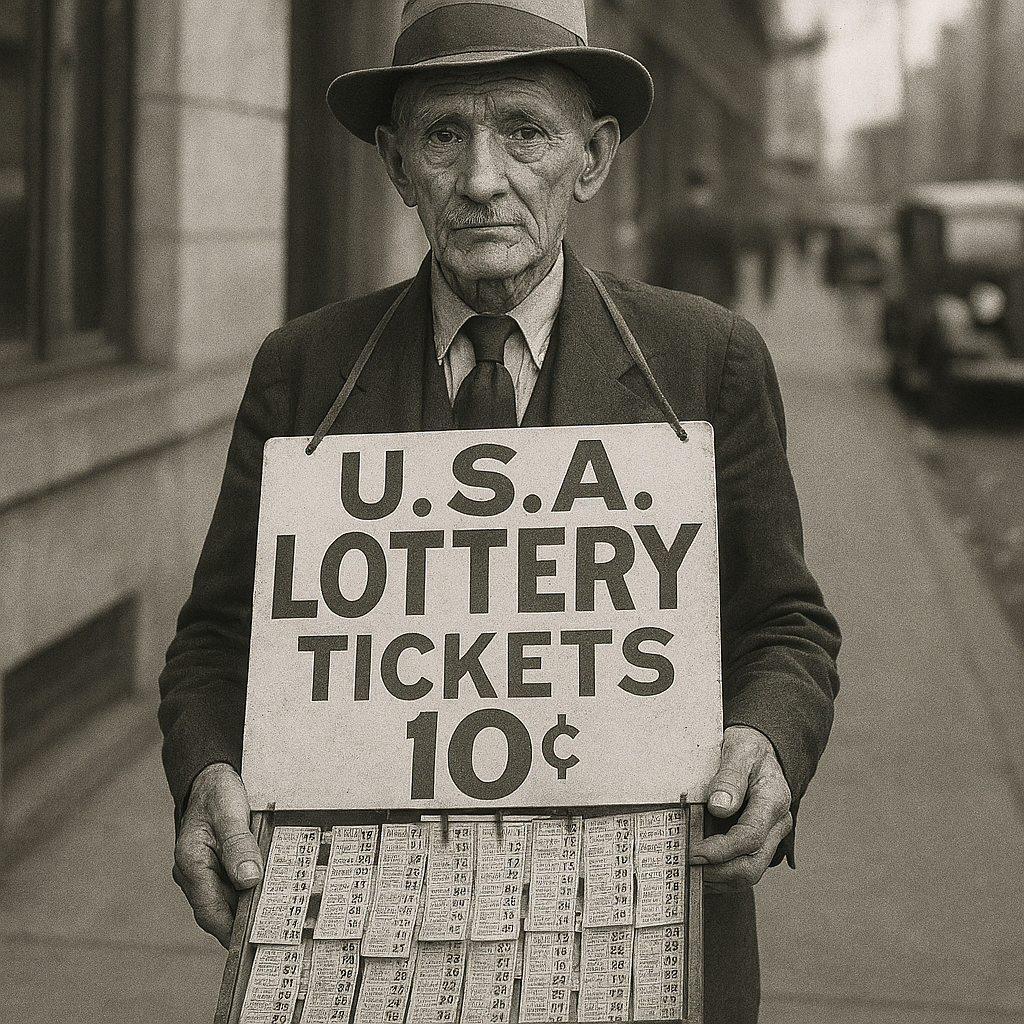
Meanwhile, back in the USA, the government introduced state lotteries, regional casinos and off-track betting. The first modern state lotteries in the U.S. started in the 1960s, and they’re an important part of the Distributed Era story because they represent gambling coming to the masses in a legal, regulated way outside casinos. Here’s an overview:
First U.S. State Lotteries (1960s)
Still limited compared to today’s multi-state games, but legally sanctioned gambling was expanding beyond casinos.
Would a casino perk the place up a bit?
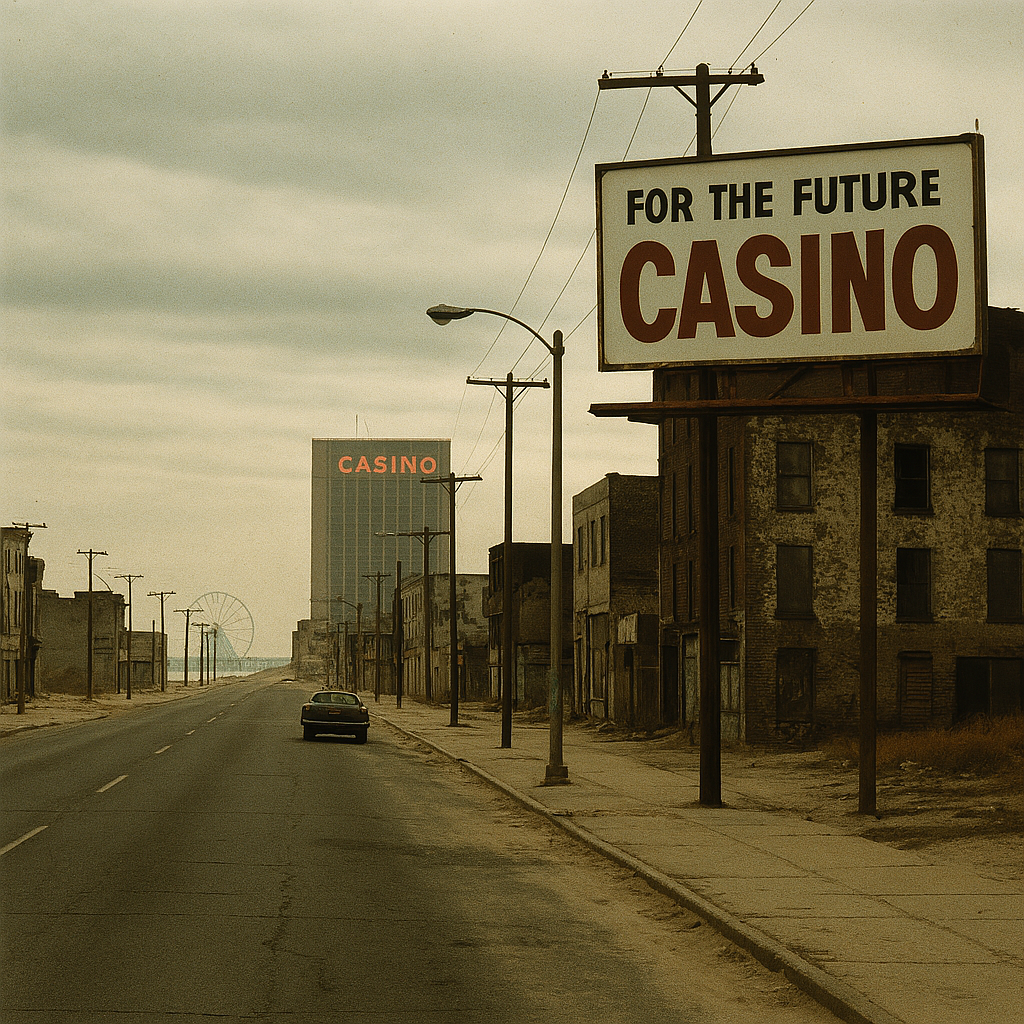
By the early 1970s, Atlantic City emerged as a new casino hub and gambling became accessible to far more people.
Before the casinos, Atlantic City was economically declining as tourism had collapsed bringing down with it many hotels and attractions. Local politicians began searching for ways to revive the city’s economy.
Voters demanded the right to lose their money
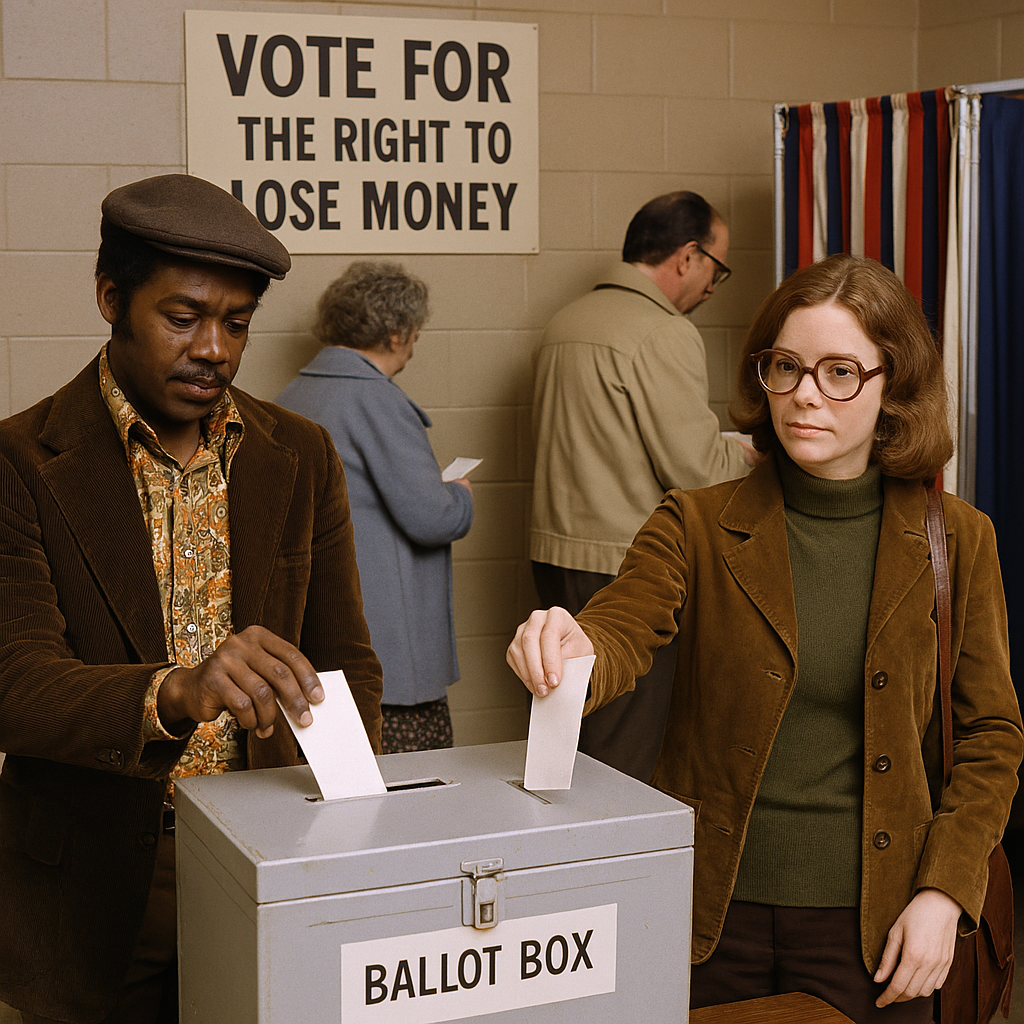
In 1976, voters in New Jersey approved a statewide referendum allowing casino gambling in Atlantic City only. The decision was deliberately limited to one city in order to: control expansion, concentrate tourism and to reduce political resistance elsewhere in the state.
This was the first major challenge to Nevada’s casino monopoly.
Following the referendum, the state passed the New Jersey Casino Control Act. This law created one of the strictest casino regulatory systems in the world. It established two important bodies:
Casino owners and executives had to undergo extensive background checks, partly to prevent organized crime from entering the industry.
The industry expanded rapidly
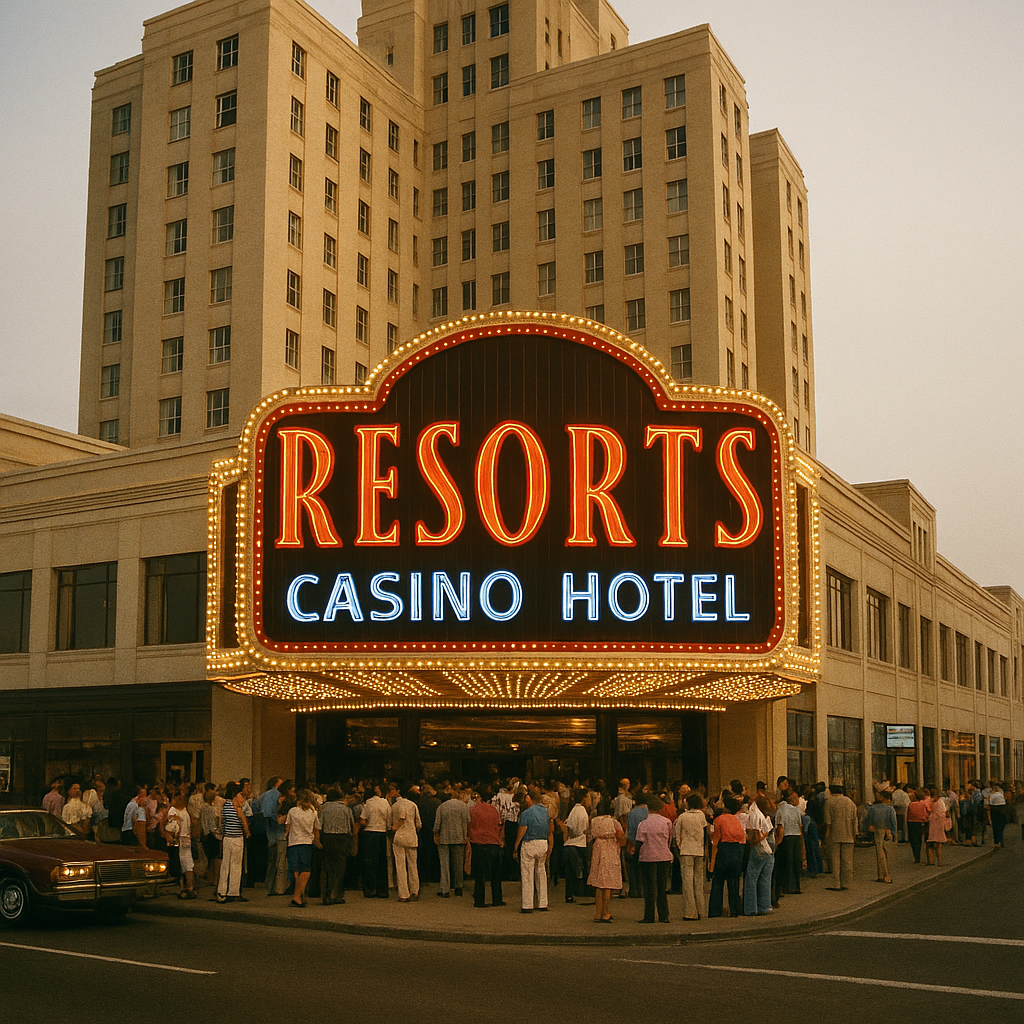
The first licensed casino was Resorts Casino Hotel which opened in 1978. The opening was a huge event and immediately drew large crowds. Within a few years, major operators opened additional casinos along the Atlantic City Boardwalk.
During the 1980s Atlantic City became the largest casino market in the United States, briefly surpassing Las Vegas in annual gaming revenue. Major casino resorts were built by companies connected with figures such as Steve Wynn and Donald Trump.
Once Atlantic City opened the door in the late 1970s, a slow regional expansion of casinos began across the United States. It didn’t explode everywhere at once, but a handful of places in the late 1970s and 1980s started experimenting with legalization.
Think of this era as the second wave after Nevada: gambling moving from a single destination market to regional hubs.

Online gambling brought access for the masses
The third era began with the arrival of internet gambling. In the mid-1990s, companies such as InterCasino and Intertops began offering real-money gambling through websites.
For the first time, gambling no longer depended on physical venues. Players could participate from home, at any time and across international markets.
Initially online gambling was loosely regulated and expanded rapidly. Governments feared for their tax revenues and for their inhabitants well-being.
So, the technically liberalised market was brought to heel by successive government interventions that recognised the inherent demand but wanted to tax and stabilise the situation. Some say they succeeded, other argue that the very liberal nature of the internet cannot be totally controlled and so ‘illegal’ online gambling cannot be totally contained.
One thing that cannot be denied is that the 3rd infrastructure era of gambling is by far the biggest and most financially successful. The industry effectively shifted from a limited set of destinations to a massive network of users.

Efficiency brings rewards
There are some interesting economic theories that seems to explain this phenomenon as well as many other ‘boom’ industries.
In economic terms, we refer to something called efficiency and apply it to the business process. What do we mean by efficiency? These days we tend to refer to this as ‘friction’, that is how much trouble and cost the customer has to undergo to in order to make use of a service.
In theory, the more efficient the process, the more successful the business. In gambling terms, travel, waiting times, and manual processes are all factors of efficiency. The transition from destination gambling to online gambling dramatically increased efficiency.
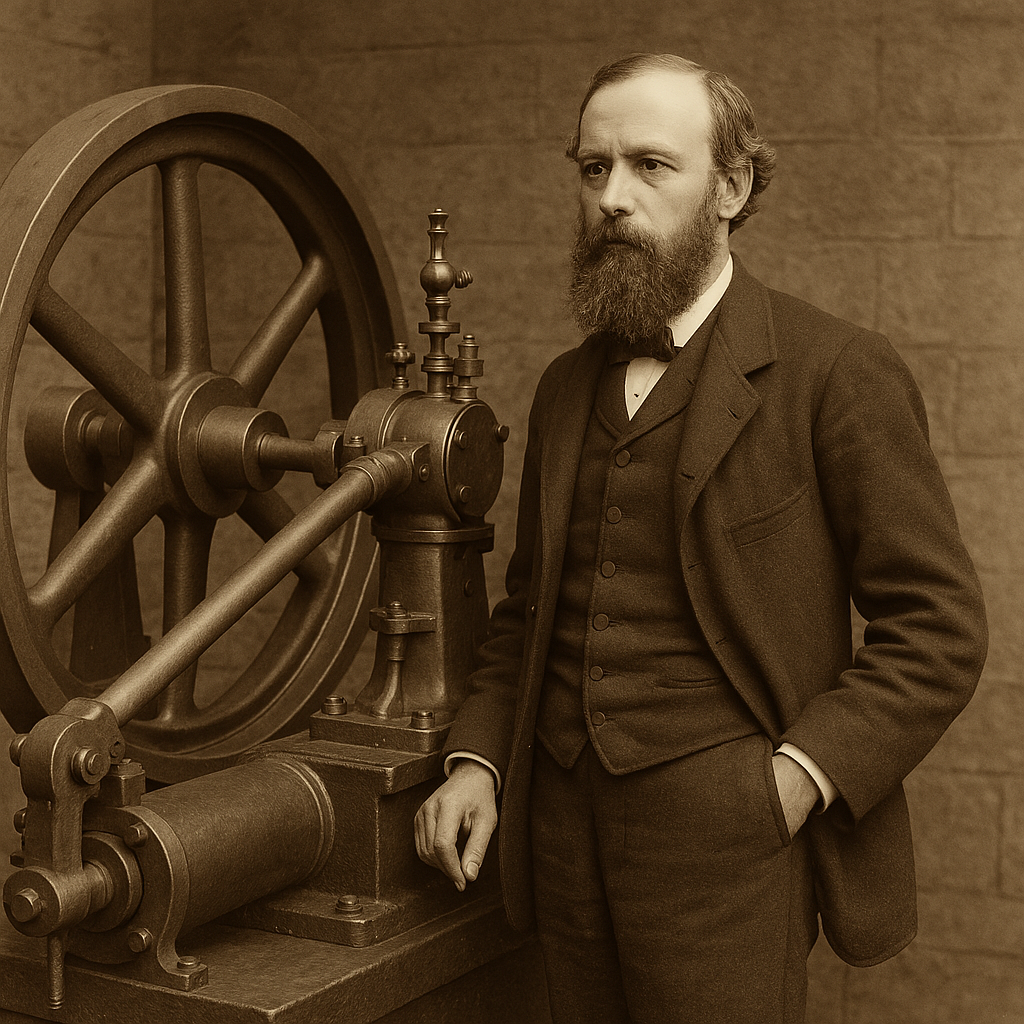
My engine uses less coal so it should reduce the overall amount of coal needed right?
Jevons’ Paradox is an economic principle which states that:
When a technological improvement increases the efficiency of using a resource, the total consumption of that resource can increase rather than decrease.
The concept was introduced by William Stanley Jevons in 1865 in his book “The Coal Question”. He observed that improvements in steam engine efficiency actually made coal cheaper and more useful. As the steam engine improved over time, the amount of coal a single engine used per unit of work decreased but the result being that overall coal consumption increased, instead of falling.
Efficiency creates three effects:
Combined, these often outweigh the savings from efficiency.
Another example is that of the car: As cars become more fuel-efficient, cost per mile decreases and then people drive more. Total fuel consumption inevitably rises.
In gambling terms the Internet has brought us instant access with 24/7 availability with thousands of markets. Efficiency has dramatically increased. The result of this is that more people are able to gamble, existing users gamble more and entirely new behaviours emerge – e.g. In-Play, P2P betting.
This does not necessarily mean that more people suddenly develop a desire to gamble. Rather, a relatively stable proportion of the population has an underlying propensity to gamble, but increased efficiency allows a greater share of that group to participate more frequently and more easily.

The more the exponentially merrier
Digital gambling platforms also behave like networks. The more users who join a platform the more active the betting markets and the faster poker tables fill which leads to the more competitive the odds.
This phenomenon is explained by Metcalfe’s Law, which states that the value of a network grows rapidly as more participants connect to it.
Where Jevons Paradox explains why participation grows, Metcalfe’s Law explains why platforms become exponentially more valuable as that participation increases.
Metcalfe’s Law states that:
The value of a network is proportional to the square of the number of its users (n²).
In simple terms:
More users don’t just add value — they multiply it.

Robert Metcalf was the first true networker
Robert Metcalfe is an electrical engineer and entrepreneur. He was a co-inventor of Ethernet (a foundational internet technology) and a founder of 3Com. He developed the idea in the 1970s–80s while thinking about telecommunications and computer networks and was fascinated by how connectivity scales.
He realised that a network becomes more valuable because each new user can connect with every existing user whereby interactions increase exponentially and so utility grows faster than size .
A classic example of Metcalf’s Law is the telephone network. A single telephone is useless. Two phones is just one connection but millions of phones creates a global communication system.
Hence, value grows with the number of participants.
Traditional gambling (pre-internet) had value tied to location with a limited number of participants. Digital Gambling Networks with their online platforms transformed gambling into a networked system.
For example: Sports Betting
So, the platform becomes more efficient and attractive.
Another gambling example: Poker Networks
So, value increases dramatically with user count.
A further example: Betting Exchanges. Platforms like Betfair show this most clearly:
This is almost a textbook case of Metcalfe’s Law.
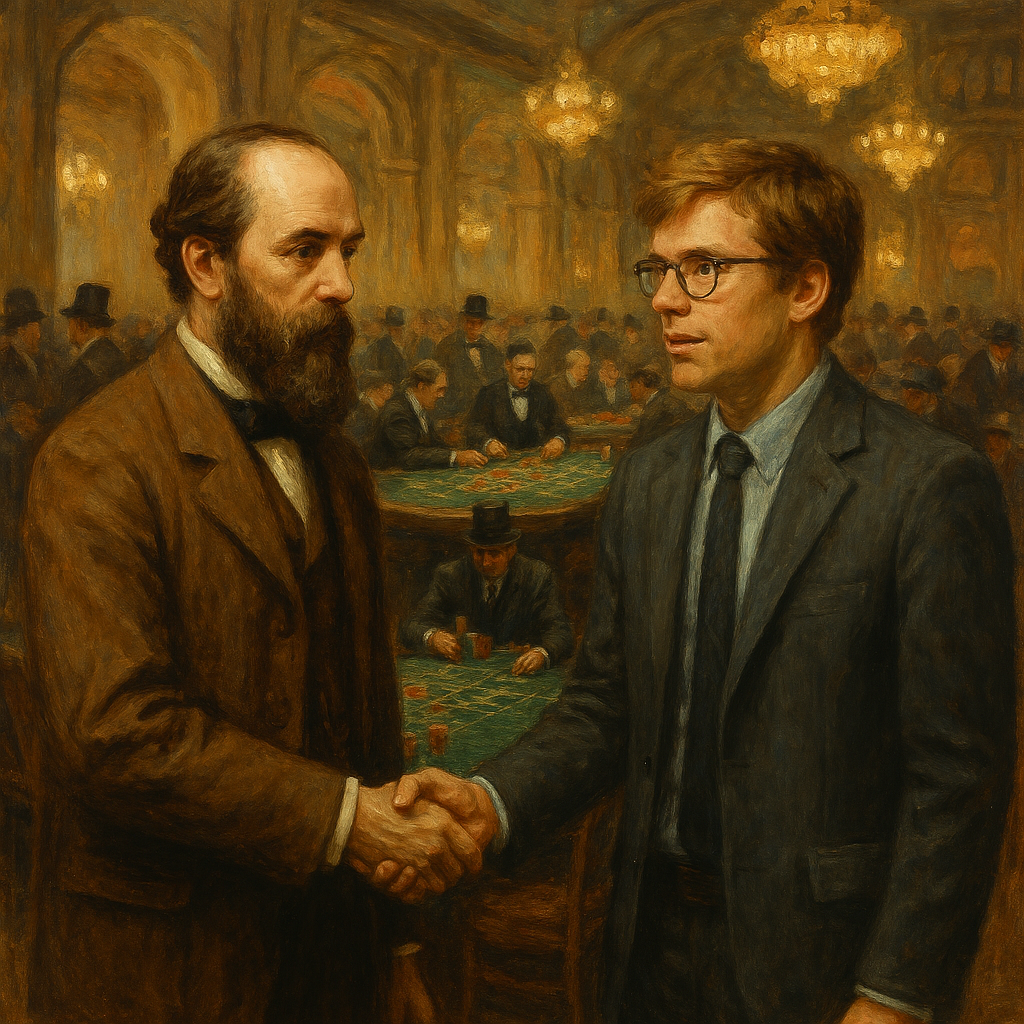
Mr Jevons and Mr Metcalf explain the phenomenal growth of the gambling industry
Over the course of the twentieth century gambling evolved from a fixed set of destinations, to a network of venues, and finally into a global digital network of players.
The evolution of the three infrastructure eras of gambling, the Destination, Distributed and Network eras can all be explained by a couple of economic theories. These days these theories seem like common sense as we, the Internet savvy generation, are all too aware of the importance of participation and value.
But just to summarise:
Participation Growth: Explained by Jevons Paradox. Efficiency → more users
Value Growth: Explained by Metcalfe’s Law. More users → exponentially more valuable networks
As gambling became more accessible, participation increased. As participation increased, platforms became more valuable – creating a feedback loop of growth.
While Jevons’ Paradox explains why more people could gamble, Metcalfe’s Law explains why online gambling platforms became so valuable – each new user increased not just activity, but the value of the entire system.
Together, these forces created a self-reinforcing cycle. Increased efficiency brought more users into the system, and each new user made the system more valuable.
The phenomenal success of the three infrastructure eras of the gambling industry are therefore not simply as a result of technological development, but of also of two underlying dynamics: the unlocking of latent demand, and the exponential scaling of networked participation.
Hope that makes some sense. Thanks for reading!